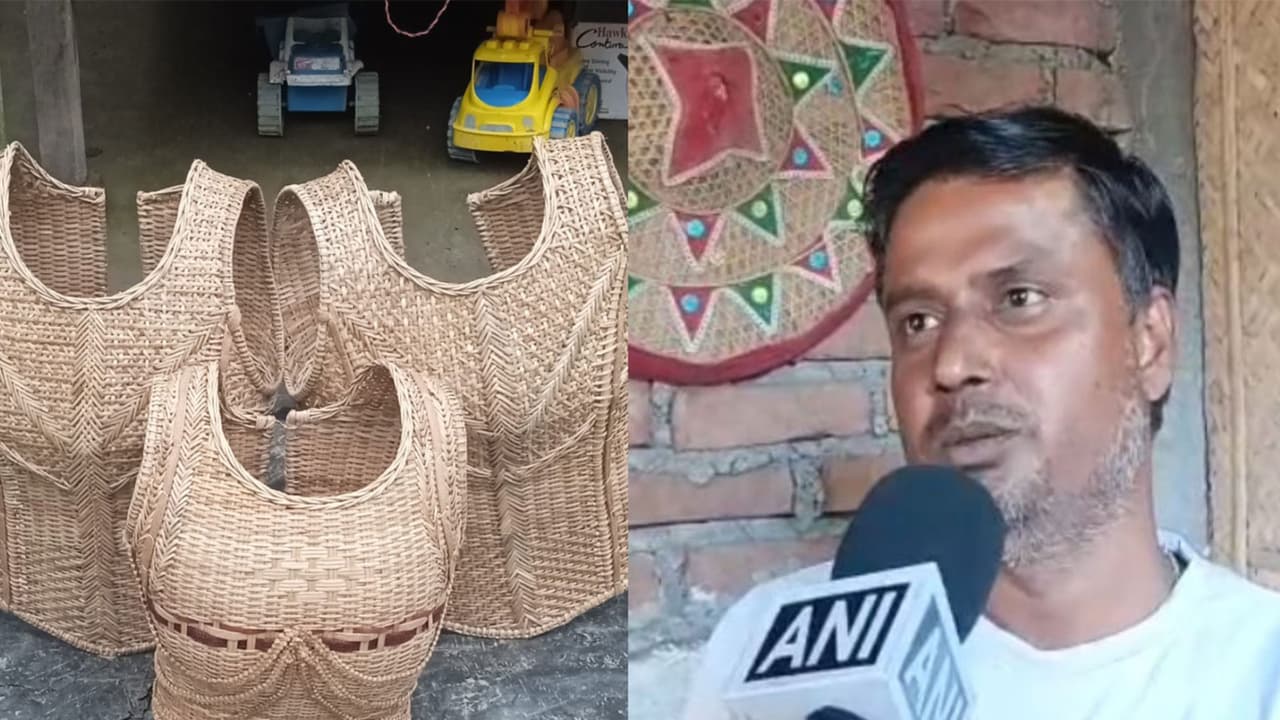
Assam artisans from Barpeta district gained national recognition after crafting specialised cane-and-rubber armour for Nitesh Tiwari’s film Ramayana, a project that took three-and-a-half years of dedicated work to perfect.
Assam Artisans Craft Armour for Ramayana
Traditional cane craftsmanship from a remote village in Assam’s Barpeta district has found a prominent place on the silver screen in Nitesh Tiwari’s newly released mythological epic ‘Ramayana’, starring Ranbir Kapoor as Lord Rama and Ravie Dubey as Lakshman. Master artisan Jaynal Abdin, a resident of Jania Banglipara village in Barpeta district, led a 15-member local team over a span of three-and-a-half years to handcraft 30 to 35 pieces of the specialised cane-and-rubber armour featured in the film.
The Project Origins
Speaking to ANI, Abdin recalled that the project first reached him around three-and-a-half years ago through Abdul Malek of the local organisation Gram Unnayan in Jania, rather than directly from the film’s production house. “It did not come to me directly. It first came to Abdul Malek ji of Gram Unnayan here in Jania. He called me over and said a project had come in and asked me to take a look. They had sent a file initially containing the drawings and designs. After examining it, I said it could be done and discussed it with my team head. Soon after, five to six members from their team arrived here, and a member named Sagar stayed back with us to help oversee the measurements and corrections,” Abdin told ANI.
Technical Challenges and Innovation
Crafting wearable armour out of stiff cane for high-intensity film sequences posed significant technical hurdles. Abdin shared that the initial prototype had minor fitting issues around the neck and shoulders and was returned with markings for alteration. Once refitted and tried on the lead actor, the pure cane structure proved too rigid and tight for comfortable movement. “After we fixed the initial cuts, they made the main actor of the film wear it, and he said it was very hard and tight—which cane naturally is. They asked what alternative material could be used. I told them we could craft it out of whatever material they provided. They sent us black and green rubber, but weaving with rubber alone was not working. When I spoke to costume designer Ajay, I suggested using half cane and half rubber. He agreed and asked us to make one sample,” Abdin explained.
Once the hybrid cane-and-rubber design was approved, the artisans worked intermittently over three to three-and-a-half years under tight deadlines whenever the production schedule demanded fresh pieces. To meet urgent shooting requirements in Mumbai, finished armour jackets were rushed directly from Barpeta to Guwahati Airport.
“They gave me the contact number of a person at Guwahati Airport and told me to simply hand the jackets over to him. I would go to the airport, hand it over, and within two to three hours they would call to confirm they had received it. The work was not continuous; sometimes there would be no news for three to six months, and then suddenly a call would come asking for eight or ten pieces on very short notice before shooting resumed. In total, over three to three-and-a-half years, we sent around 30 to 35 pieces,” he said.
Confidentiality and Pride
Throughout the making of the costumes, the 15 artisans in Jania Banglipara were kept under strict confidentiality regarding the identity of the project. “At that time, they did not tell us we were making this for Ramayana. They only told us it was for a film shoot and assured us that our work would bring us recognition later. Now that the film has been released, we finally came to know. I have not watched the film yet, but I will definitely watch it because a small part of my own handiwork is in it,” Abdin said.
Expressing joy over the national recognition coming to his village following the film’s release on November 5, the artisan said the achievement belongs to the entire region. “I feel immense pride—pride for my team, for myself, for my village Jania Banglipara, and for the entire Barpeta district,” Abdin added.
(Except for the headline, this story has not been edited by Asianetnews Editorial staff and is published from a syndicated feed.)