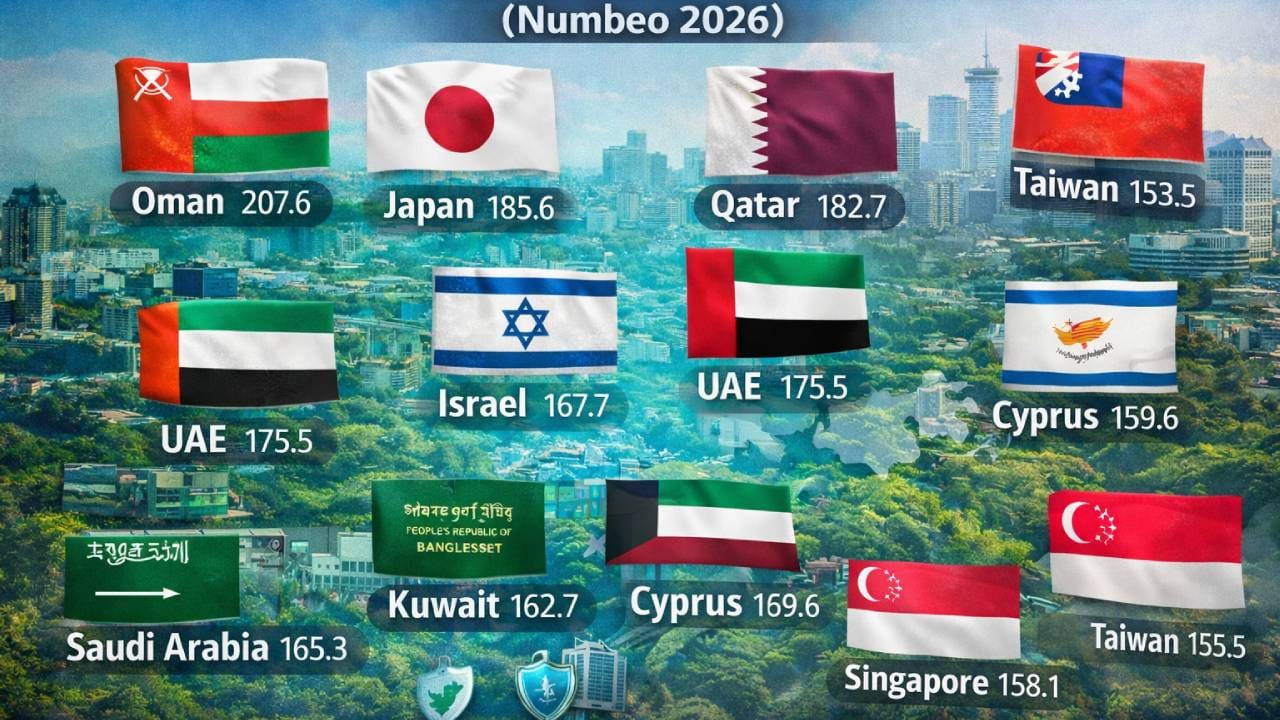
New Delhi: While GDP often grabs the headlines, the true measure of a nation’s success lies in how its citizens actually live. The 2026 Quality of Life Index by Numbeo has pulled back the curtain on Asia, ranking countries not just by wealth, but by safety, healthcare accessibility, environmental cleanliness, and the “hassle factor” of daily commutes.
Using a complex formula that measures purchasing power against the cost of housing and the quality of the climate, the 2026 data identifies the following leaders in Asian living standards.
Oman (Score: 207.6)
Oman has claimed the throne as the number 1 destination for quality of life in Asia. The Sultanate’s secret weapon is a combination of massive purchasing power and the most affordable housing market among the top-tier nations. With low pollution levels and stress-free commutes, Oman offers a level of daily comfort that offsets its mid-range healthcare scores.
Japan (Score: 185.6)
Securing the silver medal, Japan remains a bastion of stability. While residents deal with higher property prices and longer commutes than their Gulf counterparts, they enjoy world-class healthcare, unparalleled safety, and a highly favorable climate. The country’s superior urban planning and public services ensure it remains a top global contender.
Qatar (Score: 182.7)
In third place, Qatar’s ranking is powered by immense financial strength and high safety ratings. While the country boasts short commute times and relatively affordable housing, its overall score is slightly tempered by environmental factors, specifically higher pollution levels and a challenging desert climate.
United Arab Emirates (Score: 175.5)
The UAE continues to be a magnet for those seeking state-of-the-art infrastructure and high purchasing power. While it is one of the safest places to live with excellent healthcare, the high cost of living and premium real estate prices in major hubs like Dubai and Abu Dhabi keep it in the fourth spot.
Israel (Score: 167.7)
Ranking fifth, Israel stands out for its high-quality medical services and one of the most pleasant climates in Asia. However, the “affordability gap” remains a hurdle, as a high cost of living and a steep property-price-to-income ratio put pressure on residents’ long-term finances.
Saudi Arabia (Score: 165.3)
The Kingdom takes the sixth spot, driven by strong purchasing power and a remarkably low cost of living. While manageable traffic and affordability are major perks, the country’s overall ranking is weighed down by its climate and pollution metrics, though healthcare remains steady in the mid-range.
Kuwait (Score: 162.7)
Kuwait holds a unique distinction. It boasts the highest purchasing power of any country on this list. However, economic might alone isn’t enough to reach the top. Poorer healthcare scores, significant pollution, and average safety ratings pull Kuwait down to seventh place.
Cyprus (Score: 159.6)
The island nation of Cyprus lands at number eight. It is a favorite for those who prioritise a Mediterranean climate and easy commutes. While the cost of living is reasonable, it lacks the raw purchasing power and high-tier healthcare infrastructure seen in the nations further up the list.
Singapore (Score: 158.1)
Despite being a global financial titan, Singapore ranks ninth. The city-state is nearly perfect in terms of safety, low pollution, and elite healthcare. However, it is the victim of its own success. The astronomical cost of living and world-record property prices significantly impact the overall quality of life for the average resident.
Taiwan (Score: 155.5)
With its best healthcare scores in Asia, strong safety and climate indicators, Taiwan finishes at number ten in this list. However, the housing affordability concerns, reflected in its high property price-to-income ratio, limit the country’s ability to climb higher in the rankings.