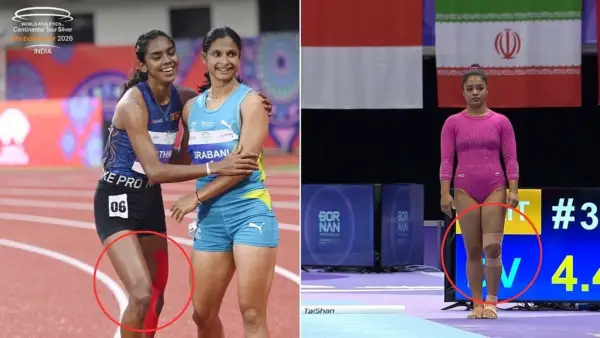
Athletes are often seen competing with strips of tape wrapped around different parts of their bodies. While the colourful tape may look like a routine part of their sporting gear, it serves a practical purpose.
Several athletes from around the continent have been seen wearing them at the ongoing Asian Games 2026.
But why do athletes wear it, and how does it help?
Why do athletes tape their joints?
Athletes often tape joints that experience repeated stress, including the knees and ankles during running, jumping and sudden changes in direction. Elastic kinesiology tape stretches with the body, allowing athletes to move while providing a sensation of support around muscles and joints.
Physiotherapists may also use taping as part of a wider rehabilitation programme when an athlete is returning from an injury or dealing with discomfort. The tape is not a rigid brace that keeps the joint from moving – it is intended to give sensory feedback to the athlete.
Scientific research on kinesiology tape has produced mixed results, with studies finding limited evidence that it consistently prevents injuries or significantly improves athletic performance. Some athletes nevertheless report feeling more confident or comfortable when a joint is taped, making it one practical tool within a larger sports-medicine routine.
It does not prevent injury, but helps the athlete be more aware of their movements, allowing them to be in more in control. Importantly, taping is not a substitute for proper rehabilitation, strength training, medical assessment or injury prevention.
Incorrect application may cause skin irritation, while masking pain could encourage an athlete to compete despite an injury that requires treatment.