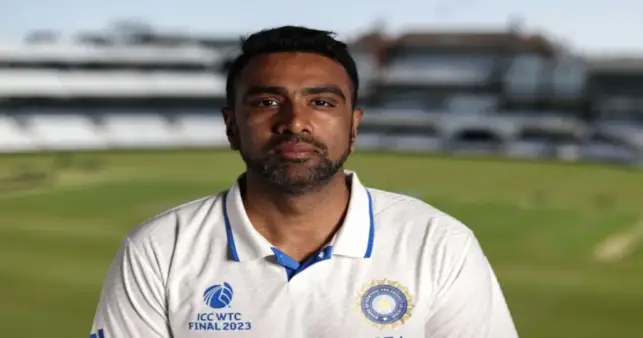
Former India all-rounder Ravichandran Ashwin has criticised West Indies captain Shai Hope for his tactical decisions during the second T20I against India at the JSCA International Stadium Complex in Ranchi on Friday.
The match witnessed an explosive batting display from both sides, with India posting a formidable 249/5 in 20 overs before the West Indies produced a remarkable chase to secure victory with nine balls to spare. Despite India’s imposing total, Hope led the visitors’ response with an unbeaten century, highlighting the contrast between the two teams’ batting performances. Ashwin’s criticism centred on Hope’s captaincy decisions and the challenges of managing India’s aggressive batting line-up in a high-scoring T20 contest.
India’s innings was powered by Sanju Samson, who smashed 82 runs off just 41 deliveries to provide the hosts with a commanding platform. His aggressive stroke play helped India maintain a high scoring rate throughout the innings, putting the West Indies bowlers under sustained pressure. The hosts eventually finished with 249 runs for the loss of five wickets, a total that would ordinarily place considerable pressure on a chasing team. India’s batting performance demonstrated the value of building momentum in the powerplay and maintaining attacking intent through the middle overs and the final stages of an innings.
However, the West Indies responded with an extraordinary batting effort, refusing to allow India’s total to dictate the outcome. Hope took responsibility at the top of the order, producing an unbeaten 102 off 45 balls to steer his team towards the target. His innings combined rapid scoring with sustained pressure on the Indian bowling attack, allowing the visitors to remain ahead of the required run rate. The West Indies eventually completed the chase with nine balls remaining, turning what appeared to be a daunting target into a successful pursuit. Hope’s century was the defining contribution in a match that underlined the increasingly aggressive nature of modern T20 cricket.
Ashwin’s criticism of Hope’s tactics brought attention to the strategic decisions that can influence matches even when a captain delivers an outstanding individual performance. In T20 cricket, captains must constantly assess match-ups, field placements, bowling changes and the use of attacking options against powerful batters. Decisions made during the opposition’s innings can have a significant impact on the final score, particularly when conditions favour stroke play. The headline’s comparison, ‘Serving Goat to Hungry Lion’, captures the criticism of a tactical error that allegedly allowed India an advantage. However, the specific decision Ashwin questioned was not identified in the supplied report, and the precise context of his remarks would need to be verified before the criticism could be explained in detail.
The match also highlighted the growing importance of aggressive batting strategies in the shortest international format. Totals approaching or exceeding 250 have become increasingly challenging to defend when batters maintain a high scoring rate and avoid losing wickets in clusters. India’s 249/5 reflected the effectiveness of its batting effort, but the West Indies demonstrated that even a substantial target can be chased when a key batter produces a decisive innings. Hope’s unbeaten century ensured that the visitors remained competitive throughout the pursuit, while the result highlighted the need for bowlers and captains to adapt quickly as conditions change during a chase.
For India, the defeat despite posting 249 runs raised questions about the bowling execution and tactical adjustments required to defend a large total. For the West Indies, the victory showcased Hope’s leadership with the bat and the team’s ability to handle a demanding chase under pressure. Ashwin’s reaction added another layer to the discussion, drawing attention to the decisions that can shape a T20 contest beyond the performances reflected in the scorecard. While Hope’s century was central to the West Indies’ success, a complete assessment of Ashwin’s criticism requires the original statement or recording to establish which tactical choice he considered a mistake. The contest ultimately illustrated that in modern T20 cricket, no total is entirely safe when a chasing side combines sustained aggression with a standout individual performance.