New Delhi: After being rocked by massive protests which started due to a dwindling economy and later snowballed as a movement against the country’s regime, Iran’s fortune continues to deteriorate. The country is now facing an offensive, currently rhetorical, from the US, which increasingly seem to be on the verge of inciting military action.
Measured response or action
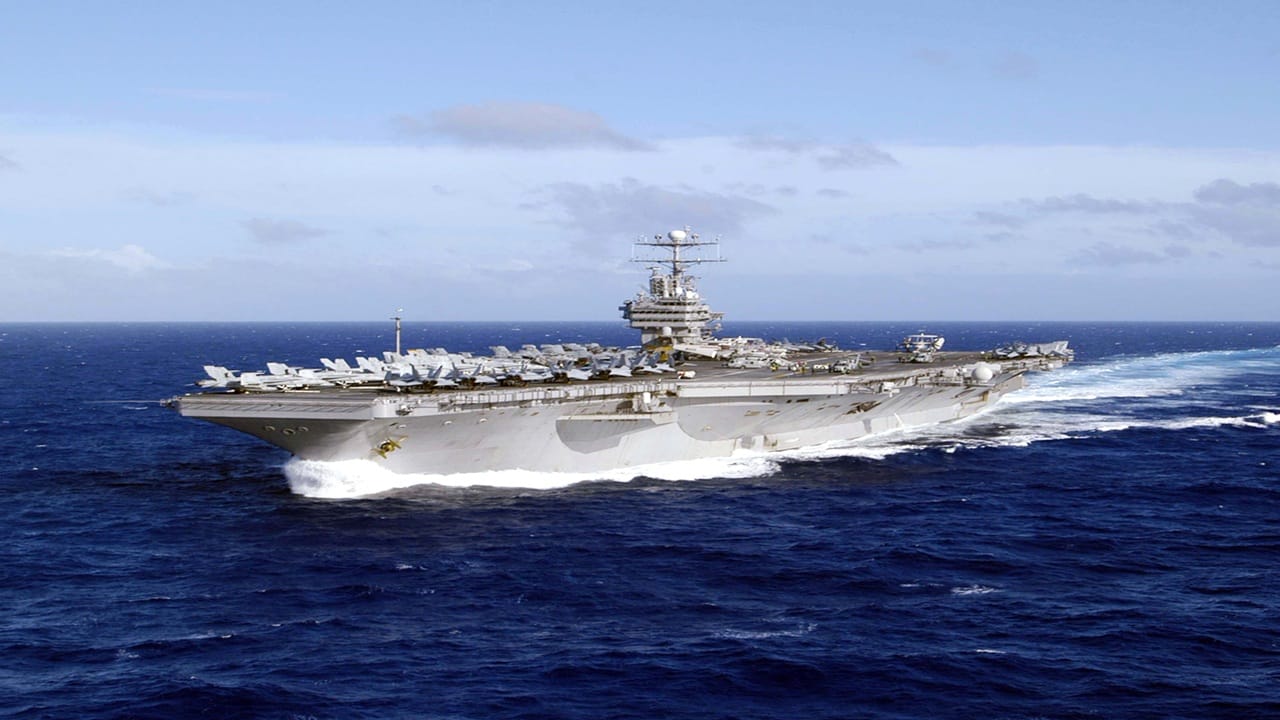
Donald Trump has now warned Iran that “time is running out” to negotiate a deal on its nuclear programme following the steady build-up of US military forces in the Gulf. The US president said a “massive Armada” was “moving quickly, with great power, enthusiasm, and purpose” towards Iran, referring to a large US naval fleet.
In response, Iran’s Foreign Minister Abbas Araghchi said the country’s armed forces were ready “with their fingers on the trigger” to “immediately and powerfully respond” to any aggression by land or sea.
Trump’s latest comments on Iran appeared to focus more on the country’s nuclear programme, compared to earlier when he was more concerned with the action of the Iranian regime against its protesters. “Hopefully Iran will quickly ‘Come to the Table’ and negotiate a fair and equitable deal – NO NUCLEAR WEAPONS,” he wrote on Truth Social. Trump added that this force was “ready, willing, and able to rapidly fulfil its mission, with speed and violence, if necessary”.
Referring to the US strikes on Iranian nuclear sites last June, which were launched during Iran’s 12-day war with Israel, the US president warned: “The next attack will be far worse! Don’t make that happen again.” Speaking to the Senate Foreign Relations Committee on Wednesday, Secretary of State Marco Rubio said the Iranian “regime is probably weaker than it’s ever been”.
A military comparison
The US and Iran have had a tumultuous relationship for some time. From the Iranian Revolution and the ensuing hostage crisis to Bush’s ‘Axis of evil’ comments and nuclear deal, both countries have even engaged in what can be referred to as proxy warfares in Gaza. Thus chances of military action between the two are not improbable.
When it comes to a comparison between the military prowesses of the two, one can start looking at the US aircraft carrier USS Abraham Lincoln (CVN-72), currently at the eye of the storm. The nuclear-powered aircraft carrier is 1,092 feet (333 metres) long, has a beam of 252 feet and a displacement of around 100,000 tons. It can carry around 5,700 personnel, including 3,200 crew, between 60 to 75 planes and helicopters, including F/A-18 Hornet and F-35 Lightning II aircraft. The carrier’s air wing also includes E-2D Hawkeye airborne early-warning aircraft, which provide long-range radar surveillance and early detection of incoming aircraft or missiles.
For Iran to directly hit or damage the USS Abraham Lincoln is unlikely despite their impressive missile arsenal. Iran claims its ballistic missiles have a range of up to 2,000 kilometres. This includes the Sejil, which has a range of approximately 2,000–2,500 kilometres, as well as the Kheibar, boasting a range of around 1,400 kilometres, and the Fattah-2.
When it comes to direct comparison, the US defense budget, around $895 billion to nearly $1 trillion annually, significantly dwarfs that of Iran, which is typically estimated in the low tens of billions that is about $15 to $25 billion. Thus, the US clearly has an edge in advanced military technology, equipment, logistics and global deployments.
In terms of air power, the U.S. fields more than 13,000 military aircraft, including cutting-edge F-35 and F-22 fighters, strategic bombers, aerial refuelers, drones and ISR platforms, whereas Iran operates a much smaller fleet of around 500–640 aircraft, many of which are ageing Cold War-era jets supplemented by domestically produced platforms. Iran’s military arsenal has been significantly affected due to US imposed sanctions on the country. Be its naval fleet or weapons and artillery.
Where Iran has strength is in its large ballistic missile stockpile and drone forces. Iran also leverages proxy militias and electronic warfare techniques which can counter conventional warfare of the US. Such asymmetric and unconventional systems give Iran significant deterrent power in its own region, be it on ground or naval. Thus Iran’s best options lie in regional defense and irregular warfare rather than head-to-head conventional engagements where Washington significantly overpowers Tehran.