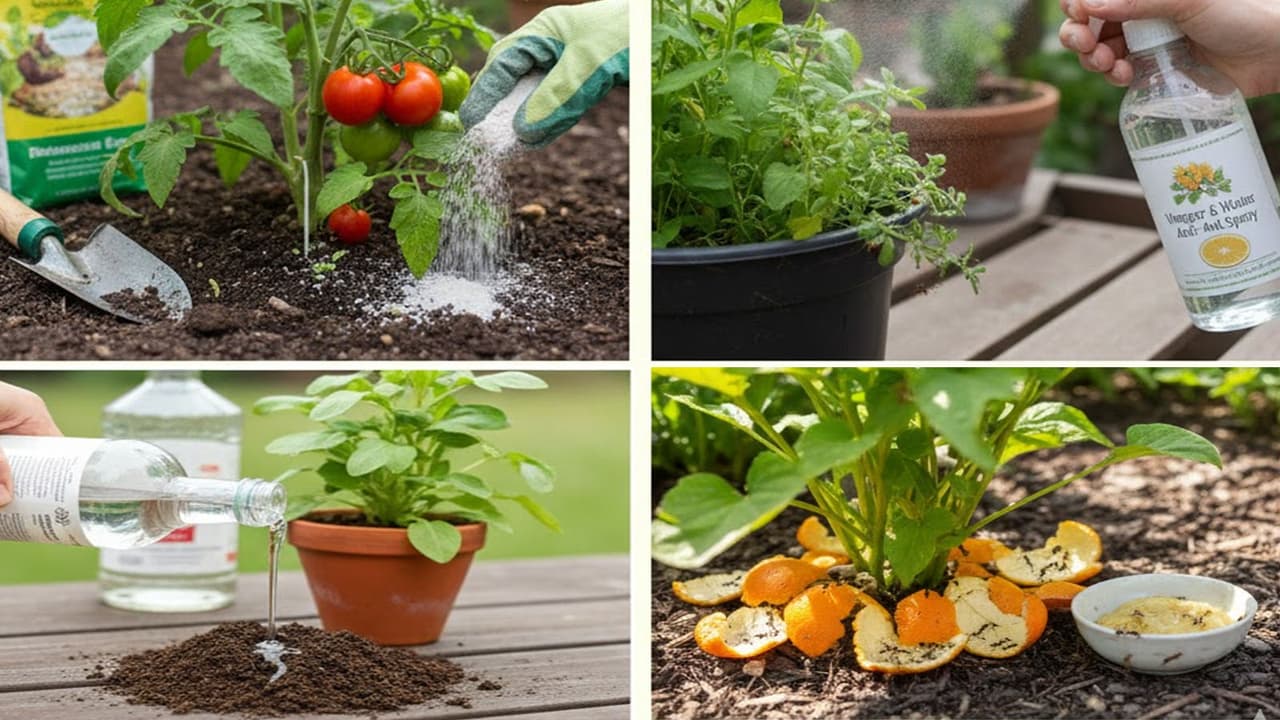
Best Tricks to Remove Ants: Is your balcony garden becoming full of ants? Use these tricks before the plants get completely destroyed.
If suddenly lines of ants start appearing in the garden, then understand that there is definitely some problem around the plants. Many times people think that ants are eating plants, whereas the truth is that ants are a sign of some other problem. If these are not controlled, the soil starts deteriorating and the plants start becoming weak. Learn here why ants appear in the garden and 4 easy home tricks that show immediate effect.
- Excessive sweetness or fungus growth in soil: When fungus or sugar based elements increase in the soil, ants start gathering there rapidly. Fallen fruits, sweet manure or rotten leaves attract ants a lot.
- Aphids i.e. small insects called ants: Aphids suck the sap from plants and release sweet honeydew. Ants stay near plants to eat the same honeydew, this is a kind of partnership.
- Easy to make home for ants in dry or loose soil: Very dry soil or little water also allows them to quickly form their colonies.
Read more – Disadvantages of spider plant, first know these 5 truths
4 easy tricks to remove ants from the garden
Neem Water and Dishwash Liquid Spray: This is the easiest and most effective method. Mix 1 liter of water, 2 teaspoons of neem oil or neem water and 5–6 drops of dish wash liquid. Mix well and spray on the roots and leaves of the plants. Due to this, aphids also die and ants also disappear.
Add coffee grounds to soil: Ants do not like the smell of coffee powder at all. Pour some coffee around the plant. It also improves the quality of the soil and changes the path of ants.
Read more – This red plant is so expensive, how to plant Heliconia indoor and outdoor?
Sprinkle cinnamon or camphor powder: The strong fragrance of both destroys the colony of ants. Lightly sprinkle cinnamon powder or camphor powder directly on the base of the plants. Ant activity is reduced by 70% in 24 hours.
Easiest Gardening Tips: Ants mostly prefer dry soil, while excess moisture promotes fungus growth. Therefore, turn the soil every 2–3 days.