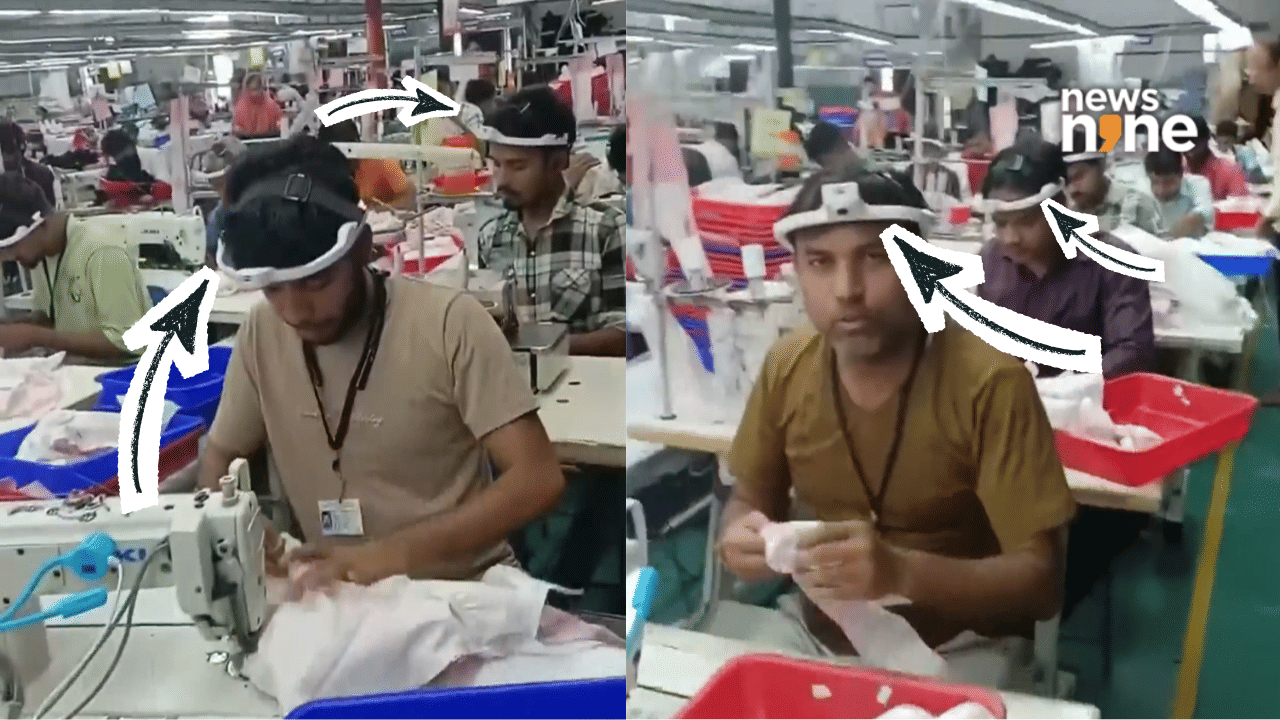
New Delhi: A set of viral videos showing garment factory workers wearing small head-mounted cameras has triggered a wave of online debate. The clips show workers stitching fabric in long rows, each with a device fixed on their head. At first glance, it looks like a routine factory setup. But the cameras changed how people saw it.
As the videos spread across social media, many users began asking the same question. Why are workers recording everything they do. Some believe the answer points to artificial intelligence. The idea being, capture human work in detail, then train machines to copy it.
Two spacetimes, one data value chain
>India: Workers’ headcams record garment sewing egocentric data flows to AI/robotics companies.
>China: Operators teleoperate humanoid robots in warehouses, sorting packages …validating the system ,collecting real-world training data. pic.twitter.com/uPrTb6nYRR
— CyberRobo (@CyberRobooo) April 12, 2026
Viral factory videos spark AI training debate
The most widely shared explanation claims factories may be collecting “egocentric” video data. This means first-person footage that shows exactly how a worker handles fabric, moves hands, and performs tasks.
One user explained it like this. Factories could be recording “egocentric” video data to help machines learn complex hand movements, such as fabric handling through imitation learning, avoiding the need for expensive motion-capture technology.
The clips themselves do not confirm this use. There is no official statement from factories yet. Still, the theory gained traction quickly.
Fear of job loss grows as AI enters manual work
The conversation soon shifted from curiosity to concern. Many users raised a serious point. If machines learn from workers today, what happens tomorrow.
Some posts suggested that workers might be unknowingly helping build systems that could replace them in the future. Others took a calmer view. They argued that adapting to new tech has always been part of industrial change.
What this means for India’s labour economy
India’s garment sector employs lakhs of workers, many in repetitive manual roles. If AI training using real human actions becomes common, it could change how factories operate.