
New Delhi: Bollywood actress Ananya Panday’s recent visit to Shri Trimbakeshwar Temple has renewed attention on one of Maharashtra’s most sacred pilgrimage sites. Located around 28 kilometres from Nashik, the temple sits near the Brahmagiri hills, where the river Godavari originates. Trimbakeshwar is among the 12 Jyotirlingas of Lord Shiva and holds unique importance due to its rare three-faced linga. The site is known for deep spirituality, history, and striking temple architecture.
Situated at the foothills of Brahmagiri, Trimbakeshwar stands at an altitude of nearly 3,000 feet above sea level. The temple town remains deeply connected to the Varkari tradition and Nath sampradaya. Pilgrims visit year-round for worship, sacred rituals, and yatras linked to saints whose spiritual journeys shaped Maharashtra’s devotional history.
Key highlights of Trimbakeshwar Temple
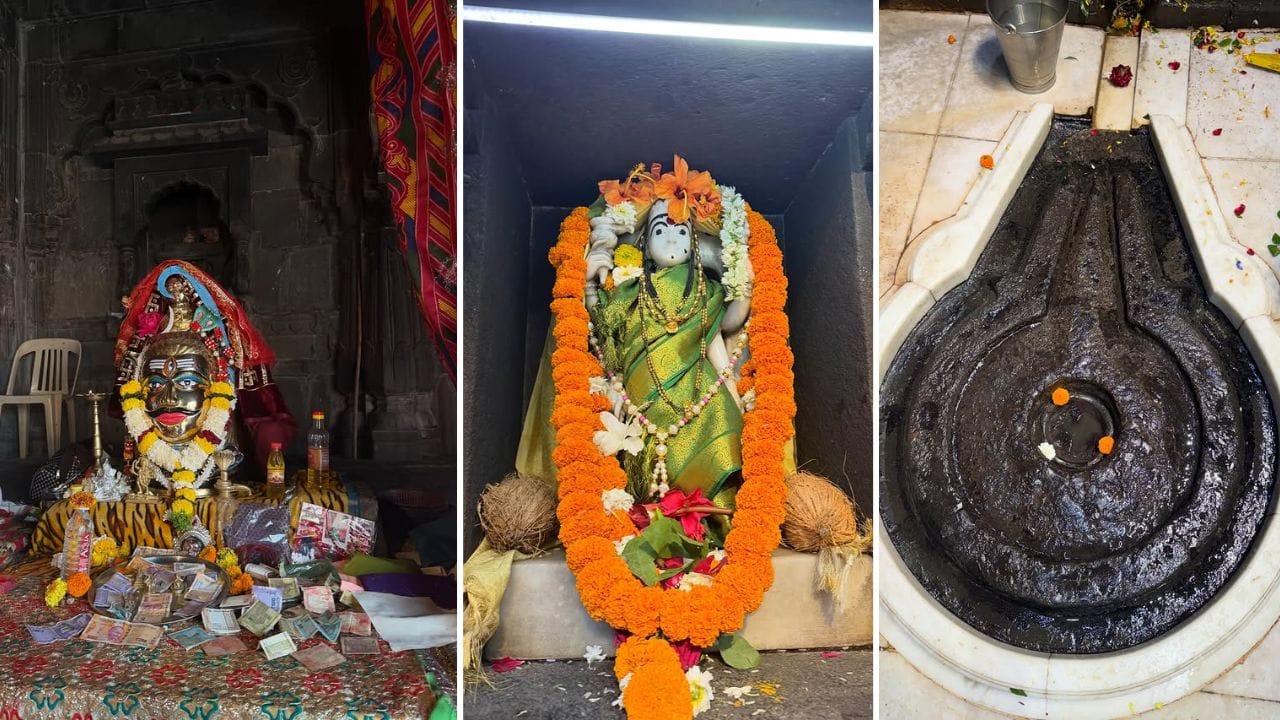
Trimbakeshwar Temple spiritual significance
Trimbakeshwar Temple is revered as one of the 12 Jyotirlingas, making it a major Shaivite pilgrimage centre. The presiding linga uniquely represents Brahma, Vishnu, and Mahesh through its three faces. The temple is also closely associated with the origin of the Godavari river, which is believed to emerge symbolically at Kushavarta Kund near the shrine.
Connection with saints and Varkari tradition
Sant Nivruttinath, elder brother of Sant Dnyaneshwar, attained samadhi at Trimbakeshwar. He was a disciple of Nath Guru Gahininath and played a key role in guiding Sant Dnyaneshwar. On his advice, Dnyaneshwar wrote the Dnyaneshwari, a Prakrut commentary on the Bhagavad Gita. Every year, lakhs of Varkaris gather here during Nivruttinath punyatithi.
Temple construction and history
The present structure was built between 1740 and 1760 by Peshwa Balaji Bajirao on the site of an older temple. Today, the temple is managed by the Trimbakeshwar Temple Trust, which also maintains facilities for pilgrims, including Shivprasad Bhakta Niwas with accommodation, lift access, and basic amenities.
Architectural features of Trimbakeshwar Temple
The temple is constructed mainly using black basalt stone and reflects a blend of Deccan, Hemadpanthi, and Maratha architectural styles. Its towering shikhara features intricate carvings and symbolic motifs. The mandapa is supported by strong stone pillars that enhance acoustics for Vedic chanting. The complex includes smaller shrines, a large courtyard, and the sacred Kushavarta Kund. Precision-cut stone blocks fitted without mortar highlight advanced craftsmanship.
How to reach Trimbakeshwar Temple
- Nearest airport: Nashik Ozar Airport, though flights are limited. Many travellers prefer Mumbai airport.
- From Nashik city: Around 30 km by road, taking about one hour via buses, taxis, or private cars.
- From Mumbai: Roughly 170–180 km, around four to five hours by road depending on traffic.
- From Pune: Travellers usually take a train to Nashik followed by a road journey.
Nearby attractions around Trimbakeshwar Temple
- Kushavarta Kund lies close to the temple and is believed to mark the symbolic origin of the Godavari.
- Brahmagiri hills offer peaceful surroundings, walking trails, and parikrama routes for devotees.
- Anjaneri hill, associated with Lord Hanuman, is popular for sunrise treks and short nature walks.
- Pandavleni caves near Nashik feature ancient rock-cut structures and scenic views.
- Saptashrungi Devi Temple, though farther away, is often included in pilgrim itineraries due to its spiritual importance.
Trimbakeshwar Temple remains a powerful shrine of devotion, history, and nature. With its sacred Jyotirlinga, saintly legacy, and Himalayan-style surroundings, the site continues to draw pilgrims and travellers seeking spiritual depth and cultural richness near Nashik.