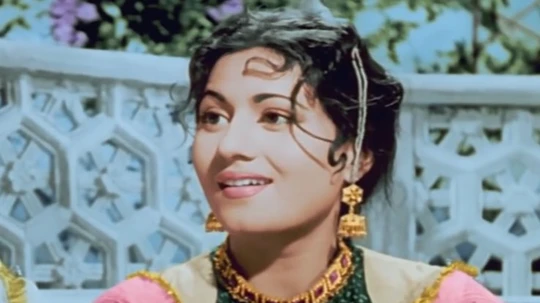
The buzz around potentially stepping into the shoes of has reignited interest in one of Indian cinema’s most captivating but heartbreaking stories.
Often remembered as the face of timeless beauty and grace, Madhubala’s life was far from the fairy tale many imagined. Behind her luminous screen presence lay years of struggle, sacrifice, illness, and emotional turmoil. As a new generation prepares to rediscover her legacy through cinema, her real story deserves a big, bright spotlight.
Madhubala – A Star Born Out Of Struggle
Born as Mumtaz Jehan Begum Dehlavi in 1933 in Delhi, Madhubala’s journey into films was not driven by ambition alone but by necessity. She grew up in a large family, becoming the primary breadwinner at a very young age. By the time she was seven, she had already begun working after many of her siblings died and father lost his job, first at All India Radio and then gradually making her way into films under the name Baby Mumtaz.
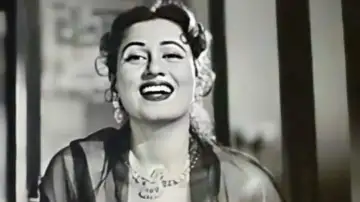
Her early years in cinema were filled with small roles and financial uncertainty. Despite working relentlessly, success did not come easily. Many of her initial films failed to make an impact, and she often accepted lower pay just to secure work. What set her apart, however, was a laughter that sounded that heaven on earth and an unmistakable screen presence that would soon turn heads.
Her breakthrough came with films like Mahal, where her haunting beauty and enigmatic performance established her as a leading lady. By the 1950s, she had become one of the highest-paid actresses in the country. Known as the “Venus of Indian cinema,” Madhubala could effortlessly move between genres.
Yet, even as her career soared, her personal life carried a shadow that few knew about. She was bleeding – physically and in her personal relationships.
Love, Loss And Madhubala’s Public Heartbreak With Dilip Kumar
Madhubala’s romance with Dilip Kumar remains one of the most talked-about relationships in Bollywood history. Their chemistry got them quick fame as a couple, especially after the success of Tarana. For a while, they were seen as a perfect pair, destined for a life together.
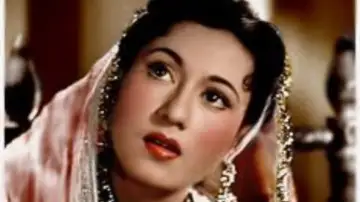
However, reality had other plans. Their relationship came under strain due to family interference and professional conflicts. The turning point arrived during the legal dispute surrounding the film Naya Daur. What could have been a temporary disagreement soon escalated into a public courtroom battle between Madhubala’s father and BR Chopra. Dilip Kumar’s testimony during the case in favour of Chopra deeply hurt Madhubala. The incident shattered her emotionally and marked the end of their relationship. It was a very public breakup, played out under media scrutiny, leaving lasting scars.
Despite the heartbreak, Madhubala continued working. She delivered some of her most memorable performances during this period, including her role as Anarkali in Mughal-e-Azam. The film went on to become a landmark in Indian cinema, but for Madhubala, the experience was physically and emotionally exhausting.
Madhubala’s Fame Shadowed By Illness And Loneliness
Unknown to many, Madhubala had been battling a serious heart condition since her early years. Diagnosed with a ventricular septal defect, she lived with a constant awareness of her fragile health. Over time, the illness worsened, limiting her ability to work and forcing her to step away from several projects. Even while shooting for demanding films like Mughal-e-Azam, she pushed through immense physical discomfort. The long production schedule, combined with her declining health and personal struggles, took a visible toll on her.
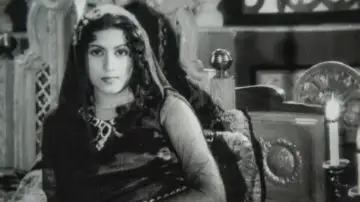
In 1960, she married Kishore Kumar, hoping for a fresh start. Soon after, the couple travelled to London seeking medical treatment. Doctors, however, advised against surgery due to the risks involved and gave her a limited life expectancy. She was also warned against leading a stressful life or having children. What followed was a period of increasing isolation. As her condition deteriorated, she spent much of her time away from the public eye. Reports suggest that her marriage too became strained over time, and she eventually moved back with her family.
During her final years, Madhubala was largely bedridden. She found solace in poetry and often revisited her own films, especially Mughal-e-Azam. Once surrounded by fame and admiration, she now lived a quiet, secluded life, connected to only a few close friends from the industry. In February 1969, after years of battling illness, Madhubala passed away at the age of just 36. Her fate was sealed when she was born with a disease that had no cure, but she made the world her own for the short time she was here. She gave Indian cinema more than she took from it.
If at all a biopic is made on the life of the actress, the most difficult part will be to capture the gleam Madhubala had in her eyes – the eyes that ones hypnotised India.