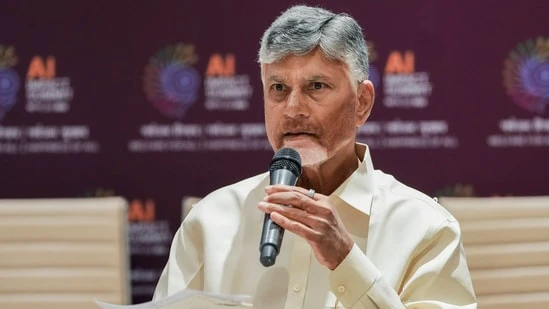
Andhra Pradesh chief minister N Chandrababu Naidu on Thursday announced a comprehensive “Population Management Policy,” stating that the government is shifting its focus from traditional family planning to “population care” in view of declining fertility rates and future demographic challenges.
Presenting the draft policy document in the state legislative assembly, Naidu said currently about three lakh families, accounting for 58% of the total number, have only one child, while around 2.17 lakh families have two or more children.
The chief minister explained that the state’s Total Fertility Rate (TFR) is currently 1.5, a sharp fall from 3.0 recorded in 1993, whereas the ideal level should be 2.1 to maintain demographic balance. If the TFR continues to decline rapidly, the number of working-age people could reduce significantly, potentially slowing economic growth, he explained.
To be sure, India’s TFR is currently at 1.9.
Declining population is of concern to almost all southern states, who are staring at a possible reduction in their proportionate representation in the Lok Sabha after the next delimitation exercise (which will happen after the ongoing National Census). Naidu himself had spoken of the need for a population policy last year, as did Tamil Nadu chief minister M K Stalin.
“People are our strength. Population is our strongest economic resource. The world is increasingly reliant on countries with large populations. Earlier, I promoted family planning but now I stress the need for population management. To avoid a human resource crisis in the future, the fertility rate in the state must rise. Joint families are disappearing. There’s growing concern about the declining population in South India. While Parliament seats may increase in the future, southern states could see reduced representation,” Naidu said in July 2025.
On Thursday, he focused more on the economic fallout.
“As economies grow, birth rates tend to decline, which can create workforce shortages and long-term economic challenges,” Naidu said.
The incentives proposed in the new policy include ₹25,000, at the time of birth, for couples having a second or a third child; ₹1000 a month in nutritional support for five years for the third child; and free education up to the age of 18 years for all children.
The government is also considering 10 months maternity leave (up from six months) for women having a third child, and two months paternity leave for men.
The chief minister said the policy has become crucial for the state as fertility rates are steadily declining, a trend already seen in countries such as Japan, South Korea and Italy.
Citing 2023 data, Naidu said about 6.7 lakh births were recorded in the state during the year. If the current trend continues, 23% of the state’s population could be over the age of 60 years by 2047, posing challenges for the economy and social welfare systems, he added.
Naidu said the policy will adopt a five-stage life-cycle approach to population management, built on five key pillars – Maatrutvam (motherhood), Shakti (empowerment), Kshema (wellbeing), Naipunyam (skills), and Sanjeevani (health care).
The government plans to extend support to women at every stage of life – from pregnancy to old age – while also assisting couples facing fertility issues, the chief minister said.
Naidu said the government is considering the establishment of Centres of Excellence for Maternity Care, where IVF (in-vitro fertility) services would be offered under a Public-Private Partnership (PPP) model with subsidies.
The Chief Minister also announced several measures aimed at increasing the workforce participation of women.
He pointed out that the female labour force participation rate in the state is currently 31%, and if it rises to 59%, the state’s Gross State Domestic Product (GSDP) could increase by nearly 15%.The measures include setting up childcare centres and women’s toilets in workplaces with at least 50 children, introducing “She Cabs” for women’s safety, and constructing a working women’s hostel in Visakhapatnam at a cost of ₹172 crore.
The chief minister said the draft Population Management Policy will be uploaded online for public feedback.
Naidu said the government plans to finalise the policy by the end of this month and implement it from April 1.