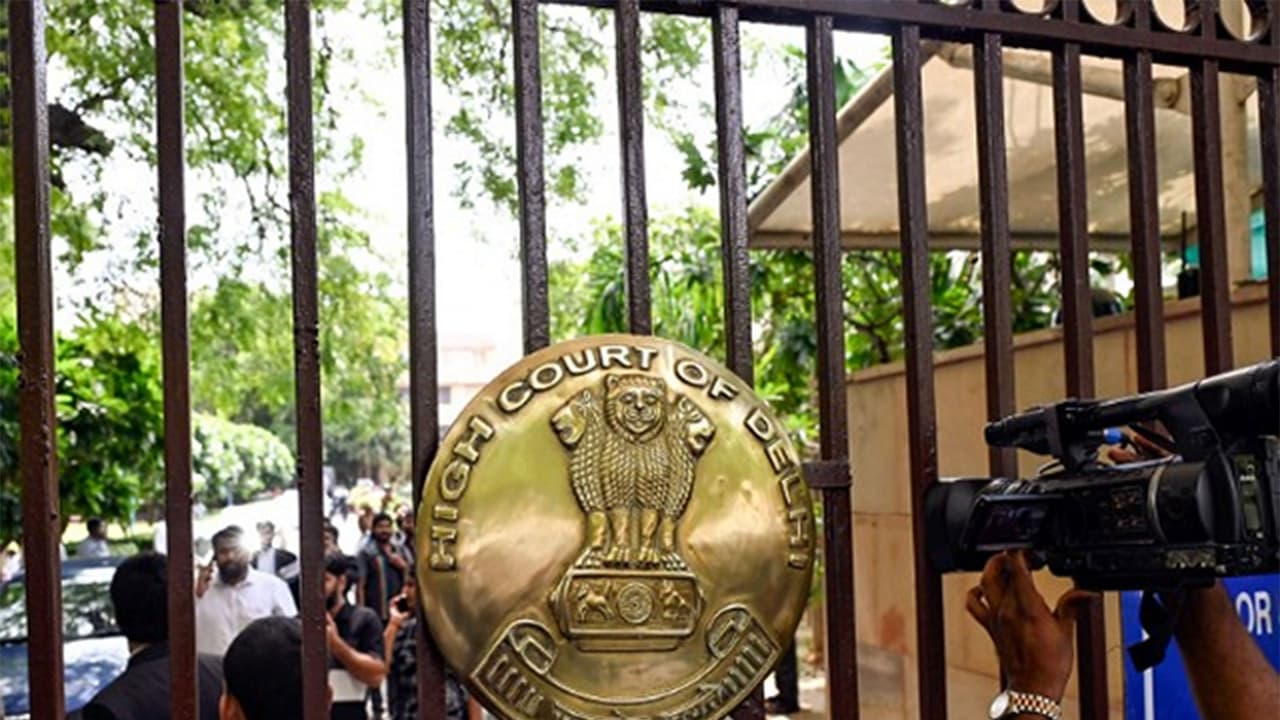
The Delhi High Court dismissed a review petition filed by former West Bengal Chief Secretary Alapan Bandyopadhyay, refusing to reopen its judgment that upheld the transfer of his case from the CAT’s Kolkata Bench to its Principal Bench in Delhi.
Reaffirming the narrow limits of review jurisdiction, the Delhi High Court on Saturday refused to reopen its earlier judgment upholding the transfer of proceedings involving former West Bengal Chief Secretary Alapan Bandyopadhyay from the Kolkata Bench of the Central Administrative Tribunal (CAT) to its Principal Bench in New Delhi.
The Division Bench of Justice C. Hari Shankar and Justice Jyoti Singh observed that a review petition cannot be treated as an appeal in disguise and courts cannot revisit conclusions merely because a party seeks reconsideration of arguments already examined. The Court held that interference in review proceedings is permissible only when a clear and self-evident error exists on the face of the record, which was absent in the present case.
Petitioner’s Grounds for Review
The petitioner had sought review of the High Court’s March 7, 2022 judgment that upheld the Tribunal Chairman’s decision to transfer his service-related challenge concerning a disciplinary chargesheet. It was argued that the earlier judgment suffered from legal errors, denial of effective hearing, and non-consideration of certain judicial precedents.
Court’s Rebuttal of Petitioner’s Arguments
On Denial of Hearing
However, the High Court found no merit in the contention that the petitioner was denied an adequate opportunity of hearing. The Bench noted that representation through counsel had been duly provided and clarified that the grant of a pass-over to enable the appearance of senior counsel is not an enforceable legal right.
On Violation of Natural Justice
Dealing with allegations of violation of principles of natural justice, the Court held that the Tribunal had complied with statutory requirements by issuing notice and granting a hearing before passing the transfer order. The Bench clarified that Section 25 of the Administrative Tribunals Act does not mandate the filing of written objections and requires only notice and opportunity of hearing.
Nature of CAT Chairman’s Transfer Power
The Court also rejected the petitioner’s principal argument that the power exercised by the CAT Chairman under Section 25 is judicial or quasi-judicial in nature. Upholding its earlier reasoning, the Bench reiterated that the power to transfer cases between Tribunal benches is essentially administrative and subject only to limited judicial review.
Addressing the submission that a retired government officer has a statutory right to institute proceedings before a Tribunal bench within whose jurisdiction he resides, the Court observed that such an interpretation would undermine the Chairman’s statutory authority to transfer cases. The Bench held that procedural rules cannot override powers expressly granted under the parent legislation.
Court Dismisses Review Plea
The High Court further noted that judgments relied upon by the petitioner either dealt with different statutory provisions or addressed issues unrelated to the transfer powers under the Administrative Tribunals Act, and therefore did not justify review of the earlier decision.
Finding that the review plea effectively sought rehearing of the matter rather than correction of any apparent error, the Court dismissed the petition as devoid of merit and disposed of all pending applications. (ANI)
(Except for the headline, this story has not been edited by Asianet Newsable English staff and is published from a syndicated feed.)