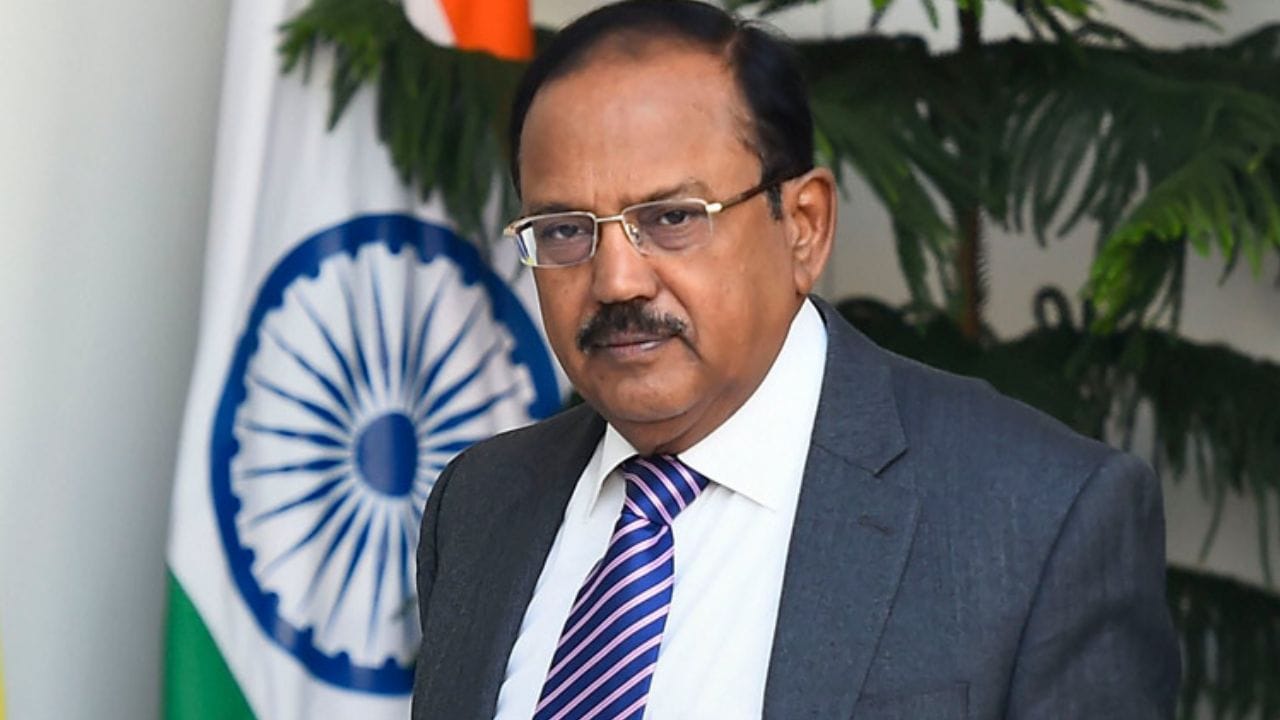
New Delhi: National Security Adviser Ajit Doval concluded a two-day visit to Canada with a series of high-level meetings that signalled a recalibration of India–Canada security engagement. Doval held talks with Nathalie Drouin, Deputy Clerk and National Security and Intelligence Advisor to the Canadian Prime Minister, under the framework of a regular bilateral security dialogue.
Shift from posturing to action
Government sources told CNN-News18 that the discussions sent a clear message that violent extremist organisations, including Khalistani-linked networks, do not have the backing of the Canadian government. Officials described the talks as a reset in ties, with an emphasis on operational cooperation rather than political signalling.
Sources said the dialogue focused on opening channels for real-time intelligence sharing on narcotics, cyber threats and extremism, with particular attention on Khalistani-linked groups. According to officials, the engagement reflected a shift in Ottawa’s approach from political posturing to concrete law enforcement action against anti-India activities.
What was discussed in the meeting
An official statement said both sides reviewed progress on initiatives aimed at ensuring the safety and security of their citizens. India and Canada agreed on a shared work plan to steer cooperation on national security and law enforcement, enabling more practical collaboration on identified priorities.
The two sides also decided to post security and law enforcement liaison officers in each other’s countries. Officials said this step would streamline communication between agencies and allow faster exchange of information on issues such as the illegal drug trade, including fentanyl precursors, and transnational organised crime networks.
Cybersecurity and immigration enforcement
Doval and Drouin committed to formalising cooperation on cybersecurity policy and information sharing related to cyber threats. They also agreed to continue discussions on cooperation in tackling fraud and strengthening immigration enforcement mechanisms.
Officials said coordinated cyber policy is increasingly important as extremist groups rely on online platforms for recruitment, radicalisation and fundraising. Such networks also exploit immigration loopholes to move operatives or evade scrutiny after targeting India, intelligence assessments cited by sources added.
Focus on rebuilding trust
Government sources told CNN-News18 that the Ottawa talks were aimed at rebuilding trust rather than creating optics. The decision to appoint law enforcement liaison officers reflects a shared understanding that Khalistani networks are being viewed through the lens of organised crime rather than free expression.
Doval raised concerns about extremist fundraising, intimidation and propaganda linked to drug money, document fraud and coercive practices within sections of the diaspora that target India. Officials said the emphasis on narcotics is strategic, as intelligence assessments point to synthetic drug profits flowing to transnational groups.
Political outreach and upcoming visit
During his visit, Doval also met Gary Anandasangaree, Canada’s Minister for Public Safety, which officials said underscored Ottawa’s intent to improve bilateral relations. Sources added that Canada is increasingly recognising that violent extremism directed at India from abroad is a public safety concern and not merely a diplomatic irritant.
The meetings come ahead of a likely visit by Canadian Prime Minister Mark Carney to India in the first week of March. India’s High Commissioner to Canada, Dinesh Patnaik, said Carney is expected to travel to New Delhi to sign agreements covering uranium, energy, critical minerals and artificial intelligence.