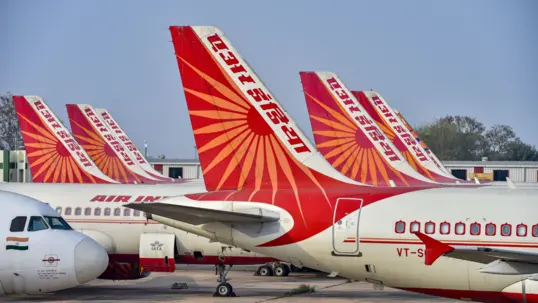
At least 17 passengers were injured when Air India flight AI-2379 dropped 300 feet on its Phuket-Delhi run – and they can take the airline to court.
Whether they would win is a harder question, and it has just become harder still: the pilot who later tested positive for a banned substance was, by early accounts, not even at the controls when the aircraft plunged.
Here is what the law allows, in plain terms.
Can they sue – and for how much?
Because this was an international flight, compensation is governed mainly by the Montreal Convention of 1999, which India has written into law through the Carriage by Air Act. It works in two layers.
For an ordinary injury claim, the airline has to pay – and passengers do not have to prove Air India did anything wrong. They only have to show they were hurt in an “accident” on board, and a sudden altitude loss that throws people around the cabin fits squarely within that. Then the compensation part holds. But for a very large claim, the airline can avoid paying only if it proves the injury was not caused by its negligence. Either way, passengers are compensated for the harm they can actually show, such as medical costs and treatment, rather than a fixed sum. They can also approach a consumer forum under the Consumer Protection Act, 2019, for “deficiency in service.”
What the experts say
Sanjay Lazar, aviation expert and CEO of Avialaz Consultants, is blunt about the gap between the right to sue and the standing to win: “The passengers, or anyone, may sue the airline at any time; it is a free country. However, they will get locus only if the final report has been released and culpability has been established in it – but personally, I doubt anyone would succeed. The question is: did the plane plunge because the said pilot was at the controls? No – from reports, we now know that he wasn’t. We are also informed that the plunge of 300 feet was because there was a stall warning, so it ended up saving passengers’ lives,” he said.
“This case could open up multiple possibilities under Indian law; remember, it is a first globally on both counts – pilot dope testing and the Airbus triple-hydraulic issue and transient technical faults of this nature. On the other hand, if technical faults are at play here, then it reveals an entirely new aspect and will need a thorough evaluation. Remember, we have the French investigators BEA and Airbus as part of the enquiry; they need to get to the bottom of this, as there are 11,300 Airbus A320s flying,” Lazar said.
Supreme Court advocate Harsh Dahiya points the sharper exposure at the carrier, not the individual: “The legal issue extends beyond the individual pilot. Airlines have a non-delegable duty to ensure that flight crew are medically and mentally fit to operate an aircraft. Where a pilot is found to have been under the influence of a prohibited substance, affected passengers could potentially pursue claims for negligence and deficiency in service by the airline. Courts and the DGCA may examine whether the airline’s internal controls, testing protocols, and supervisory systems were adequate.”
Where the pilot’s drug test fits – and where it doesn’t
The pilot-in-command’s mandatory post-incident test reportedly came back positive for cannabis after a confirmatory check, and he was taken off the roster. But an internal safety review, as reported, places him standing behind the first officer’s seat – not flying – when a stall warning and hydraulic faults triggered the drop. The Aircraft Accident Investigation Bureau (AAIB) has classified it a serious incident and, alongside France’s air-accident investigators, the Bureau of Enquiry and Analysis for Civil Aviation Safety (BEA), and Airbus, is examining the aircraft’s systems.
So the positive test does not, on current reporting, explain the plunge. What it does raise is a separate question about the airline’s own fitness-to-fly controls – exactly the ground Dahiya flags.
Injured passengers can seek compensation, but any claim that blames the airline will hinge on the final report – and early signs point to a technical fault, not the pilot.
On August 4, Air India flight AI-2379, an Airbus A320neo flying Phuket-Delhi, suddenly lost about 300 feet during cruise, injuring at least 17 people, including two crew with spinal injuries. Air India first blamed turbulence, but maintenance logs and an internal review point to a technical sequence – autopilot disconnect, a stall warning and hydraulic faults. The AAIB has classified it a serious incident, with France’s BEA and Airbus assisting. The pilot-in-command later tested positive for cannabis and was taken off the roster, though reports say he was not at the controls when the aircraft dropped. Sources suggest, in his interrogation, he reported a deficit of sleep, a prescription of medication and a request for a brief slumber as the flight began ascent. Investigations continue.