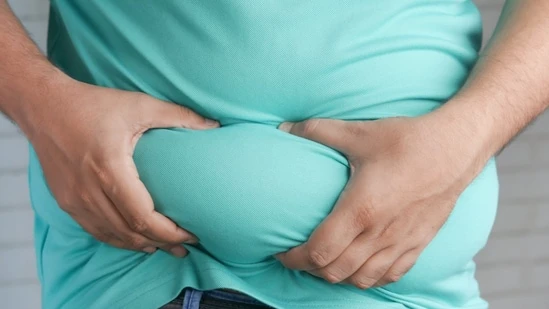
Losing the extra pounds around the belly is likely to be a popular resolution in the coming new year. However, actually achieving it is a steep hill to climb, especially for people in their thirties and older.
In an Instagram post on 21 December, Dr Saurabh Sethi, aCalifornia-based gastroenterologist trained at AIIMS, Harvard and Stanford Universities, stated that after the age of thirty, people are likely to find their belly fat increasing without making any noticeable change in their diet.
“The same foods lead to more belly fat. The same workouts give fewer results,” he noted. Even small “cheat days” have a much larger impact than before. This shift is not random, but rather the result of physiological changes that the body undergoes, as listed below.
“After 30, we naturally lose 3-8% of muscle per decade,” shared Dr Sethi. Less muscle results in the body burning fewer calories while at rest.
Daily energy burn is significantly reduced even if the body loses just one kilogram of muscle tissue. This is because muscles handle approximately 70-80% of glucose disposal.
As per the gastroenterologist, “When muscle mass drops, glucose stays in the blood longer and is more likely stored as abdominal fat.”
Declining insulin sensitivity
With age, our body’s sensitivity to insulin declines at the rate of 4-5% per decade. This means that the intake of the same amount of carbs as before will provide greater sugar spikes, which in turn lead to faster fat storage, especially around the waist.
Shift in hormones
As age progresses beyond 30, the levels of human growth hormone, testosterone and oestrogen are reduced, while the level of cortisol is increased. “This combination favours deep abdominal fat storage,” highlighted Dr Sethi.
As a cumulative result of all these changes, visceral fat (deep belly fat) accumulates faster than subcutaneous fat. “This fat surrounds organs and worsens insulin resistance and inflammation, ” stated Dr Sethi.
He pointed out that the effects are stronger if a person suffers from fatty liver, prediabetes or diabetes, or has high triglycerides, since insulin resistance pushes more fat into the abdomen and liver.
Signs that point to slowing metabolism
- Increase in belly size despite maintaining stable weight
- Energy crash in the afternoon
- Stronger sugar cravings
- Bloating after carbs
- Gaining fat in the upper abdomen
Tips to lose belly fat
- Ensure sufficient protein intake. The body needs roughly 1.2-1.6g of protein per kg of mass per day
- Participate in strength training at least three times every week
- Walk daily to improve insulin sensitivity
- Get 7-8 hours of sleep daily