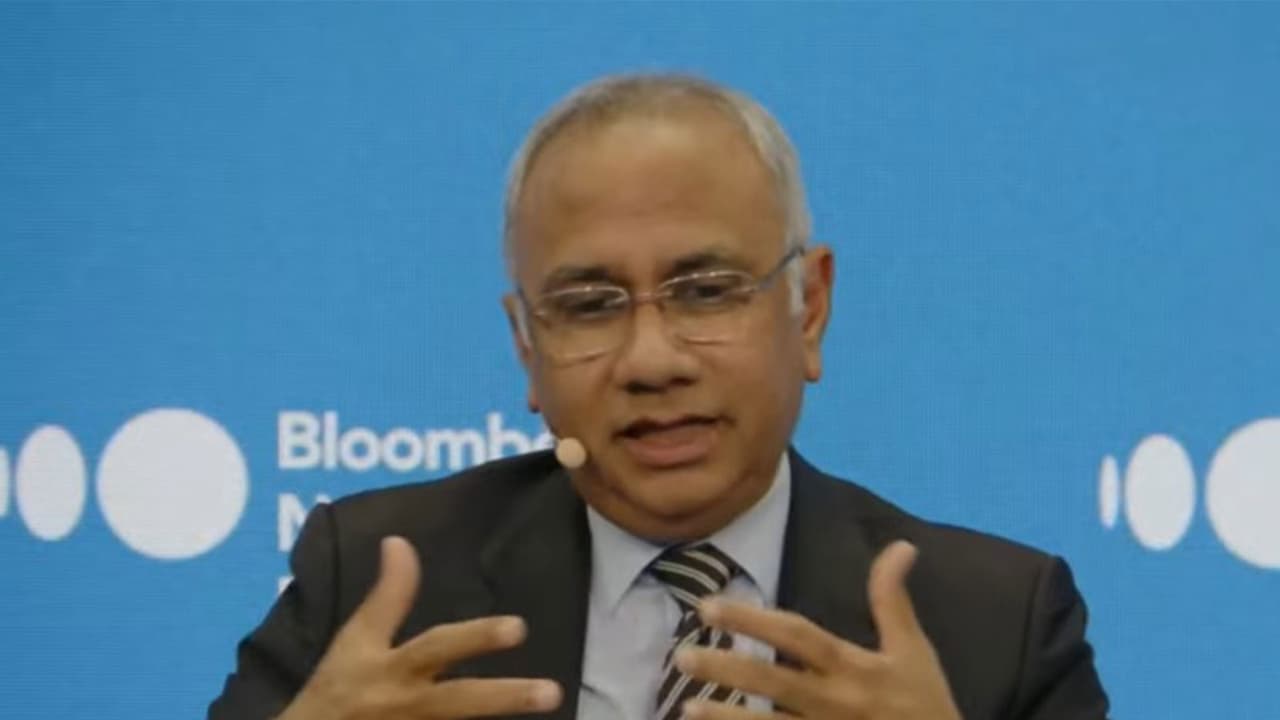
Infosys CEO Salil Parekh said high data centre and chip costs, and emerging cheaper AI models, pose risks to AI infrastructure investments. He highlighted uncertainty over the longevity of current capacity and its potential impact on utilisation.
High data centre and chip costs, coupled with emerging AI models offering cheaper inference, pose risks to AI infrastructure investments and future capacity utilisation, Infosys CEO Salil Parekh said. Speaking at the Bloomberg New Economy 2026, the Infosys CEO highlighted that the rapid expansion of AI infrastructure comes with technological risks, particularly due to the high cost of building data centres and uncertainty over how long existing capacity will remain relevant.
“In terms of the risk, I think, my sense is there is some risk in technology what we see in the cost of the buildout of the data centre capacity, the chips they are massively expensive today,” he said. He further pointed out that growing competition in AI infrastructure adding, “what will be the duration of the longevity of that capacity is not clear.”
Impact of New AI Models
Parekh further noted that new foundation models are being developed using approaches different from those adopted by the two major closed-model companies, which is potentially reducing inference costs and “can affect overal capacity usage.”
Infosys’s Focus on Adaptation and Skilling
Apart from this, he highlighted Infosys is already building AI agents for enterprise clients and developing methods to transition legacy technology to newer systems. However, he flagged, “What is critical there is really training and skilling our employees and making sure that they are available and ready to use all these techniques for our clients.”
Client Focus on Cost-Effectiveness
Parekh said companies are increasingly examining whether they can perform the same tasks using lower-cost tokens rather than relying on the latest AI models. “…clients have started looking can we use more cost tokens for the same work…so, do we need the most recent models?,” he said.
Data’s Growing Importance and Restrictions
Parekh further stressed, data is becoming “fastest growing commodity” particularly for large enterprises and governments. Adding data requirements are even more rigid now, he noted, rquirements of soverign cloud is further restriciting some of the capacity buildout.
“We will see more and more focus on that data and how that is being scaled up for enterprise and for the sovereign nation states.” (ANI)
(Except for the headline, this story has not been edited by Asianetnews Editorial staff and is published from a syndicated feed.)