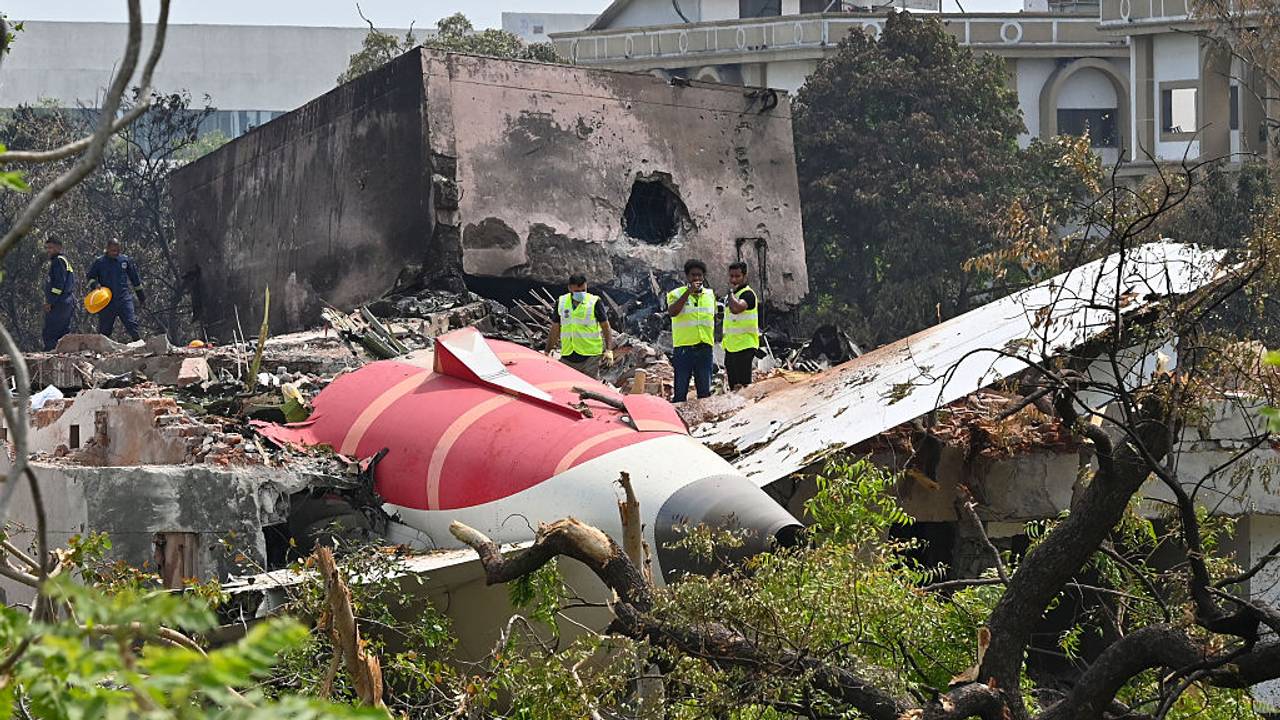
Investigation into the Ahmedabad plane crash revealed that the bodies of 53 victims sent to Britain contained dangerous levels of toxic chemicals. These included formalin, carbon monoxide and cyanide, which also endangered workers in London.
New Delhi: A very shocking thing has come to light in the investigation of Ahmedabad Air India plane crash. A senior British judicial official has revealed that dangerous levels of poisonous chemicals have been found in the bodies of several victims returned to the UK. On June 12, a Boeing 787 plane crashed shortly after takeoff in Ahmedabad. Professor Fiona Wilcox, who is leading the investigation into the deaths of 53 British citizens who died in the accident, released a report on Tuesday, December 2, outlining how such deaths can be prevented in the future.
The London-bound plane fell from a height of about 600 feet just 32 seconds after takeoff, killing all but one of the 242 people on board. Along with this, it fell on a hostel, due to which 19 people present there also lost their lives. The only person to survive the accident was Vishwas Kumar Ramesh, a British citizen of Indian origin. According to Wilcox’s report, staff at London’s Westminster Public Mortuary found formalin at “dangerously high” levels while handling passengers’ remains. This is a very poisonous chemical. He said formalin, which is commonly used to preserve dead bodies, can cause serious respiratory problems.
Wilcox said that this shocking thing came to light after opening the coffin and removing the shroud from the bodies. In addition to excessive formalin, dangerous levels of carbon monoxide and cyanide were also found inside the mortuary. “When the coffins of the repatriated dead were opened, formalin levels were found to be dangerously high, and carbon monoxide and cyanide were also found at dangerous levels,” the report said.
Formalin is used to save dead bodies
According to Wilcox, the bodies returned to Westminster Public Mortuary were brought back in lined coffins, but the presence of formalin was felt in 40% of them. This chemical is routinely used in preservation, but in this case, the levels were so high that it posed an immediate danger to mortuary workers when the coffin was opened. Their report further stated, “Concerns have been raised in mortuaries about the dangers posed by formalin to the health of all mortuary users.”
Wilcox stressed that no inquest had yet begun, but that he exercised his duty under Rule 28 because the manner of preservation and transportation of the bodies posed a “serious danger” to all staff handling them. He said the danger became clear as soon as the coffin was opened in London, which led to an immediate investigation.
Expert advice was then sought and measures were implemented to reduce the risk, including environmental monitoring, breathing apparatus, and special protective equipment. He warned that awareness of the dangers of exposure to formalin in UK mortuaries is inadequate, putting anyone working in such facilities at potential risk.
Formalin spreads cancer
According to a PTI report, evidence from experts has warned that formalin contains formaldehyde, a volatile and carcinogenic substance that quickly spreads into the air. Excessive exposure can cause metabolic acidosis, bronchospasm, pulmonary edema, and death. Heat and light can break down this chemical to release carbon monoxide, while its reaction with ammonia can produce cyanide, which is often found during decomposition.
According to the report, demanding immediate corrective action, Wilcox has asked for a response from the UK departments of Health and Social Care and Housing, Communities and Local Government within 56 days to ensure such threats do not happen again.
A British government spokesman acknowledged the seriousness of the report while expressing condolences. PTI quoted him as saying, “Our deepest condolences go out to the families of all those killed in this tragic accident. This is an extremely shocking case. We will respond to and learn from all reports to prevent future deaths, and will consider it thoroughly before responding formally.”