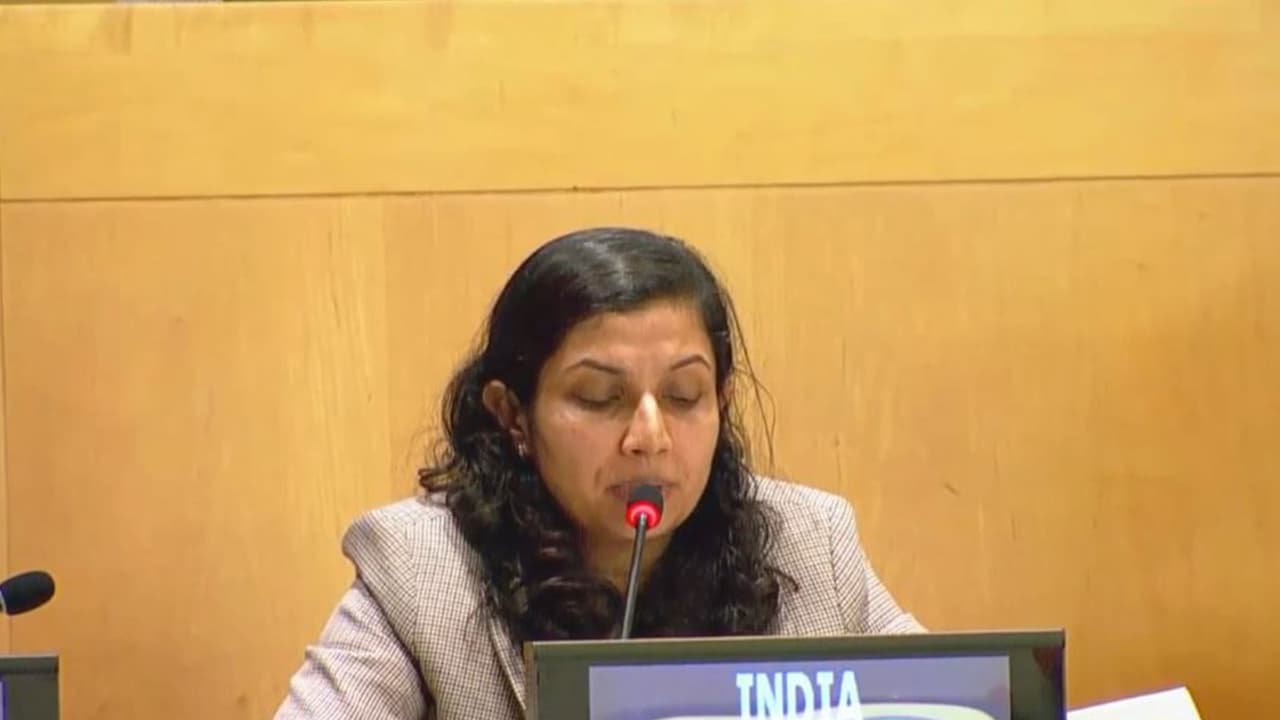
India called for balanced climate action at a UN event ahead of COP31. Counsellor Soumya Nair highlighted the need for greater climate finance, technology transfer for developing nations, and respecting national development priorities and circumstances.
India Calls for Equitable Climate Action
India has called for balanced and equitable climate action ahead of COP31, stressing the need for greater climate finance, technology transfer and capacity-building for developing countries while respecting their national circumstances and development priorities. Soumya Nair, Counsellor at India’s Permanent Mission to the United Nations, on Friday (local time) delivered India’s statement at a special event convened by the President of the UN General Assembly (PGA) ahead of COP31, entitled ‘A Planet Fit for the Future: Restoring Trust through Climate Action’.
#IndiaAtUN Soumya Nair, Counsellor, delivered 🇮🇳’s statement at the special event convened by the @UN_PGA ahead of COP31 entitled, “A Planet Fit for the Future: Restoring Trust through Climate Action”, highlighting: ➡️ Climate action grounded in equity and common but differentiated responsibilities and respective capabilities (CBDR-RC), respecting national circumstances and development priorities. ➡️ Greater climate finance, technology transfer and capacity-building for developing countries. ➡️ Adaptation that serves vulnerable communities and just transitions that safeguard livelihoods. ➡️ 🇮🇳’s achievement of 50% non-fossil installed electricity capacity, five years ahead of its 2030 target. ➡️ Inclusive, consensus-based climate action towards a balanced and equitable COP31 outcome. @PMOIndia @MEAIndia @IndianDiplomacy @PIB_India @airnewsalerts @DDNewslive @UN — India at UN, NY (@IndiaUNNewYork) October 16, 2026
Restoring Trust Through Implementation
In the statement shared by India at the UN in New York in a post on X, Nair said, “As India emphasised at Pre-COP in Fiji, our shared ground exceeds our differences. COP31 must restore trust through balanced implementation.”
“Implementation must respect national circumstances and development imperatives, with practical support enabling developing countries to pursue nationally determined climate pathways,” she added.
Call for Finance and Technology Transfer
Highlighting India’s priorities, Nair said that greater finance, technology transfer and capacity-building were essential for enhancing climate ambition.
“The Article 9.1 work program under the Paris Agreement should advance developed countries’ finance obligations, addressing scope and modalities first. Article 6 cooperation can mobilise additional resources,” she said.
She further called on COP31 to advance the “Bellm Technology Implementation Program” and remove barriers to technology transfer.
Focus on Climate Adaptation
On climate adaptation, Nair stressed that the global goal on adaptation must serve vulnerable communities and be supported by predictable and accessible finance, technology and capacity-building, without becoming overly technical or imposing additional reporting burdens.
“India is finalizing its first national adaptation plan,” she said, adding that the country had demonstrated climate-resilient agricultural technologies in 448 villages across 151 vulnerable districts.
She also highlighted India’s Jal Shakti Abhiyan programme, which strengthens water conservation and rainwater harvesting.
Ensuring a Just Transition
On just transition, Nair called for the operationalisation of a mechanism grounded in equity and the principle of common but differentiated responsibilities and respective capabilities (CBDR-RC).
“COP31 should operationalise the just transition mechanism grounded in equity and common but differentiated responsibilities and respective capabilities, safeguarding livelihoods and nationally determined development pathways,” she said.
She also cautioned against unilateral trade measures, including carbon border adjustment mechanisms, shifting the burden of historical emissions onto developing countries.
India’s Climate Achievements
Highlighting India’s climate achievements, Nair said, “India achieved 50 per cent non-fossil-installed electricity capacity 5 years ahead of its 2030 target.”
She pointed to the PM Surya Ghar programme, which expands rooftop solar, and the National Green Hydrogen Mission, which promotes clean energy innovation.
She also highlighted India’s role in advancing technology cooperation, capacity-building and clean energy access through the International Solar Alliance and the Global Biofuels Alliance.
Emphasis on Multilateral Cooperation
Emphasising the importance of multilateral cooperation, Nair said climate action must remain inclusive and consensus-based, with the global stocktake strengthening the implementation of existing commitments, particularly on finance and the means of implementation.
“It should not become a vehicle for new mitigation obligations or sector-specific prescriptions which are outside the UNFCCC process,” she said.
Nair expressed India’s full support for the COP31 presidencies and said the country stood ready for open dialogue, technical cooperation and targeted capacity-building to achieve a balanced and equitable outcome, particularly for the most vulnerable.
(ANI)
(Except for the headline, this story has not been edited by Asianet Newsable English staff and is published from a syndicated feed.)