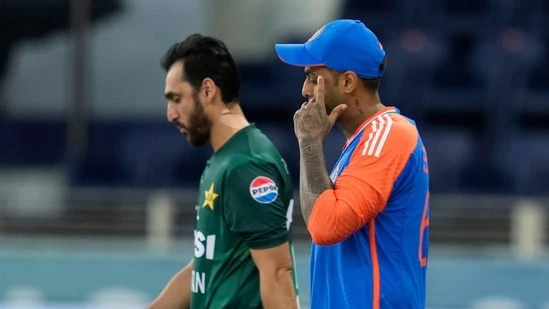
Cricket has a funny way of turning even the loudest rivalry into the quietest math problem. India vs Pakistan still feels like a coin toss in the gut – but on paper, in this tournament, it is not.
On February 15 at the R. Premadasa Stadium, India arrive as the side that the table, the margin, and the momentum say is supposed to win.
Why India are supposed to win
Let us start with the boring stuff – because boring is usually true. India and Pakistan are both 2-0 in Group A, but they are not travelling at the same speed. India’s net run rate is +3.050, while Pakistan’s is +0.932. That gap is basically a neon sign that says – same points, different dominance. India’s last outing was a demolition: 209 for 9 and then Namibia bundled out for 116, a 93-run win. Zoom out, and it gets louder. India are the defending champions, and the tournament narrative around them isn’t about finding form – it is sustaining a run. The question isn’t ‘Can we?’ It is how we do not give it away?
The rivalry tax
India vs Pakistan is the one game where logic has to pay an entry fee. The audience doesn’t watch it like any sport; they watch it like a memory. Which is why India are the favourites often sounds like a dare. Pakistan have also played twice in this tournament, but their path has shown the other side of T20 cricket – the one where you survive. In the opener against the Netherlands, Pakistan chased 148 in 19.3 overs, needing a late rescue from Faheem Ashraf to win by three wickets. It’s a reminder that this side can be dragged into a scrap, and scraps are exactly where this rivalry lives.
Hence, on this Sunday, India are carrying expectation; Pakistan are carrying possibility. One bad phase and those two trade places.
Three doors Pakistan can walk through
Pakistan don’t need to be better for 40 overs. They need to win a few small rooms inside the game.
Door 1: Early wickets. If India lose two in the powerplay, the innings shifts from freedom to repair.
Door 2: Middle-over control. Premadasa is a control venue more often than a chaos venue. In T20Is here, chasing teams have won 35 off 55 compared to 23 wins batting first, and the average first innings score is around 142. If Pakistan can make 7-15 a grind, the innings starts asking questions.
Door 3: Death-overs mess. Pakistan’s best version of T20 is when the last four overs feel like a panic room. The Netherlands game matters here not for who they played, but for how comfortable Pakistan were living late. And yes, captaincy will play a big role. Salman Ali Agha is leading the Pakistan team in this World Cup. In a rivalry match, calm leadership wins you the right phases at the right time.
What India needs to do
India’s job is not to be heroic. It is to be clinical. Treat the first six overs to make a statement. Read Premadasa properly: if chasing has historically been the friend here, the toss is not theatre – it should be a part of the plan. And take the game by phases. Pakistan’s upside is volatility, India’s advantage is stability. Because the truth, quietly sitting under all the noise, is this: India isn’t walking in hoping to win. They are walking in, expected to win. And expectation is a heavier bag than hope.