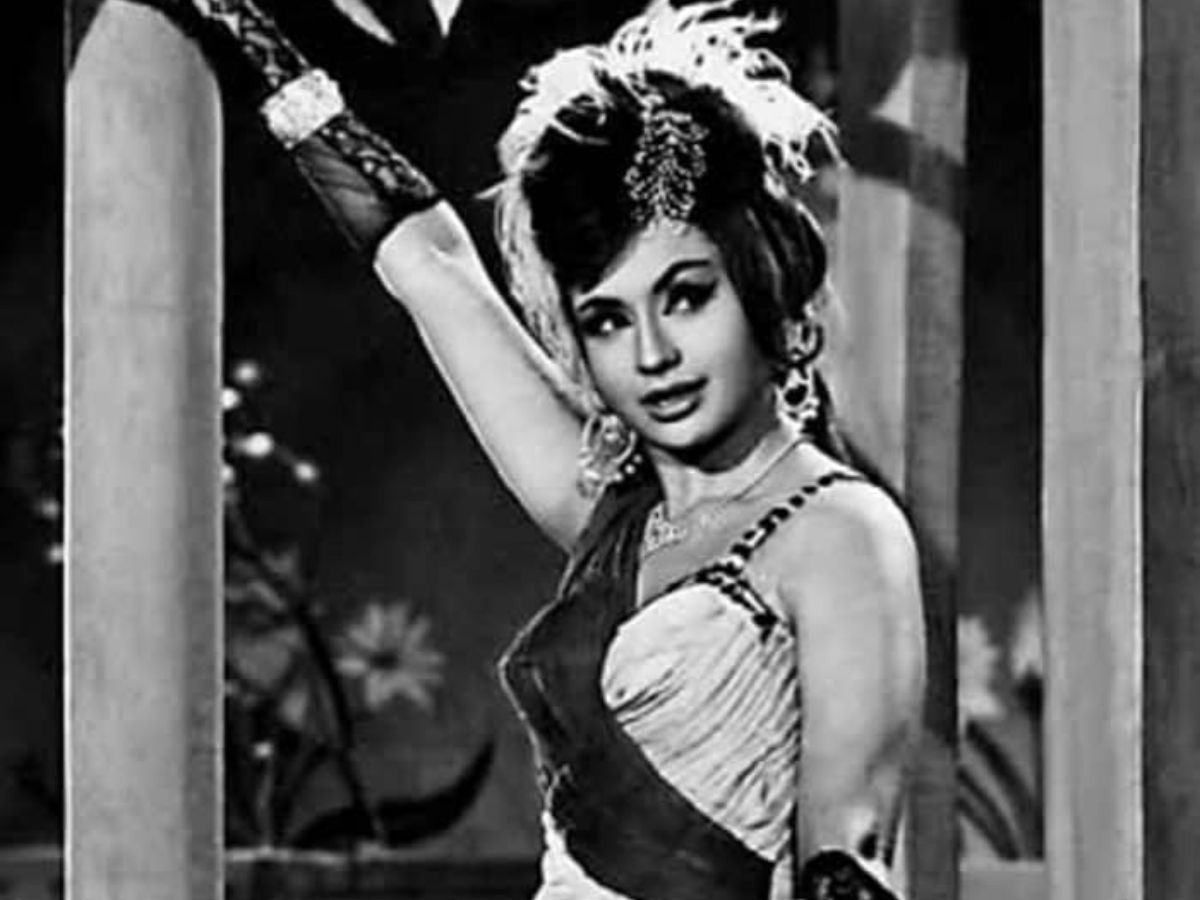
Before Helen became one of Bollywood’s most recognisable dancers, she was a three-year-old child fleeing war-torn Burma with her family. During World War II, Helen and her family were forced to leave Burma, now Myanmar, after the Japanese invasion. They attempted to escape by air, but the aircraft they hoped to board was bombed. With no other option, Helen, her mother and younger brother began the arduous journey on foot towards India.
The trek lasted nine months. It was a journey marked by hunger, illness, death and unimaginable hardship. Yet Helen survived it and eventually went on to become one of Hindi cinema’s most iconic performers.
Why Did Helen Leave Myanmar?
Helen was born in Rangoon, Burma, on November 21, 1938. She was only around three years old when her family fled the country during the Japanese invasion. In a conversation with Arbaaz Khan, Helen recalled that around 300–350 people had migrated during the crisis. Her family included her mother, her younger brother and Helen herself. Her mother was also pregnant at the time.
The family first tried to escape by plane. However, according to Helen’s recollection, the aircraft at the Burma airport was bombed by the Japanese. She remembered her mother shielding her children during the bombing. With the escape by air no longer possible, the family joined others and began walking out of Burma.
How Long Did Helen Walk From Myanmar To India?
Helen said the journey from Burma to India lasted nine months. She was just a child during the trek and travelled with her mother and younger brother across difficult terrain. The family eventually crossed into India and reached Assam before travelling onward to Kolkata.
The journey was devastating for the family. Helen’s mother was pregnant when they began the journey, but she lost the baby along the way. Other accounts of Helen’s childhood have described how the larger group suffered from starvation and illness during the journey. A 2024 Indian Express account reported that many people travelling with the group did not make it to Dibrugarh, while Helen and her family eventually reached Assam.
How Did Helen Survive The Journey?
Helen has credited her mother for helping the family survive the ordeal. In her conversation with Arbaaz Khan, she said she did not remember every detail because she was so young but remembered incidents from the journey. Her mother later told her about the family’s struggle as they walked out of Burma.
The family eventually crossed into India through Assam. From there, they travelled to Kolkata, beginning a new chapter after escaping the war. Helen’s childhood was therefore shaped by two completely different realities — first, surviving a wartime refugee journey, and later, trying to build a life in India.
How Did Helen Enter Bollywood?
Helen eventually moved towards the Hindi film industry and began working as a chorus dancer in the early 1950s. Her family’s financial struggles played a major role in her decision to work. According to accounts of her early life, Helen left school and began working to support her family. She gradually moved from background dancing to more prominent performances.
Her breakthrough as a solo dancer came with Howrah Bridge in 1958, particularly through the song Mera Naam Chin Chin Chu. The performance helped establish Helen as one of Hindi cinema’s most sought-after dancers.
Why Did Helen Become Bollywood’s Iconic Dancing Queen?
Helen transformed the way dance performances were presented in Hindi films. During the 1960s and 1970s, her cabaret and dance numbers became a major part of Bollywood entertainment. Songs such as Piya Tu Ab To Aaja, Yeh Mera Dil and O Haseena Zulfonwale Jane Jahan remain closely associated with her screen legacy.
Her popularity was so strong that Helen became synonymous with the club and cabaret numbers that were common in Hindi cinema during that period. Scroll described her as the original “Helen song” performer, noting that she became a defining presence in such sequences. But Helen was not limited to dance performances. She also took on dramatic roles, including her performance in Lahu Ke Do Rang, for which she won the Filmfare Award for Best Supporting Actress.
Helen’s Journey From War Survivor To Bollywood Icon
Helen’s story is unusual even by Bollywood standards. She arrived in India as a young refugee after a nine-month journey from Burma, having witnessed the devastation caused by war and faced severe deprivation along the way. Years later, she became one of the defining performers of Hindi cinema’s golden era.
Born in Burma on November 21, 1938, Helen went on to build a career spanning decades and appeared in hundreds of films. She was also honoured with the Padma Shri in 2009 for her contribution to Indian cinema.
From a child walking through a war-torn landscape to one of Bollywood’s most celebrated dancers, Helen’s journey remains one of the most extraordinary stories in Indian cinema.