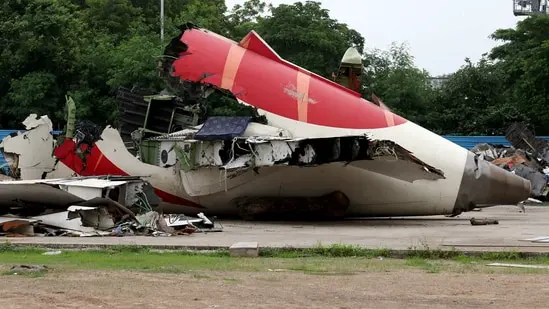
The Aircraft Accident Investigation Bureau (AAIB) is expected to complete its probe into last year’s Air India Flight AI-171 crash within six weeks, with “a draft final report” ready by October, the Centre told the Supreme Court on Tuesday.
The draft cannot be released immediately, the Centre said in an affidavit filed ahead of a hearing on Friday in a batch of petitions seeking an independent investigation into the crash that killed 260 people, including 241 on board.
The government cited International Civil Aviation Organisation (ICAO) framework and the Aircraft (Investigation of Accidents and Incidents) Rules, 2025 that mandates a draft air crash investigation report to be circulated to states participating in the probe – in this case, the US’ National Transportation Safety Board as accredited representative of the state of design and manufacture – for their “significant and substantiated comments”. The consultation could take 30 to 60 days depending on the complexity of the responses, the Centre stated.
Filed on behalf of the civil aviation ministry and AAIB, the affidavit opposed petitioners’ demands for a court-monitored or independent inquiry, arguing the investigation strictly follows international standards and Indian law and leaves no scope for judicial supervision or a parallel probe. The matter is listed for July 17 before a bench led by Chief Justice of India Surya Kant.
“In all probability, the investigation activities, subject to the resolution of the pending external dependencies set out therein, are anticipated to be completed within approximately 6 weeks,” the affidavit said, adding that the draft final report “is expected to be ready approximately in October 2026” after the analysis phase.
The AAIB said aviation accident investigations exist solely to prevent future accidents, not to determine civil or criminal liability, and that Indian law expressly separates them from judicial or criminal proceedings. Appointing another investigating body or ordering judicial oversight would breach the “sole investigation authority” principle under Annex 13 of the ICAO framework, it said, noting that it alone holds statutory custody of the wreckage, flight recorders and other investigative material. Of the 66 procedural steps mandatory for a serious accident investigation, the AAIB said it has completed 49.
Every safeguard – evidence preservation, recovery and analysis of flight recorders, participation of accredited representatives, technical examination of aircraft systems, stakeholder consultation and circulation of the draft report – is being “scrupulously followed”, it said.
The Bureau also defended the confidentiality around the probe, saying cockpit voice recordings, crew communications, witness statements, medical records and the contents of the draft report are protected from public disclosure to preserve the integrity of the investigation and meet India’s international obligations.
Since its establishment in July 2012, the AAIB has completed 218 investigations – 97 accidents, 120 serious incidents and one incident – a record it said establishes it as technically competent and fully capable of investigating the Ahmedabad crash.
Air India flight 171, a Boeing 787 Dreamline, crashed moments after take off on June 12, 2025.Except for one, all on board and 19 people on the ground were killed.
Among the petitions seeking an independent probe is the father of Captain Sumeet Sabharwal, one of the pilots, who has challenged the AAIB’s preliminary report over the speculation it triggered about possible pilot error.
NGO Safety Matters Foundation has sought a formal court of inquiry. At the previous hearing, the top court had asked the Centre and the Directorate General of Civil Aviation to place on record the procedural protocol governing the AAIB probe, observing that proceedings should not become a “blame game” and that it would first examine whether the investigation conforms to the prescribed legal and international framework before considering any parallel inquiry.