
New Delhi: The state of agreeing with someone or something. That’s how the Cambridge English Dictionary describes the word “consent”. Sadly, Indian men love to brush it off as feminist propaganda to take over the masculine clan (as if it were possible anyway). When it comes to marriage, a wife’s body has been treated as an unquestioned part of marital life, something she was expected to endure rather than negotiate. In such a context, the very act of speaking about consent becomes both necessary and quietly radical.
Now, along comes Chiraiya on JioHotstar, and it’s dragging all that hidden pain out into the light. And of course, social media is erupting with rage. Starring Divya Dutta and Prasanna Bisht, the six-episode web series doesn’t shy away from tough topics: marital rape, emotional abuse, and the deep social conditioning that makes so many women stay silent.
Before the end credits roll, the series flashes a stark statistic drawn from India’s National Family Health Survey (NFHS-5), conducted between 2019 and 2021 by the International Institute for Population Sciences (IIPS) under the Ministry of Health and Family Welfare. The survey found that around 5.6% of ever-married women aged 18–49 reported experiencing sexual violence by their husbands.

Prasanna Bisht in a still from JioHotstar’s Chiraiya
Speaking to News9Live, matrimonial lawyer Shaili Mazoomdar explained that in her practice, cases involving forced sex within marriage are often pursued under alternative legal provisions because marital rape itself is not criminalised in India.
“I see it often enough, unfortunately,” she said. “Women can seek relief under the Protection of Women from Domestic Violence Act, 2005, particularly under provisions that recognise sexual abuse, humiliation or violence against dignity. While forced sex within marriage may not be recognised as rape under criminal law, it can fall under the broader definition of ‘cruelty’ in matrimonial disputes.”
Mazoomdar added that certain sexual acts, historically described as “sodomy,” have also been cited as grounds for divorce under various personal and civil matrimonial laws. However, she noted that the Supreme Court’s ruling in Navtej Singh Johar vs Union of India, which decriminalised consensual same-sex relations, has introduced some legal ambiguity in such arguments, particularly because consent is often presumed within marriage.

Divya Dutta and Prasanna Bisht in Chiraiya
Is consent a part of marriage?
“It would be inaccurate to say that consent does not exist within marriage,” says Mazoomdar. “A more precise way to frame it is that consent is often assumed within marriage.”
She explains that marriage has traditionally been understood to include sexual and conjugal relations, and this expectation has historically been used, sometimes misused, to shield husbands from allegations of marital rape. “Legally speaking, sexual intimacy is considered a right available to both spouses. In fact, the voluntary and continuous refusal to engage in sexual relations, known as ‘constructive desertion’, can be cited as a ground for divorce by either partner under several matrimonial laws,” she notes.

Chiraiya on JioHotstar
Responding to whether shows like Chiraiya influence how authorities approach sensitive complaints, Mazoomdar says media portrayals can be powerful but complex.
“High-profile media depictions are always a double-edged sword. On one hand, they help create awareness and break the taboo around discussing difficult issues. On the other, if a subject is presented without balance, it can lead to misrepresentation or prejudice in the public imagination,” she explains.
What legal options do women have when it comes to marital rape?
When asked what legal options a woman has today if she faces forced sexual advances from her husband, Mazoomdar says the law does provide certain avenues for protection, even though marital rape itself is not criminalised.
“A woman can seek protection under the Protection of Women from Domestic Violence Act, 2005, if she finds herself subjected to such treatment,” she explains. “The Act recognises sexual abuse as a form of domestic violence and allows women to seek protection orders, residence rights, and other forms of relief.”
Mazoomdar adds, “Just because the conduct is not explicitly labelled as ‘marital rape’ in criminal law does not mean it is entirely ignored or condoned by the legal system,” she notes. “There are still legal mechanisms available for women to seek protection and a change in their circumstances.”
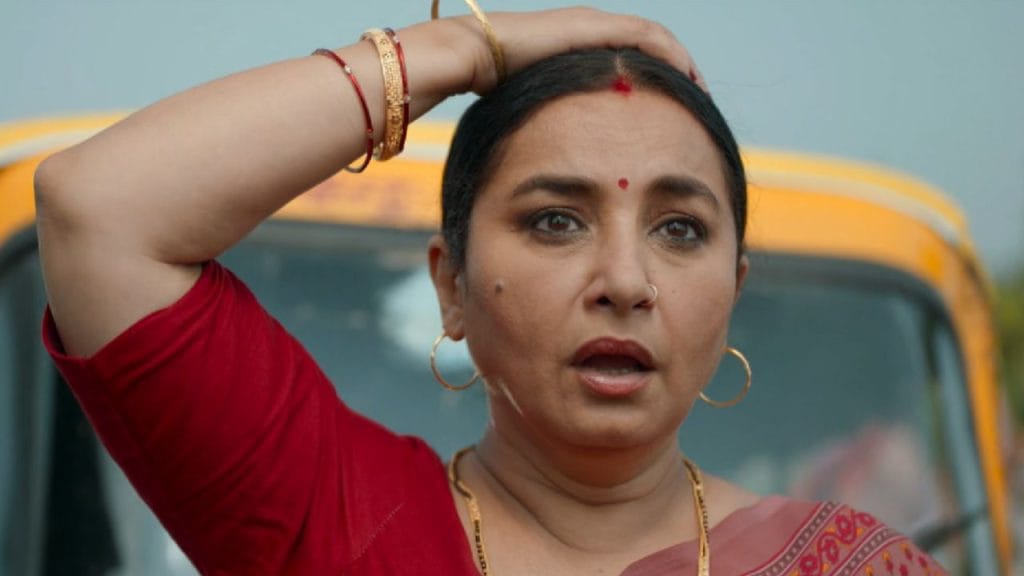
Divya Dutta in JioHotstar’s Chiraiya
Bottom line
Chiraiya isn’t just another show you stream and forget. It’s more like a mirror, forcing society to look at itself, especially when it comes to understanding consent in marriage, a subject people still tiptoe around. The outrage online says it all: folks are uncomfortable, and that’s the sign things need to change.
Notably, a series like Chiraiya won’t rewrite the law overnight, but it does carry the potential to mess with the assumptions that keep harmful ideas alive. Change starts when people are willing to rethink what respect, partnership, and consent really mean in a marriage. Not just in a courtroom, but in everyday life. That’s how real reform begins.