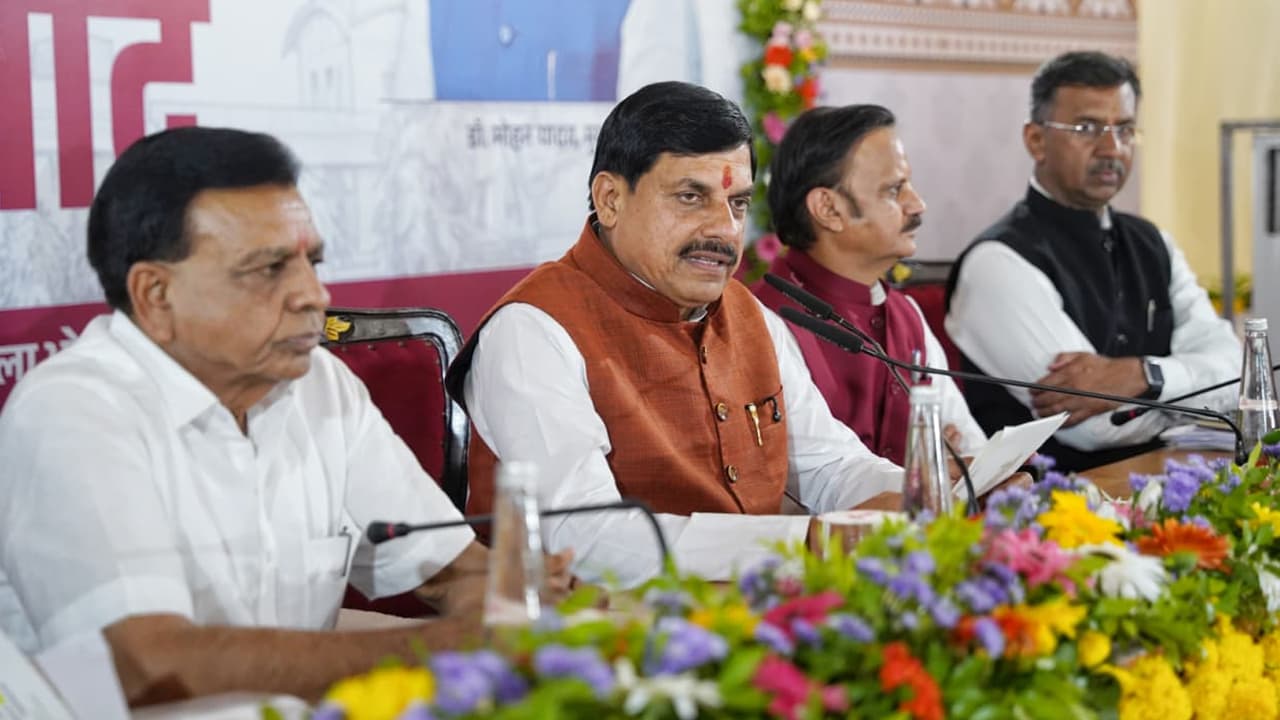
Madhya Pradesh Cabinet approved Uniform Civil Code 2026. Uniform law will apply in all personal matters including marriage, divorce, succession and live-in.
Bhopal. The day of 19th July became historic for Madhya Pradesh. In the cabinet meeting held in Jagdishpur under the chairmanship of Chief Minister Dr. Mohan Yadav, the proposal to implement ‘Uniform Civil Code (UCC)’ in the state was approved. With this, the way has now been cleared for the implementation of uniform laws for citizens of all religions in personal matters like marriage, divorce, inheritance, maintenance and live-in relationships.
Chief Minister Dr. Mohan Yadav said that this step will strengthen the spirit of equality, justice and secularism enshrined in the Indian Constitution. He said that the purpose of the proposed law is to ensure equal civil rights for all citizens, so that the inequalities caused by different personal laws can be eliminated.
The biggest focus will be on giving equal rights and protection to women
The Chief Minister said that the most important objective of the Uniform Civil Code is the protection and empowerment of women. Now women will get equal rights in matters like marriage, divorce and inheritance. This is being considered a big step towards ending the discrimination against women due to different personal laws over the years.
He said that this law will give equal rights to both men and women. Religious traditions, customs and social conventions will also be respected, provided they are consistent with public policy and morality.
The spirit of Article 44 of the Constitution will get a new basis
The Chief Minister said that under the Directive Principles of State Policy in Part 4 of the Indian Constitution, Article 44 gives the responsibility to the State to make efforts to implement the Uniform Civil Code. Keeping this objective in mind, the draft of “Madhya Pradesh Uniform Civil Code-2026” has been prepared.
The purpose of this Code is to bring the rules related to marriage, divorce, succession and live-in relationships into a uniform legal framework. This will strengthen constitutional values like equality, gender justice, dignity and rule of law. The Chief Minister said that the draft of this law has been prepared after studying the Uniform Civil Code implemented in Uttarakhand (2024), Gujarat (2026) and Assam (2026).
Key Features of MP UCC 2026
Scheduled Tribes were kept out of the law
The proposed code will not apply to Scheduled Tribes covered under Article 342 and Article 366(25) of the Constitution. Constitutional protection to tribes like Bhil, Gond, Korku, Baiga, Sahariya and Bharia will continue as before. Communities whose traditional rights are protected under Part 21 of the Constitution have also been kept out of this law.
Major changes in the rules of marriage and divorce
Under the new code, there will be a system of only one marriage (monogamy) in all communities. Any person can have only one life partner at a time. The minimum age of marriage for men has been fixed at 21 years and for women at 18 years. Prohibited relationships will prohibit marriage unless the relevant tradition allows it.
Verbal talaq, triple talaq or informal talaq given by a panchayat will now be completely invalid. To end a marriage, only the statutory procedure prescribed in the law will be valid. If the husband hides the fact of his pregnancy from another woman at the time of marriage, the wife will be able to demand annulment of the marriage.
Registration of marriage and divorce will be mandatory. In cities, this process will be completed through MP e-Municipality portal and in rural areas through SDM, Panchayat or Municipal Body. Any humiliating or forced process like Nikah Halala for remarrying the same spouse after divorce has been declared a punishable offence.
Children will get equal legal rights
The word ‘illegitimate child’ has been completely abolished in the new code. Now all children born out of wedlock, live-in, adoption, surrogacy or ART technology will get equal legal status. In any custody dispute, the biggest basis of the court will be only the interest of the child and his all-round development.
Inheritance law will be completely gender neutral
Both son and daughter will get equal rights in the property, irrespective of their marital status. Both mother and father will get Class-1 heir status. If a person does not have a will, his property will be distributed among Class-1, Class-2 and other relatives as per the prescribed order. If a person is found guilty of murdering the owner of a property he will be forever deprived of inheritance. Whereas if there is no legal heir then the property will go to the state under the ‘escheat’ principle.
You will get complete freedom regarding your will.
In the new system, any adult with healthy mental condition will be able to bequeath 100 percent of his self-acquired or ancestral property in the name of any person as per his wish. For this, the provisions of the Indian Succession Act-1925 will be applicable and the limitations of some personal laws already in force will be abolished.
Registration will be mandatory for live-in relationships
Couples in a live-in relationship will have to register their details with the registrar within a month of the start of living together. Both should be at least 18 years of age. Both should not be already married and the relationship should be completely voluntary. If the age of any partner is below 21 years, then this information will also be given to his/her parents or guardians. The Registrar will also send this information to the concerned police station.
Live-in women and children will get legal protection
Children born from a live-in relationship will be considered fully legitimate and will have all inheritance rights. If the male partner leaves the woman, the woman will be able to demand maintenance through the court like a legal wife.
If you stay together without registration for more than a month, you can be punished with jail up to three months or a fine up to Rs 10,000. For giving wrong information, jail up to three months and fine up to Rs 25,000 will be imposed. At the same time, if information is not given even after the notice from the Registrar, there is a provision of jail up to six months and fine up to Rs 25,000.