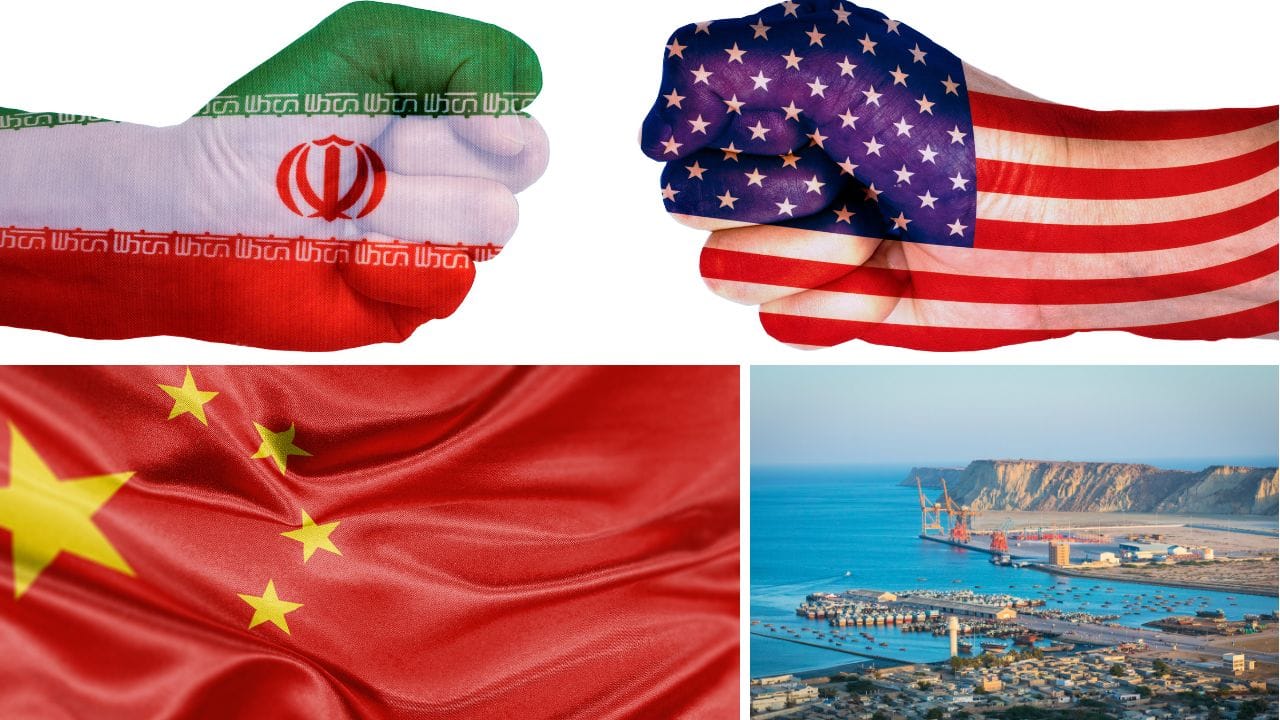
New Delhi: In The Merchant of Venice, William Shakespeare wrote, “The devil can cite scripture for his purpose.” The line feels uncomfortably relevant in today’s world, where China has stepped in as a peacemaker, alongside Pakistan, to mediate the United States-Israel-Iran conflict.
The heartening myth of Beijing as a mediator
At first glance, there is something reassuring about the idea of China stepping in as a peacemaker in the West Asia war. It suggests balance in a fractured world, a counterweight to Washington’s hard power. Beijing’s diplomacy is being cast as a stabilising force in a crisis that is shaking global energy and trade.
But that reading is far too generous. The idea of Beijing as a peacemaker for the global good is, at best, a comforting illusion. It has assumed this role to defend its own economic momentum and maintain stability. This self-interest does not need polite dressing.
China is not entering this crisis to resolve it. It is stepping in to contain the fallout.
Beijing’s language has been careful and calibrated. It speaks of restraint, sovereignty and dialogue. Yet behind the diplomatic phrasing lies a more immediate concern. Stability, for China, is not an abstract virtue. It is a supply chain necessity.
Oil, shipping and a fragile dependence
China is the world’s largest importer of crude oil. A significant share of that energy lifeline runs through one narrow corridor. Any prolonged disruption risks pushing up prices, tightening supplies and unsettling domestic growth.
This is why Beijing’s response has avoided escalation at all costs. It has not offered military backing to Tehran. It has not directly confronted the United States. Instead, it has chosen the language of de-escalation while quietly maintaining its economic links.
Peace, in this context, becomes a tool, not a principle.
The Strait of Hormuz chokehold
At the centre of this crisis lies the Strait of Hormuz. Roughly a fifth of the world’s oil passes through this narrow stretch of water. When tensions rise here, the effects travel far beyond the Gulf.
Insurance premiums surge. Shipping slows. Energy markets react within hours.
For China, this is the real battlefield. Not Tehran. Not Tel Aviv. A closure, or even a partial disruption, would ripple through factories, transport networks and financial markets back home. This explains why Beijing has reportedly urged restraint behind the scenes.
Keeping Hormuz open is not just desirable. It is essential.
Pakistan: The quiet power broker
Less examined, but increasingly relevant, is Pakistan’s role in this unfolding crisis. It is easy to view Islamabad with scepticism, especially in a region where its actions are often read through a narrow security lens. But diplomacy is rarely static, and moments of flux tend to elevate actors that can operate across divides.
Its advantage begins with geography. Sharing a long and sensitive border with Iran, Pakistan is directly exposed to any spillover. Instability across that frontier carries immediate political, economic and security consequences. Engagement, therefore, is not driven by goodwill alone. It is a practical response to proximity.
What sets Pakistan apart is its ability to maintain working relationships across competing camps. It has lines of communication with Washington, remains closely aligned with Beijing, and retains functional ties with Tehran. Few countries in the region can engage, however cautiously, with all sides at once.
Projects such as the China-Pakistan Economic Corridor and the strategic importance of Gwadar further deepen Islamabad’s stake in regional stability. Disruption in the Gulf affects not just energy markets, but also trade routes and long-term connectivity plans that Pakistan is invested in.
Seen in this light, Pakistan’s role is less about neutral mediation and more about careful positioning. It is not stepping in out of altruism. It is using geography and relationships to reassert its place in a shifting regional order.
A familiar pattern from past conflicts
This is not the first time China has taken such a position. During the Russia-Ukraine war, Beijing adopted a similar stance. It called for dialogue while continuing trade. It avoided confrontation while safeguarding its economic interests.
The pattern is consistent. China does not rush to pick sides in conflicts that threaten global systems. It positions itself just close enough to influence outcomes, but far enough to avoid being pulled in.
That is not neutrality. It is a calculation.
Beijing’s self-preservation cloaked as diplomacy
The language of mediation makes for good headlines. It suggests intent, responsibility and leadership. But in this case, it obscures more than it reveals.
China is not trying to end the conflict. It is trying to ensure Beijing does not pay the price for the conflict. This is not diplomacy in the classical sense. It is economic self-preservation, presented in the language of restraint. And in that distinction lies the real story of China’s so-called mediation.
In a war shaped by power and interests, even the call for peace carries a cost calculation.