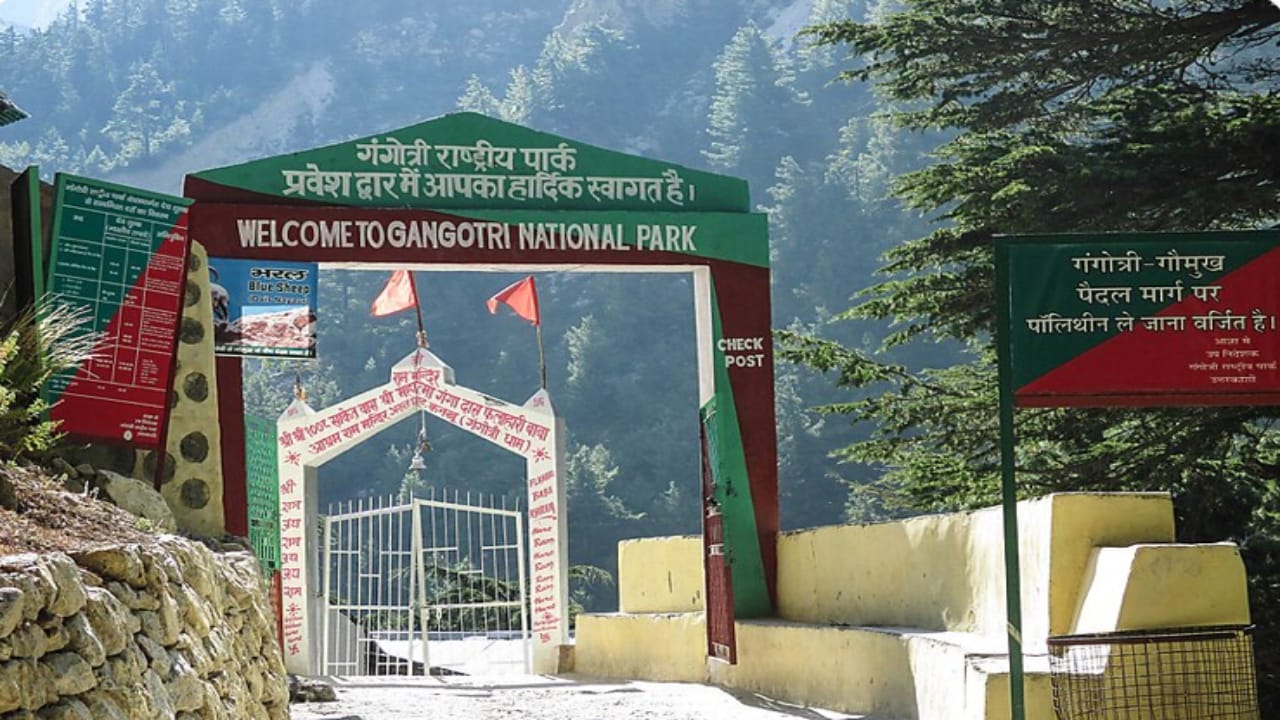
Uttarkashi: The gates of Gangotri National Park, one of India’s most famous high-altitude parks, have reopened for the summer season.
On April 1, in the presence of Deputy Director Harish Negi, park officials unlocked the gates at Kedartal, Bhaironghati, Gartang Gali, and the Kankhu barrier, marking the start of tourist visits for 2026.
Annual Opening
Every year, the park closes on November 30 due to heavy snowfall and extreme winter conditions. It reopens on April 1 when the weather becomes suitable for trekking and wildlife exploration. Deputy Director Harish Negi expressed hope that this year will see a large number of tourists from India and abroad.
Forest Range Officer Pradeep Bisht, Forest Inspector Rajbir Rawat, and other staff were present during the reopening ceremony.
Wildlife Richness
Gangotri National Park is known as the natural habitat of the snow leopard, one of the most elusive animals in the Himalayas. Apart from snow leopards, the park is home to brown bears, bharals (blue sheep), red foxes, and many bird species. Wildlife enthusiasts and researchers often visit the park to study these rare animals.
Trekking and Adventure
The park is also famous for its trekking routes.
– Gomukh, the source of the holy Ganga River, lies within the park and is a popular destination for pilgrims and trekkers.
– Over 40 Himalayan peaks, including some of the highest in the Gangotri range, are located inside the park.
– The KalindiKhal-Badrinath trek route, one of the world’s highest and toughest trekking trails, connects Gangotri with Badrinath and attracts adventure seekers from across the globe.
Tourists can also explore Kedartal, a glacial lake surrounded by towering peaks, and the historic Gartang Gali wooden bridge, which has become a major attraction in recent years.
Tourism Boost
With the gates now open, Uttarkashi district expects a rise in tourism. Local businesses, including hotels, homestays, and shops, benefit greatly from the influx of visitors. The park’s reopening also supports eco-tourism, encouraging people to experience nature while respecting conservation rules.
Authorities have advised tourists to follow safety guidelines, carry proper permits, and respect the fragile environment of the Himalayas.