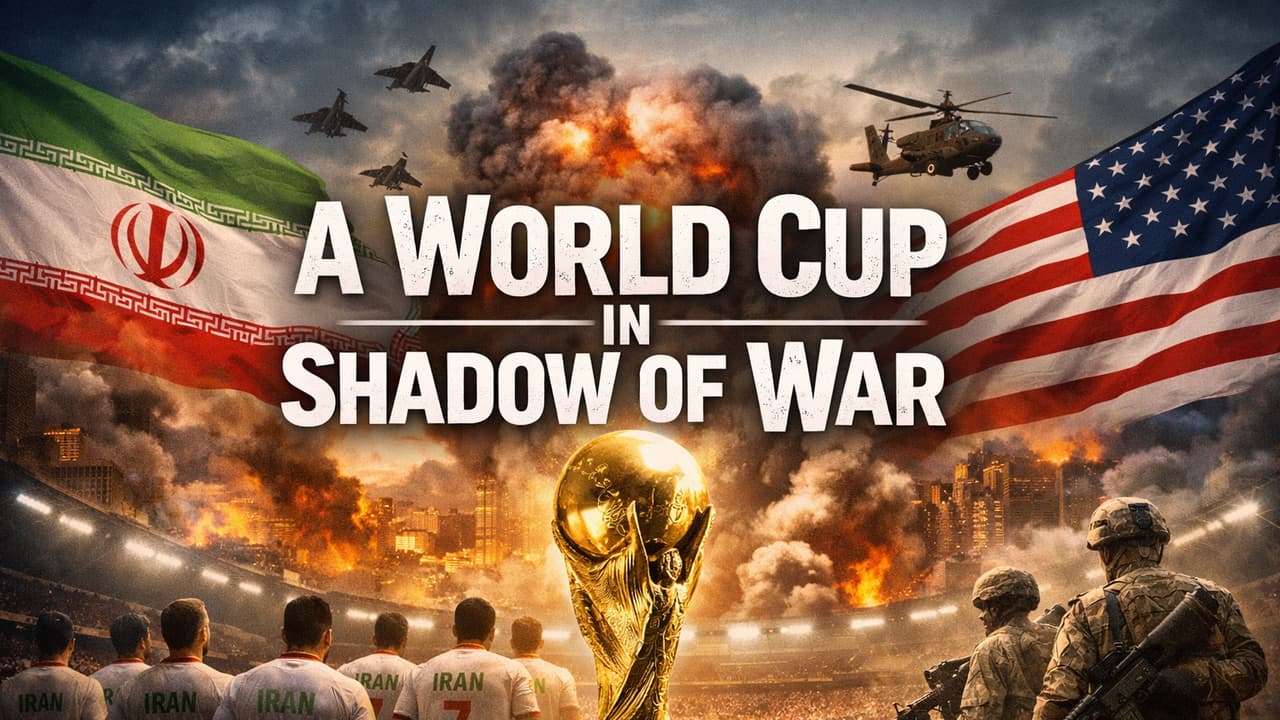
FIFA chief Gianni Infantino confirms Iran will play at the 2026 World Cup in the US despite war tensions, as politics, safety concerns and football collide on the global stage.
Despite the shadow of an ongoing conflict in West Asia, Gianni Infantino has delivered a clear message: Iran will be at the FIFA World Cup. Speaking to AFP during halftime of Iran’s emphatic 5-0 friendly win over Costa Rica in southern Turkey, the FIFA president dismissed doubts over the team’s participation.
“Iran will be at the World Cup,” Infantino said. “That’s why we’re here. We’re delighted because they’re a very, very strong team, I’m very happy.”
Matches To Go Ahead As Scheduled
Infantino underlined that there would be no deviation from the existing tournament plan, even as geopolitical tensions continue.
“I’ve seen the team, I’ve spoken to the players and the coach, so everything is fine,” he added. “Matches will be played where they are supposed to be, according to the draw.”
The 2026 FIFA World Cup—hosted jointly by the United States, Mexico and Canada—is set to begin on June 11.
Iran are scheduled to open their campaign in Los Angeles against New Zealand on June 15, before facing Belgium on June 21 at the same venue. Their final group-stage match is slated for June 26 in Seattle against Egypt.
War Casts Shadow, But FIFA Stands Firm
Iran’s participation had been under serious doubt after the war involving the United States and Israel erupted on February 28.
Amid the uncertainty, Iranian football officials had explored contingency plans, including shifting matches away from the US.
Mehdi Mohammad Nabi, vice president of the Iranian Football Federation (FFIRI), reiterated that the country would respect FIFA’s final call.
“For us, what matters most are FIFA’s rules and regulations. We will comply with whatever FIFA decides. Every host country has made commitments to FIFA and must honour them,” he said.
Mexico had even indicated its readiness to step in if required, with President Claudia Sheinbaum offering to host Iran’s matches.
Diplomatic Signals and Mixed Messaging
Infantino had earlier suggested that Donald Trump assured him Iran would be allowed to participate. However, Trump later struck a different tone, saying the Iranian team should not travel “for their own life and safety.”
Tehran responded firmly, asserting that “no one can exclude Iran’s national team from the World Cup.”
On Tuesday, Nabi revealed that Infantino made an unscheduled stop in Turkey while travelling from Mexico to Qatar to meet the team.
“Having learnt that we were organising friendly matches here, he came to see us in person, and we had a fruitful discussion,” Nabi said. “Mr Infantino is providing the necessary support to our national team and has given our players a great boost.”
A Match Played With Emotion
On the pitch, Iran delivered a commanding performance, thrashing Costa Rica 5-0 in Belek.
Captain Mehdi Taremi scored twice from the penalty spot, while Ali Gholizadeh and Mohammad Mohebbi ensured a four-goal lead by halftime. Substitute Mehdi Ghayedi added a fifth early in the second half.
But the evening carried a deeper emotional weight.
Before kickoff, Iranian players wore black armbands and held photographs of young victims of the war—an image that brought the human cost of the conflict into sharp focus.
Among the most tragic incidents was the February 28 airstrike on a primary school in Minab, which reportedly killed at least 170 people, including students and teachers. According to a report by The New York Times, preliminary findings from a US military investigation suggest a Tomahawk cruise missile struck the school due to a targeting error.
‘Inshallah’: Hope Amid Uncertainty
Even as officials trade statements and plans are debated behind closed doors, the players themselves remain cautiously hopeful.
Asked if Iran would make it to the World Cup, backup striker Dennis Eckert Ayensa offered a simple response:
“Inshallah.”
For now, FIFA’s stance has brought clarity—but with the tournament just weeks away, the situation remains one to watch closely.
(With inputs from AFP)