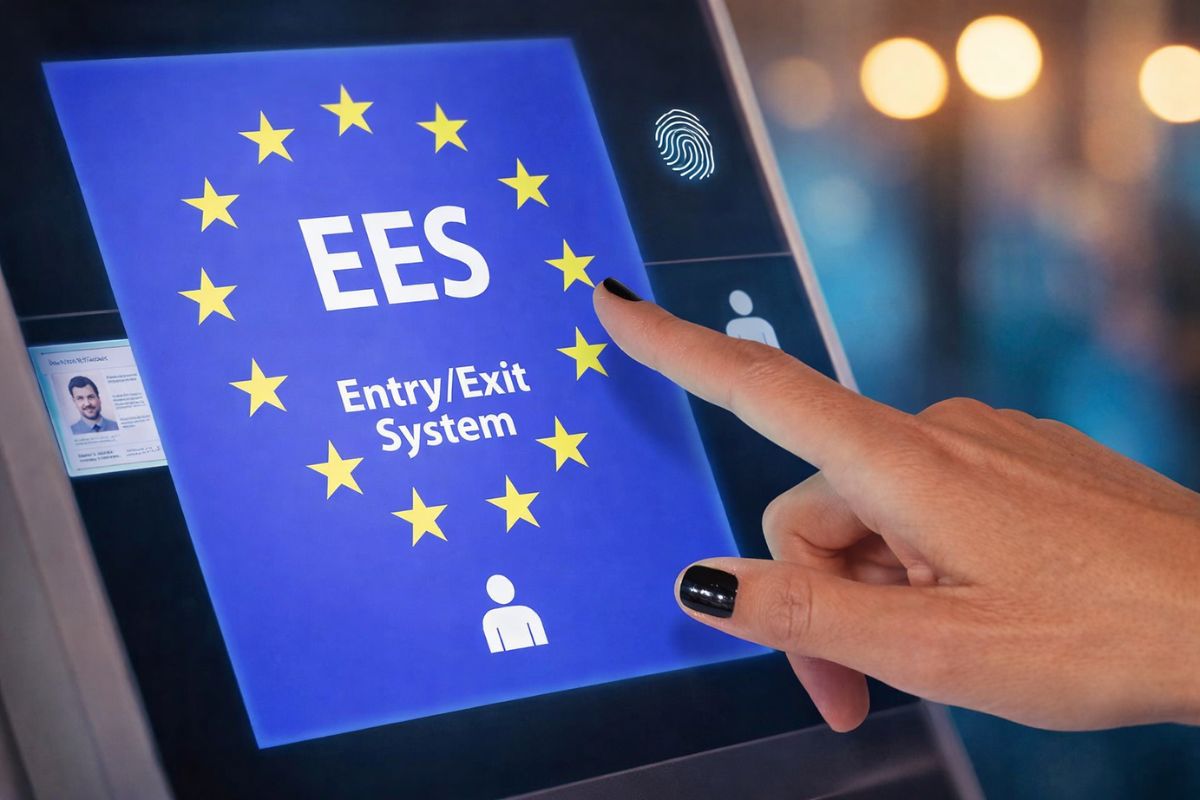
The European Union’s new Entry/Exit System (EES) is gradually changing how travellers enter and leave Europe. The system first launched on 12 October 2025 with a phased rollout across 29 European countries. From 10 April 2026, it will become fully operational.
In simple terms, passport stamps are being replaced with digital records. Instead of manual stamping, border authorities will now store entry and exit information electronically, along with biometric data such as fingerprints and facial images.
For travellers planning short stays in Europe, this marks one of the biggest border management changes in recent years.
What Is the Entry/Exit System (EES)?
The Entry/Exit System (EES) is a digital border control system used by European countries in the Schengen Area. It records when non-EU travellers enter or leave Europe for short stays.
The goal is simple: improve security, reduce identity fraud, and speed up border checks.
Under EES, authorities collect:
- Facial image
- Fingerprints
- Passport details
- Entry and exit dates
- Records of refused entry, if any
This information is stored securely and checked each time a traveller crosses the border.
Early Results Show Strong Impact on Border Security
Since the system began operating in October 2025, authorities have already recorded more than 45 million border crossings. The data has helped officials identify irregular travel patterns and improve border checks.
Key early figures include:
- 45 million+ crossings recorded
- 24,000 travellers refused entry
- 600 individuals flagged as security risks
Some travellers were denied entry due to incomplete travel documents, unclear purpose of visit, or suspected fraudulent paperwork.
In several cases, the system helped detect travellers using multiple identities. For example, border officers in Romania identified a traveller using two different names on separate documents. Records showed the same individual had previously been refused entry three times by different Schengen countries.
Without biometric matching, such cases would be difficult to detect.
Why the EES Matters for Travellers
For most travellers, the process should become smoother over time. Automated systems can reduce manual checks and help avoid long queues at busy airports.
At the same time, the system strengthens border security by ensuring travellers follow the rules of short-term stays in Europe.
The EES will also work closely with the upcoming ETIAS Travel Authorisation, which will apply to visa-exempt travellers in the near future.
How the Entry/Exit System (EES) Works
Here is a simple step-by-step explanation of how the EU Entry/Exit System records traveller data digitally, replacing passport stamps with biometric border checks.
Arrival at the Border: When you arrive in a participating European country, your passport is scanned.
Biometric Data Collected: Your fingerprints and facial photo are taken for identification.
Data Stored Digitally: Your entry is recorded electronically instead of stamping the passport.
Checked On Exit: When leaving Europe, the system records your exit automatically.
Future Travel Becomes Easier: Your details are already in the system, which can speed up future border checks.
What This Means Going Forward
The Entry/Exit System is part of Europe’s broader plan to modernise border control using technology. For travellers, this means fewer stamps but more digital checks.
If you plan to visit Europe from April 2026 onwards, expect biometric checks to become a normal part of the journey.
While the process may feel new at first, the long-term aim is clear: faster borders, better security, and more accurate travel records.
Follow and connect with us on Facebook, Twitter, LinkedIn, Instagram and Google News for the latest travel news and updates!