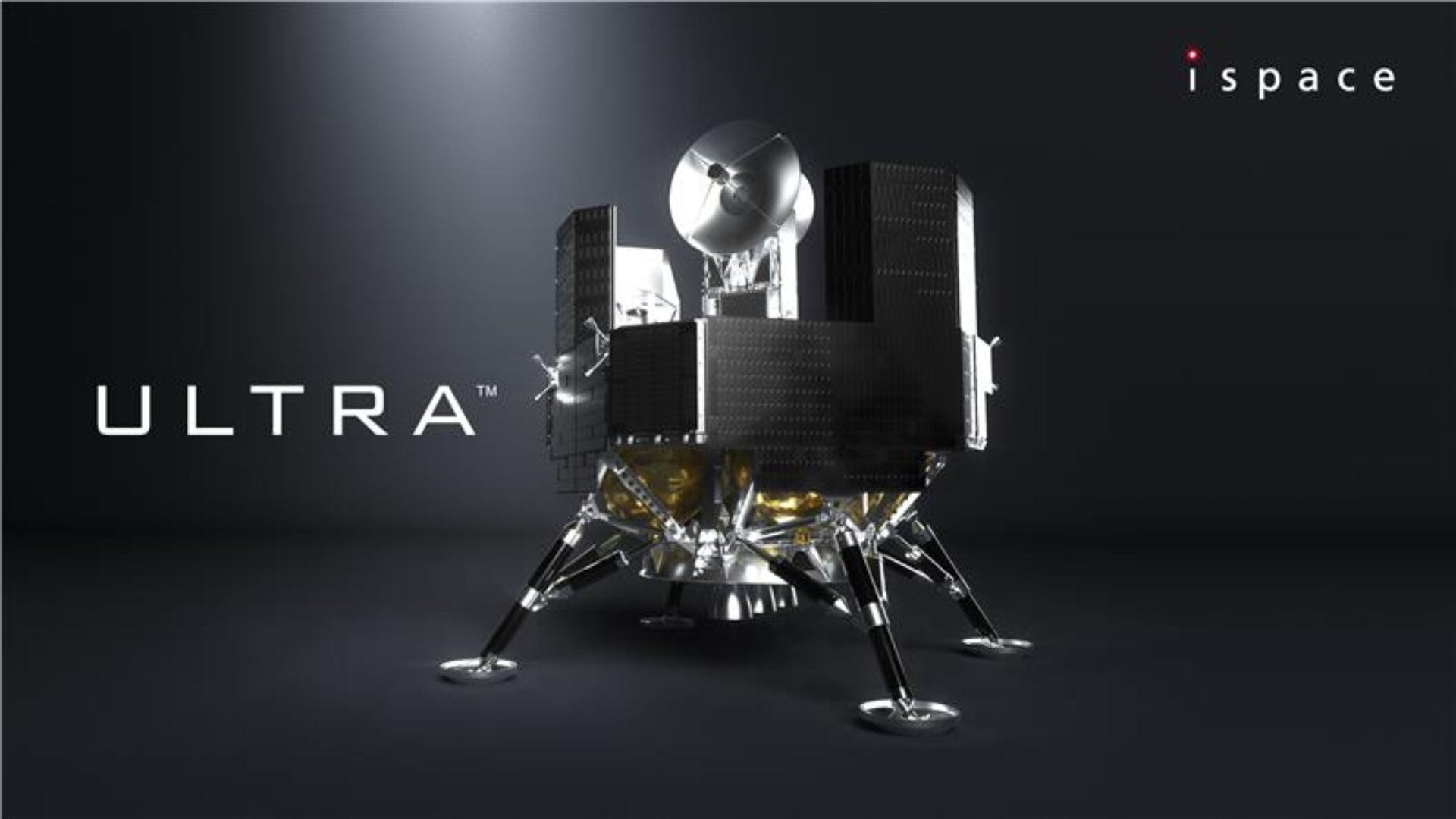
New Delhi: The lunar exploration company iSpace has announced a new Moon lander, dubbed ULTRA that combines the designs of its Japanese APEX 1.0 and US Series 3 lander models, both of which have been in parallel development. The Ultra lander includes a new engine, a change from the previous vendor, and will be used in the next missions of iSpace. Agile Space Industries was developing the new VoidRunner engine to be installed on this lander. However, Agile Space Industries has reported delays in demonstrating the engine efficiency necessary to meet the performance specifications. iSpace has now changed the development plan to incorporate an alternative engine.
The new engine will replace VoidRunner, and has already been developed by an alternative supply with a proven track record in previous lunar missions. This new engine will be used on the ULTRA lander for all the future planned missions. In the US, the Trump administration has accelerated lunar development plans with the goal of constructing a lunar base with a lunar nuclear reactor by 2030. Japan is in discussions to increase cooperation with USA for lunar explorations. In order to meet these expectations, iSpace is integrating the two landers that it was developing in parallel for American and Japanese missions. The new design has resulted in a rescheduling of the first NASA Commercial Lunar Payload Services (CLPS) mission, which is now slotted for 2030.
The revised launch schedule
iSpace has attempted two Moon landings, and lost the landers in crashes on both attempts. The first was the Hakuto Moon Lander in April 2023, followed by the loss of the Resilience Moon Lander in June 2025. iSpace was supposed to return to the Moon with Mission 3, the NASA CLPS flight, which has now been designated as Mission 5 and pushed to 2030. The next lunar mission by iSpace was formerly Mission 4, and is now Mission 3, which will launch in 2028. Mission4, formerly Mission 6 will launch in 2029. These two missions are Japanese. iSpace has also announced that it will be launching at least five communications and positioning satellites in lunar orbit by 2030, with the first launch as early as 2027.