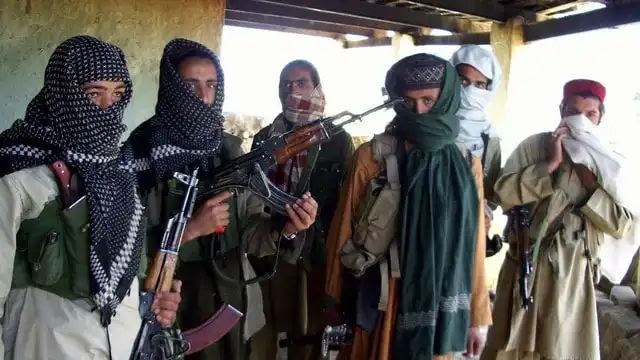
Pakistan still remains a hub of terrorist groups operating against India. This has been revealed in the recent report of the US Congress Research Service (CRS). The report warns that several major terrorist organizations are active in Pakistan, focused on Jammu and Kashmir and India.
There is a disturbing message in this report – terrorist organizations targeting India, especially the Union Territory of Jammu and Kashmir, are carrying out their activities from Pakistani soil without any fear and without any hindrance.
CRS’s ‘In Focus’ report released on March 25 has described 15 terrorist organizations in detail. Many of these groups have been declared ‘Foreign Terrorist Organizations’ (FTO) by the US. The report points to persistent threats from ‘India and Kashmir-centric terrorist groups’. These mainly include-
- Lashkar-e-Taiba (LeT)
- Jaish-e-Mohammed (JeM)
- Harkat-ul-Jihad-Islami (HUJI)
- Harkat ul-Mujahideen (HuM)
- Hizbul Mujahideen (HM)
Status of major terrorist organizations
Lashkar-e-Taiba (LeT): This organization, formed in the late 1980s, was declared FTO in 2001. It is still located in Pakistan’s Punjab and Pakistan-occupied Kashmir (PoK). According to the report, ‘This group, led by currently jailed Hafiz Saeed, has changed its name to ‘Jamaat-ud-Dawa’ to avoid sanctions.’ It has ‘several thousand fighters’ and was the organization that masterminded the 2008 Mumbai attacks, in which 166 people were killed.
Jaish-e-Mohammed (JeM): This group, founded by Masood Azhar in the year 2000, was also declared FTO in 2001. It supported Lashkar in the 2001 Indian Parliament attack. According to the report, Jaish has about 500 armed terrorists who operate in India, Afghanistan and Pakistan. The main objective of this organization is to ‘merge’ the Indian Union Territory of Jammu and Kashmir with Pakistan. The report also says that ‘Jaish has openly declared war against America.’
Hizbul Mujahideen (HM): This Kashmir-centric group, formed in 1989, was declared a terrorist organization by the US in 2017. It has about 1500 cadres (terrorists) who demand ‘independence of Kashmir or merger of Jammu and Kashmir with Pakistan’.
These groups work closely with global organizations such as al-Qaeda and its affiliate in the Indian subcontinent (AQIS).
Pakistan’s failure and the role of madrassas
It has been made clear in the report that Pakistan has failed to eliminate terrorist groups. Several major military operations, including air strikes and millions of ‘intelligence-based operations’, have failed to defeat these US and UN declared terrorist groups. The aim of the ‘National Action Plan’ of 2014 was also to eliminate these groups, but they still exist today. According to the US State Department, Pakistan had taken “some steps” to prevent terrorist activities in 2023, but madrassas there are still teaching doctrines that may “promote violent extremist ideology”.
Both victims and supporters: Pakistan’s dual character
South Asia expert K. This CRS report, prepared by Alan Kronstadt, portrays Pakistan as both a ‘victim and supporter’. On one hand, Islamabad itself is grappling with domestic violence (separatism in the restive Balochistan province and the worsening situation in Khyber Pakhtunkhwa), while on the other hand it is host to terrorist networks that have been targeting India for a long time.
The report divides terrorist and other groups operating in Pakistan into five broad, and often interconnected, categories.
- active globally
- Afghanistan-centric
- India and Kashmir-centric
- active domestically
- communal (anti-shia)
India’s stance
Pakistan’s inability or unwillingness to completely eliminate these groups has led to tensions with its neighbors. India continues to maintain that curbing cross-border terrorism is essential for lasting peace. This latest assessment by America regarding the terrorist infrastructure present on Pakistani soil has further strengthened India’s stance.