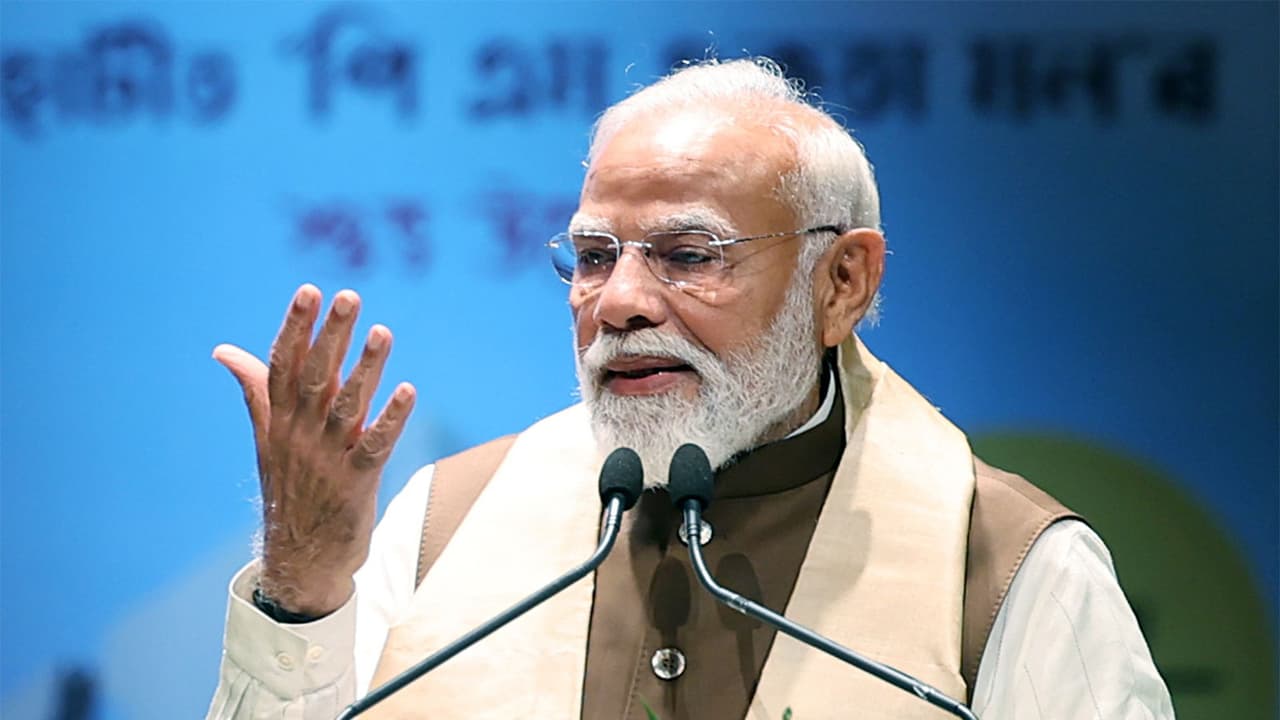
PM Narendra Modi, in his ‘Mann Ki Baat’ address, urged citizens to conserve water, highlighting the success of campaigns that led to 5 million water harvesting structures and 70,000 ‘Amrit Sarovars’ being created across the nation.
With the beginning of summer, Prime Minister Narendra Modi on Sunday emphasized the need to “reiterate the resolve” for water conservation across the nation, hailing the impact of several campaigns throughout the years in bringing awareness to the cause. Addressing the nation in the 132nd episode of ‘Mann Ki Baat’, PM Modi highlighted that the water conservation campaign, which began eleven years ago, has successfully resulted in improving the water harvesting infrastruction in the nation. “Under this campaign, nearly 5 million artificial water harvesting structures have been built in the country,” he said.
‘Amrit Sarovar’ Campaign and Local Efforts
A significant focus of this address was the ‘Amrit Sarovar’ campaign, under which 70,000 water bodies have been created across the nation. Expressing contentment over the water conservation efforts being made at villages, he said, “In some places, old ponds are being cleaned and restored while in others, efforts are being made to conserve rainwater,” further noting that the cleaning of these water bodies has also begun in preparation for the monsoon season.
Inspiring Examples of Water Conservation
Highlighting success stories in three states, PM Modi first spoke about Vangmun village in the Jampui Hills of Tripura, located at an altitude of 3000 feet.
Tripura: Rooftop Harvesting in Vangmun Village
“This village was facing a severe water crisis. During the summer days, the villagers used to travel long distances for water. Finally, the people of the village decided to conserve every drop of rain. Today, a Rooftop Rainwater Harvesting System has been installed in almost every house in Vangmun village,” he said.
Chhattisgarh: Farmers’ Recharge Ponds
Following that, the Prime Minister praised farmers in the Koriya district of Chhattisgarh for their unique initiatives for water conservation. “Farmers here built small recharge ponds and soak pits in their fields, which caused rainwater to stay within the fields and gradually seep into the ground,” he stated, noting that over 1,200 farmers have adopted this model, leading to a significant improvement in groundwater levels.
Telangana: Mass Movement with Soak Pits
The third example the Prime Minister shared was of Mudhigunta village in the Mancherial district of Telangana, stating, “400 families in the village built soak pits in their homes and turned water conservation into a mass movement. As a result, the village’s groundwater level has improved, and diseases caused by polluted water have significantly decreased.” (ANI)
(Except for the headline, this story has not been edited by Asianet Newsable English staff and is published from a syndicated feed.)