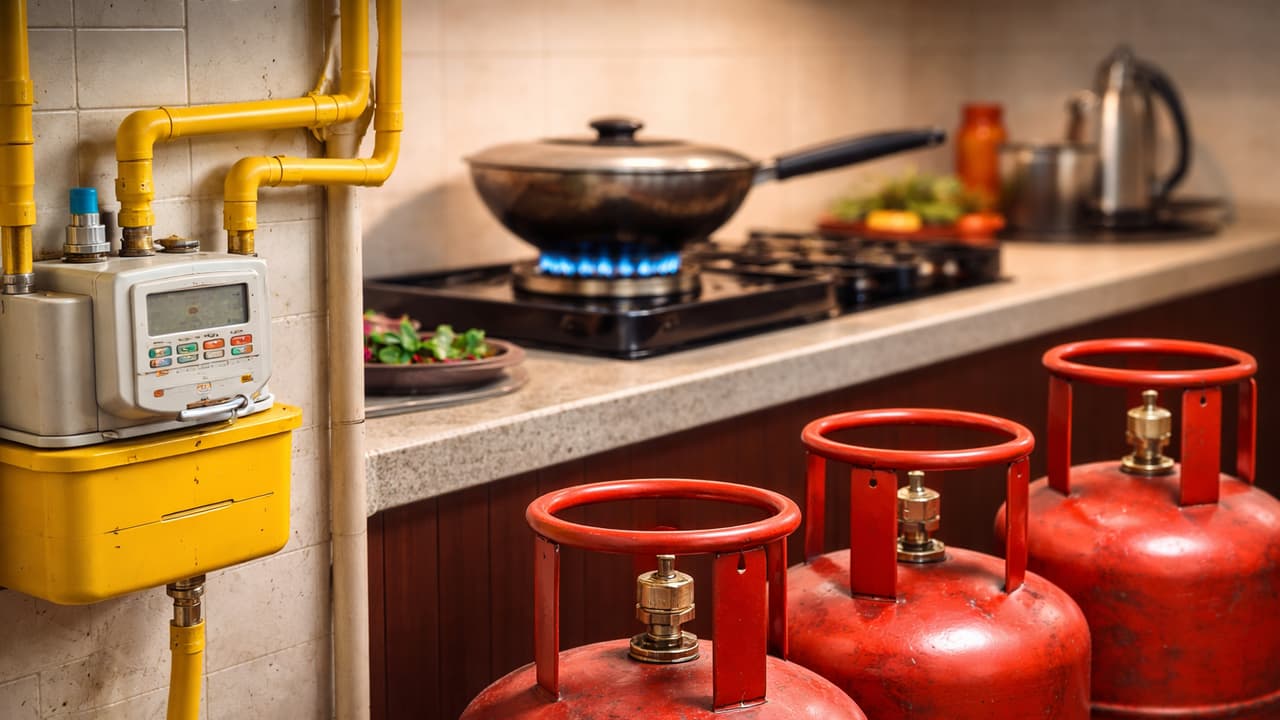
The Iran war is disrupting the Strait of Hormuz, threatening India’s energy security. India relies heavily on imported liquefied natural gas (LNG), with a significant portion, especially from Qatar, passing through this vital route. This disruption could cause price hikes and shortages for households and industries.
India is staring at a potential energy crunch as the ongoing Iran war disrupts critical supply routes through the Strait of Hormuz, a narrow but vital maritime chokepoint that underpins the country’s liquefied natural gas (LNG) imports. The crisis has exposed India’s deep dependence on foreign gas supplies and raised concerns about price spikes, shortages, and long-term energy security.
At the heart of the issue lies the Strait of Hormuz, through which a significant share of the world’s oil and gas flows. For India, the dependence is particularly stark — nearly 50–65% of its LNG imports and up to 90% of LPG imports pass through this route. As tensions escalated in late February 2026, maritime traffic through the strait was severely disrupted, triggering a ripple effect across global energy markets and directly impacting India.
Heavy Dependence on Imports
India’s domestic natural gas production is insufficient to meet its growing energy needs. The country produces roughly half of the gas it consumes, relying heavily on imports to bridge the gap. LNG imports have surged over the past decade, growing nearly 70% between 2013 and 2023, with India now ranking among the world’s largest LNG importers.
The Middle East dominates India’s import basket, with Qatar remaining the single largest supplier. In fact, Qatar accounts for over 40% of India’s LNG imports, making the country highly vulnerable to disruptions in the Gulf region. Other suppliers include the United States, Australia, Russia, and African nations, but the Gulf continues to be the backbone of India’s gas supply chain.
KG Basin: India’s Domestic Lifeline
On the domestic front, India’s most important gas-producing region is the Krishna-Godavari (KG) basin off the eastern coast. The basin contributes nearly a quarter of India’s total gas production, with major fields such as R Cluster, Satellites Cluster, and MJ playing a crucial role.
Additionally, onshore production from Assam and Tripura contributes significantly to the domestic supply. However, even with these sources, domestic output falls short of demand, forcing India to remain dependent on imports. This structural gap is a key vulnerability, especially during global disruptions like the current crisis.
Also Read: India’s energy supply secure, no shortage of petrol, diesel: HPCL
Why the Hormuz Disruption Matters
The Strait of Hormuz is not just another shipping lane — it is one of the world’s most critical energy corridors, handling around 20% of global oil and gas trade. Any disruption here has immediate global consequences, from rising fuel prices to supply shortages.
For India, the stakes are even higher. The ongoing conflict has effectively choked supply routes, with reports suggesting a near halt in tanker movement through the strait. This has forced LNG cargoes to be rerouted, delayed, or diverted, leading to tightening supply and rising prices in Asian markets.
The situation has also impacted Qatar’s LNG production, further exacerbating supply constraints. With key facilities under stress due to regional instability, long-term supply contracts face uncertainty, adding another layer of risk for India.
Impact on Households and Industry
The consequences of the crisis are already being felt on the ground. LNG is a critical fuel for India’s energy ecosystem — it powers electricity generation, fuels industrial operations, and is used in fertiliser production, which is vital for agriculture. It is also supplied directly to households as piped natural gas (PNG) and used as compressed natural gas (CNG) for vehicles.
As supply tightens, prices are expected to rise sharply. Experts warn that prolonged disruption beyond April could push PNG prices up by 20–30%, potentially forcing rationing in major cities like Delhi, Mumbai, and Gujarat.
Fertiliser plants are already facing feedstock shortages due to reduced LNG supply from Qatar, which could have cascading effects on food production and inflation. The broader economic impact could be significant, given the central role of gas in multiple sectors.
Government Response and Buffer Measures
To manage the crisis, the Indian government has taken several steps to secure supplies and stabilise the situation. These include increasing domestic production, diversifying import sources, and maintaining buffer stocks.
City gas distributors currently hold buffer stocks of 15–30 days, prioritising essential supply to households and critical industries. The government has also pushed for higher domestic LPG production and secured alternative shipments from countries like the United States, Russia, and Australia.
In addition, India has explored diplomatic and strategic options, including sourcing gas from new suppliers and even seeking waivers to resume imports from countries like Iran or Russia amid the crisis. These efforts reflect a broader strategy to reduce dependence on any single region.
Diversification and Strategic Shifts
The ongoing crisis is likely to accelerate India’s push for diversification in energy sourcing. LNG cargoes originally meant for Europe are now being diverted to Asia, including India, as buyers scramble to secure supplies.
At the same time, India is expanding its import infrastructure, with multiple LNG terminals along its coastline, including major facilities at Dahej, Hazira, Kochi, and Ennore. These terminals play a crucial role in ensuring supply continuity, even as global disruptions intensify.
The government is also working towards increasing the share of natural gas in India’s energy mix to 15% by 2030, up from the current 6–7%. However, achieving this goal will require addressing the structural challenges exposed by the current crisis.
Also Read: Sitharaman contrasts India’s stability with Pakistan’s fuel crisis
A Wake-Up Call for Energy Security
The Iran war and the resulting Hormuz disruption have served as a stark reminder of India’s vulnerability to global energy shocks. While the country has made significant progress in diversifying its energy sources and boosting domestic production, the reliance on imports remains a critical challenge.
The crisis underscores the need for long-term strategies, including expanding domestic exploration, investing in renewable energy, and building strategic reserves. It also highlights the importance of geopolitical stability in ensuring uninterrupted energy supplies.
As the situation continues to evolve, India’s ability to navigate this संकट will depend on a delicate balance of diplomacy, diversification, and domestic resilience. For now, the gas crunch is a warning — one that could reshape the country’s energy strategy in the years to come.