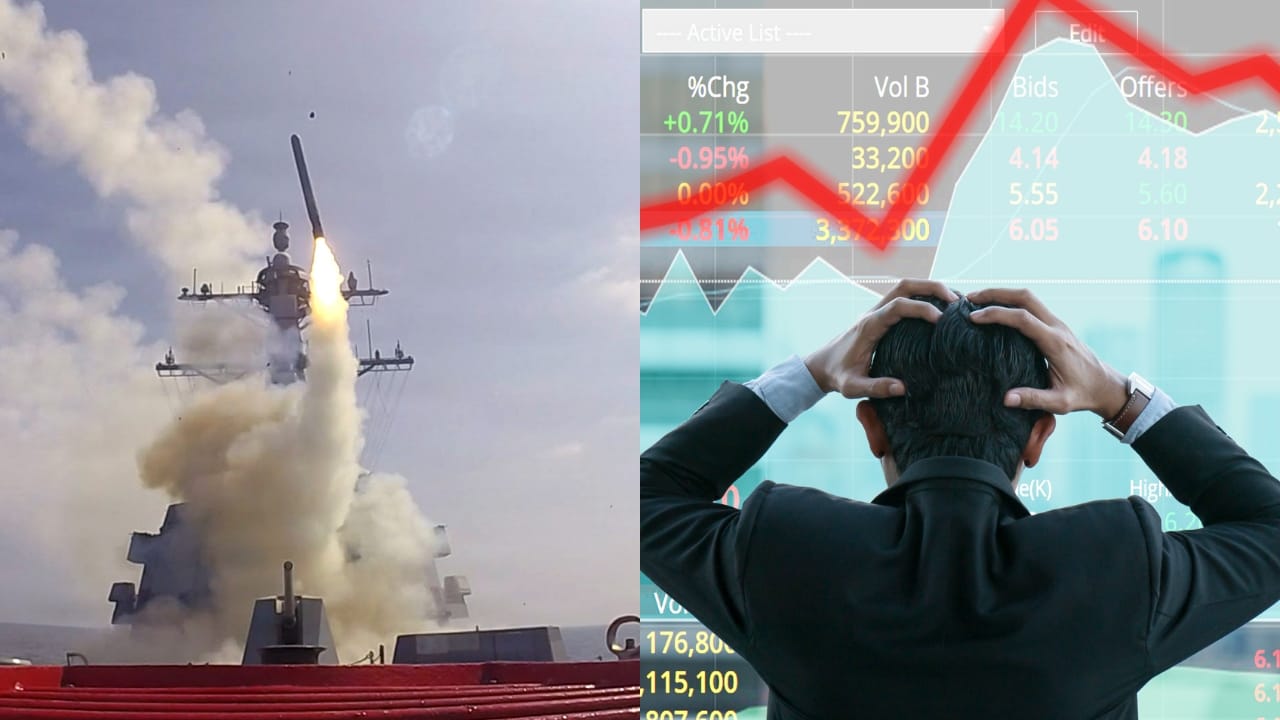
Kolkata: As the US Iran war has created a squeeze on the energy front, raising inflation concerns, deceleration in growth and sending the Indian rupee plummeting against the US dollar, FIIs have pulled out a record $12.14 billion from the Indian equity market. And there are still two trading days left in the month. In rupee terms the sale of Indian stocks by FIIs has risen to Rs 1.12 trillion. The earlier record was of Rs 94,000 crore which happened in October 2024.
Analysts have already said that the longer the conflict continues, the worse it is going to be. Saion Mukherjee, head of equity research at Nomura has told the media, “The Indian equity market’s performance is tied to oil prices, which depend on Middle East geopolitics.”
Goldman Sachs, Bernstein cut Nifty target
Major global brokerage houses have already sounded alerts on India. US-based investment bank Goldman Sachs has downgraded India from overweight to marketweight and cut its Nifty target. According to the brokerage, the “energy-shock-induced” cut in earnings is on its way in Indian businesses. Long period of elevated oil prices can impact India’s macro outlook as well, since the country is critically dependent on the import of crude oil. Goldman Sachs has trimmed its Nifty target by end-March 2027 significantly from 29,300 as stated earlier to 25,900.
This week equity research and brokerage firm Bernstein also cut Nifty’s year-end target to 26,000. Worse, it said that in the worst-case situation, Nifty can slide to 19,000. Fatih Birol, the chief of the International Energy Agency has said, the current crisis in the global energy markets is worse than the two oil shocks of the 1970s and the impact of the Russia-Ukraine war on gas put together.
Business activity decelerating
Indicators suggest that there is a deceleration in the level of activity of businesses in the country. This week HSBC’s flash Purchasing Managers’ Index indicated that activity in the private sector this month has slowed down to a level which was the weakest level since October 2022. The reason: demand in the big domestic market of India has started to cool. Inflationary pressures amid unstable markets was cited as the reason by the firms surveyed in the process. It also said that cost inflation has climbed to a near four-year high.
Current account deficit to expand
India imports more than 85% of its crude oil requirements and more than 65% of its natural gas needs. The West Asia conflict has not only raised prices but also has restricted supplies. High energy costs are raising input costs for businesses, quickly expanding the current account deficit, continuously pulling down the value of the rupee against the US dollar and raising inflationary pressures. Though the government decided to take a knock on its revenues by cutting excise on petrol and diesel by Rs 10 a litre, and not to opt for a retail rise in the price of the two fuels, it will put the deficit targets of the government under pressure.