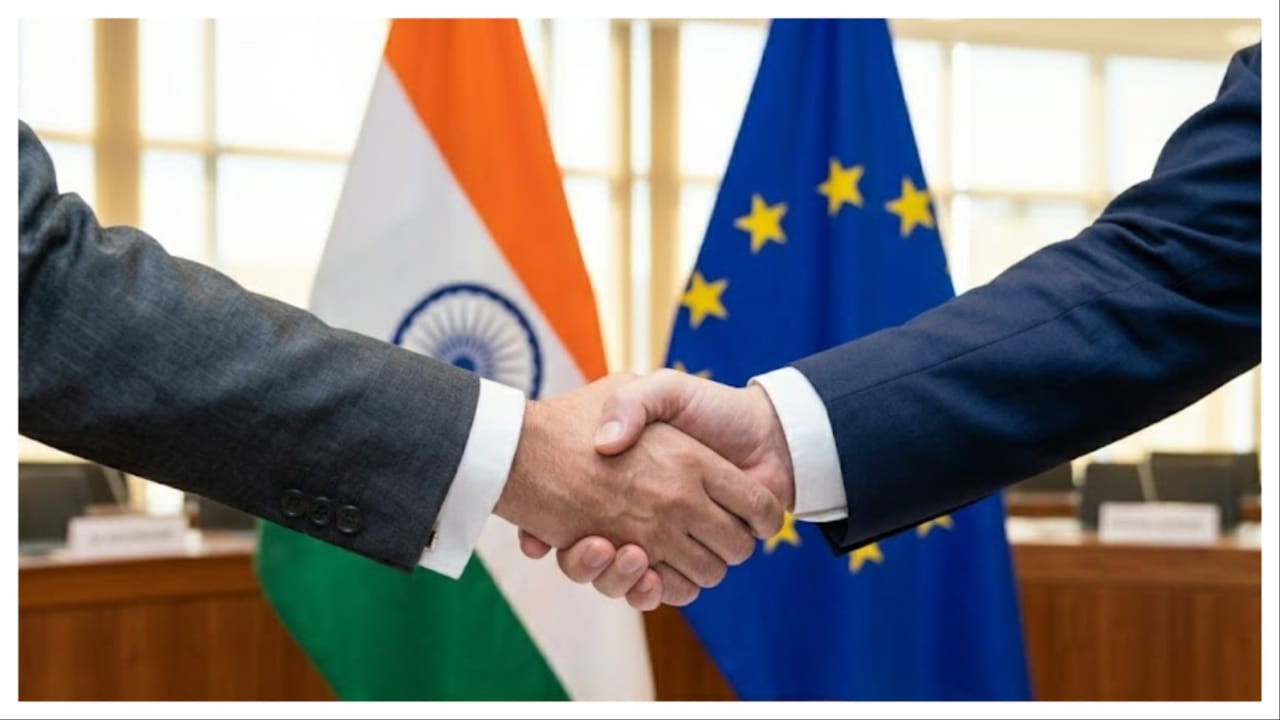
New Delhi: India and the European Union have signed a working agreement in the field of industrial aviation production on Friday. As per a government statement, the move is aimed at strengthening the bilateral ties and aligning the manufacturing with global safety standards.
The agreement was signed between the European Union Aviation Safety Agency and India’s Directorate General of Civil Aviation (DGCA). This is expected to support industrial collaboration, including ‘Make in India’ initiatives aligned with European norms.
Boost to aerospace manufacturing and collaboration
The arrangement will facilitate projects like the assembly of Airbus Helicopters H125/AS350 helicopters in Karnataka. This will deepen aerospace manufacturing ties between the two sides. Not just that, this will mark a significant milestone in India’s aerospace manufacturing journey. The move is to align Indian production practices with European standards to make global market access easier for Indian aerospace products.
The development came following the EU-India Summit at the start of the year. In that January summit under the Strategic Joint Agenda, civil aviation safety was identified as a primary area of focus.
The working agreement was signed on March 23, 2026. This came just before a regional workshop, which is scheduled for March 24 to 26 in New Delhi under the EU-South Asia Aviation Partnership Programme.
Regional workshop and future outlook
The workshop is being organised by EASA in partnership with DGCA and supported by ATR (European aircraft manufacturer). It is mainly focused on sharing operational experience and addressing common challenges that are faced by the aviation sector.
The event brought aviation regulators, airlines and industry stakeholders under one roof to discuss and strengthen operational collaboration. Day-to-day operations and regional issues were discussed.
This initiative reflects the broader push by the EU to strengthen ties with India and South Asia mainly in advanced aviation safety standards, regulatory operations and sustainable sectoral growth. Not just that, this collaboration will encourage further investments and technology transfer in the sector to create long-term benefits for both sides.