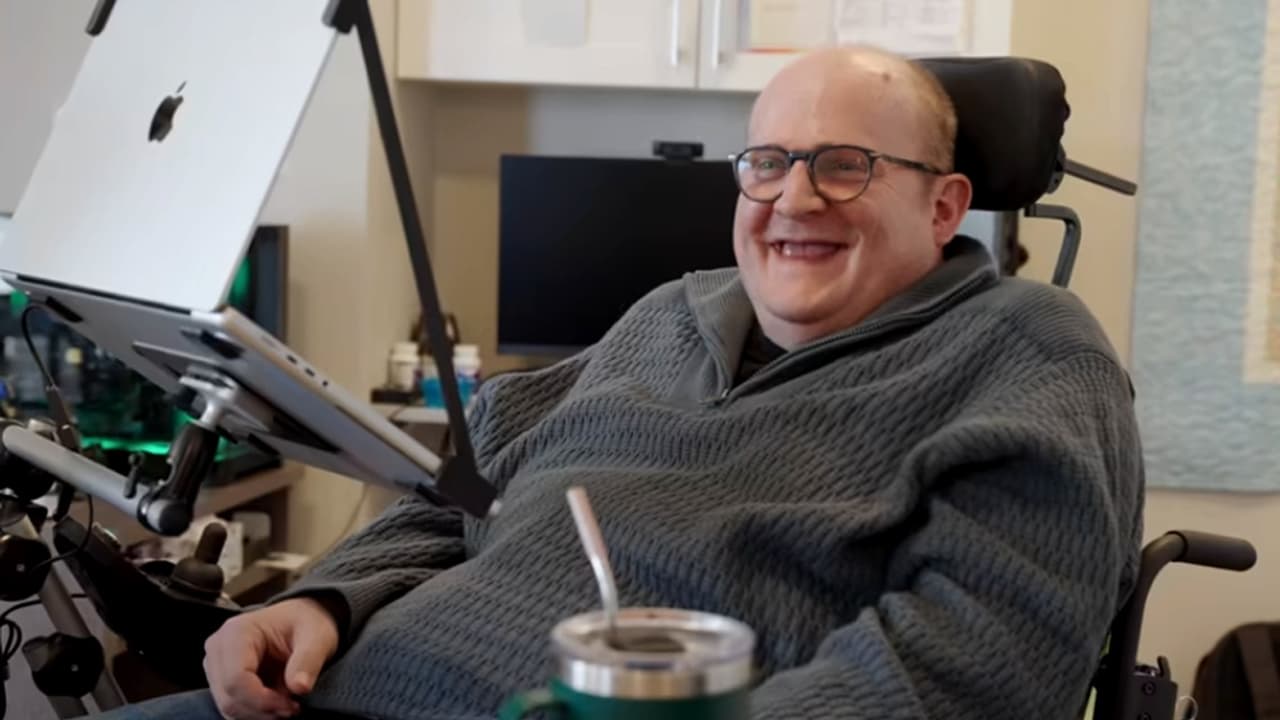
Kenneth Shock, a patient with ALS, has regained his ability to communicate using a Neuralink brain implant. The N1 implant decodes his neural impulses into phonemes and then words, restoring his voice. This significant advancement, part of ongoing clinical trials, was highlighted by Elon Musk.
Kenneth Shock, an ALS patient who had lost his capacity to talk, can now communicate again thanks to a Neuralink brain implant. Elon Musk stated that the company’s brain-computer interface is recovering voice by decoding neural impulses into words, a significant advancement in current clinical studies targeted at assisting persons with neurological problems in regaining communication abilities. The demonstration involves Kenneth Shock, an ALS sufferer who got Neuralink’s N1 implant earlier this year. ALS, or amyotrophic lateral sclerosis, gradually impairs a person’s ability to move and communicate.
With the implant, Shock was able to converse again. Neuralink’s method decodes brain impulses into phonemes, the smallest units of sound, which are subsequently assembled into words. These words are delivered in a voice that is similar to the patient’s original speech.
Watch Video
How Does This Technology Work?
Neuralink’s technology recognises brain activity related to speech and turns it to text. This text is then converted to audio output via a computer system. The business stated that while the process now takes a few moments, it is striving toward real-time translation to make communication more smooth.
What Did Elon Musk Say?
Musk posted an update on the social media site X, claiming that Neuralink is “restoring speech and communication” for those who have lost these skills. He described the breakthrough as a step towards allowing patients to “talk with their minds.”
Neuralink also stated that the technology is being evaluated in real-world scenarios as part of its continuing clinical studies.
Despite its advancement, Neuralink still faces governmental clearances, long-term safety validation, and worries about neural data privacy. The technology is still under clinical studies, and widespread distribution is likely to take time.