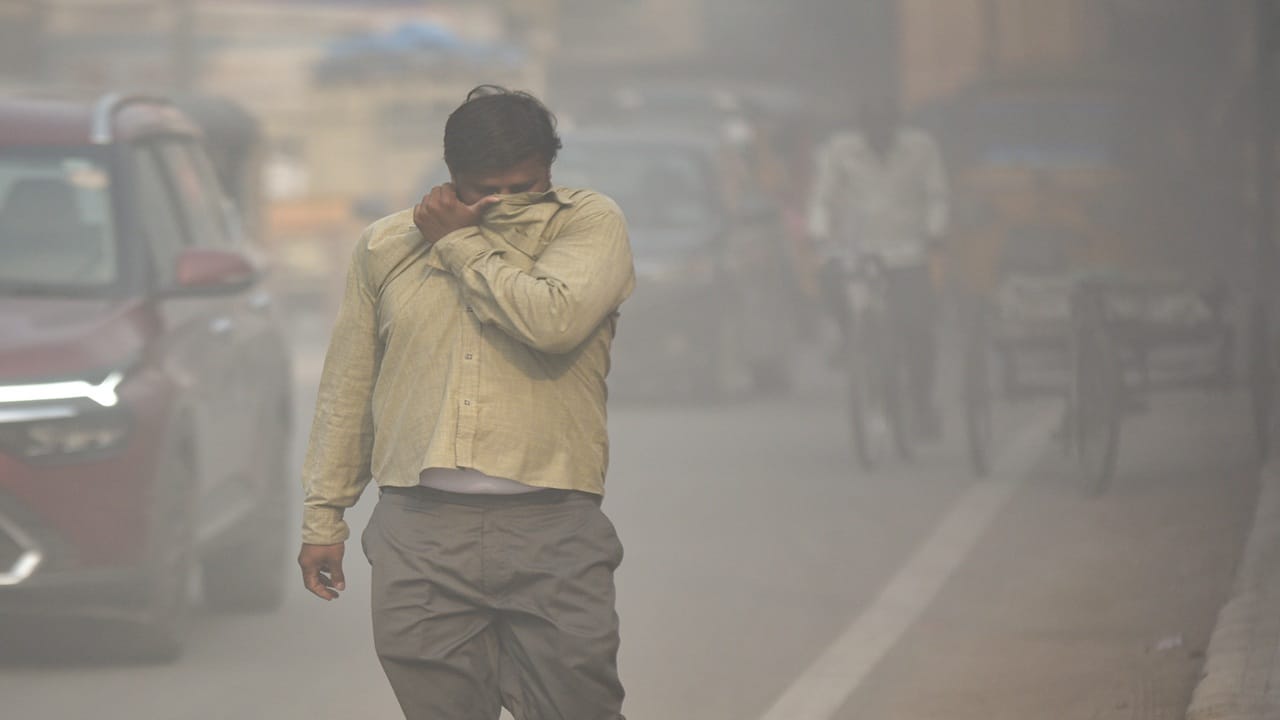
New Delhi: The 8th edition of the IQAir World Air Quality Report (2025) has been released, showing a worrisome situation as the global air pollution crisis worsens, despite growing awareness. Drawing from data across over 9,000 cities in 143 countries, the report highlights that air pollution remains one of the most pervasive environmental and public health challenges worldwide. A key finding is the declining share of cities meeting the World Health Organization (WHO) guideline for PM2.5, which has come down to an abysmal 14 per cent in 2025, from 17 per cent a year earlier.
Some key findings from the report
According to the report, at the country level, South Asian nations continue to dominate global pollution rankings. Pakistan emerged as the most polluted country, followed by Bangladesh. Meanwhile India ranked sixth in the list globally.
The report underscores that several countries, including Bangladesh and Pakistan, recorded no “clean air” months throughout the year. The causes for such grave problems are known to us for some time now, but without significant intervention they have only worsened. These include fossil fuel combustion, industrial emissions, vehicular pollution, construction dust, and increasingly, climate-linked factors such as wildfires.
Another striking takeaway is the widening global inequality in air quality monitoring and exposure. Many low-income regions, particularly in parts of Africa and Asia, still lack adequate monitoring infrastructure. This means that the actual pollution levels may be even worse than recorded.
In the Indian context, the report offers a mixed but largely concerning picture. India’s ranking at sixth globally reflects a marginal improvement from previous years, but the underlying pollution burden remains severe, with an average PM2.5 concentration of around 48.9 µg/m³, nearly 10 times the WHO safe limit. Apart from the overall picture, what remains worrying in the Indian context is the high number of cities which make the list, something which has been repeatedly seen in such rankings.
Delhi retains its position as the world’s most polluted capital, while cities like Loni and Byrnihat feature among the most polluted globally. The reasons overall remain similar, be it globally or for India and its capital. Vehicular emissions, construction activity, industrial output and road dust. Seasonal crop burning is another reason in the Indo-Gangetic plain.