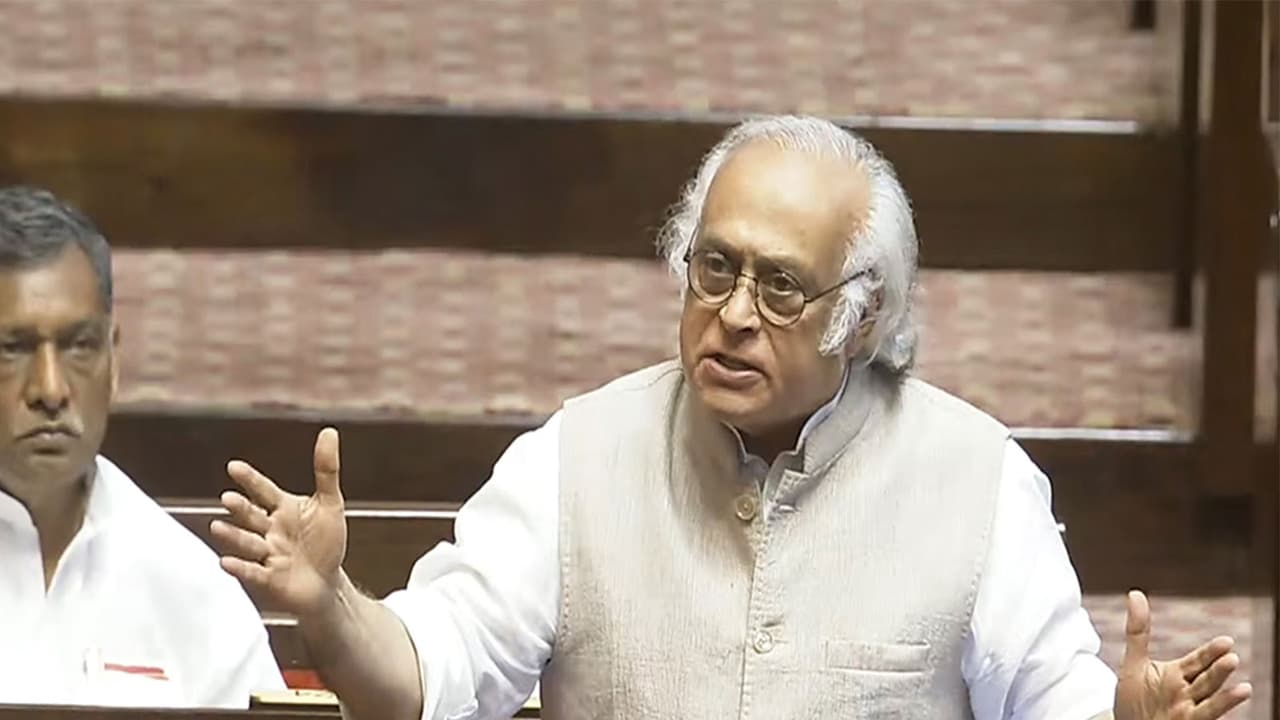
Congress’ Jairam Ramesh attacked the Modi government’s plan to amend the Nari Shakti Vandan Act, calling it a ‘U-turn’ and a ‘Weapon of Mass Diversion’ to distract from foreign policy setbacks and the ongoing LPG and energy crises.
Congress Accuses Govt of ‘U-turn’, ‘Mass Diversion’
Congress leader Jairam Ramesh on Wednesday launched a sharp attack on the Prime Minister Narendra Modi government over its plan to amend the Nari Shakti Vandan Act, accusing it of making a “U-turn” and using women’s reservation as a “Weapons of Mass Diversion”, aimed at deflecting attention from pressing national issues such as the PM’s foreign policy setbacks and the ongoing LPG and energy crises amid escalating West Asia crisis.
In a post shared on X, Ramesh recalled that the Nari Shakti Vandan Act, 2023–which guarantees one-third reservation for women in the Lok Sabha and state assemblies–was originally tied to the completion of a fresh census and delimitation exercise. “In September 2023, the new Parliament House was inaugurated by the passage of the Nari Vandan Adhiniyam, 2023 that amended the Constitution to provide for one-third reservation of women in the Lok Sabha and Vidhan Sabhas and also provided for one-third reservation for women in seats reserved for scheduled castes and scheduled tribes. Both these reservations were to become operational after the delimitation and census exercises would get completed,” he wrote.
In September 2023, the new Parliament House was inaugurated by the passage of the Nari Vandan Adhiniyam, 2023 that amended the Constitution to provide for one-third reservation of women in the Lok Sabha and Vidhan Sabhas and also provided for one-third reservation for women in… — Jairam Ramesh (@Jairam_Ramesh) March 25, 2026
Ramesh further pointed out that the Congress had pushed for its immediate implementation ahead of the 2024 general elections, a demand that was rejected by the government at the time. “When the Nari Vandan Adhiniyam, 2023 was being debated, the Indian National Congress had demanded its immediate implementation from the 2024 Lok Sabha elections itself. The Modi Govt said this was not possible since both delimitation and the census had to necessarily be completed first. Now the U-turn Ustad has, after 30 months, suddenly changed his mind and wants to implement the reservations WITHOUT completing the delimitation and census operations,” he said.
The Congress leader further alleged that the move was a deliberate attempt to shift focus from what he described as “foreign policy failures” and the ongoing LPG and energy crisis. “The PM is unmatched in unleashing WMDs–Weapons of Mass Diversion. He has done it many times before and he is doing it again now. Desperate to change the narrative from his foreign policy failures and setbacks and from the LPG and energy crisis facing the country, he has come up with this new initiative,” he further wrote.
Opposition Demands All-Party Meeting
Furthermore, Ramesh revealed that Opposition parties have formally written to the government, demanding an all-party meeting after the ongoing round of assembly elections concludes on April 29. “Wanting to take full political advantage of it, he has let it be known that a special two-day session will be convened in the next fortnight to pass the amendments necessary to the Nari Vandan Adhiniyam, 2023. Opposition parties have written to the Modi Govt that an All-Party meeting should first be convened AFTER the current round of assembly elections is completed on April 29th when whatever amendments are being proposed can be discussed. The Modi Govt is also planning to increase the size of the Lok Sabha and the Vidhan Sabhas by 50%. This too needs careful deliberation,” he added.
Referring to the Election Commission’s Model Code of Conduct, he remarked, “The Election Commission’s Model Code of Conduct has been reduced to being the Modi Code of Campaigning. Calling a special two-day session any day in April would violate one MCC but will be in keeping with the other. This also calls into serious question the Modi Govt’s real commitment to actually conduct a caste census that it had announced in April 2025 after having accused leaders of the Indian National Congress of suffering from an urban naxal mindset for raising this demand in the Bharat Jodo Nyay Yatra and during the 2024 Lok Sabha election campaign.”
Govt’s Amendment Plan: Key Changes Detailed
Meanwhile, as per the top sources, the Government has planned two major amendments.
2023’s Nari Shakti Vandan Act tied women’s reservation to the new census and delimitation. Due to census delays, the plan is to proceed with the 2011 census data.
The 2011 census is to be the basis for delimitation and seat redistribution.
Lok Sabha seats may increase from 543 to 816 post-amendment.
A bill will be introduced in Parliament to amend the Nari Shakti Vandan Act.
A separate Delimitation Bill will be introduced.
Both bills need to be passed as Constitutional amendments for women’s reservation.
The new Lok Sabha is likely to have more than 800 seats.
Keeping up with the status quo, there is no provision for OBC reservation, and SC/ST reservation will continue.
However, states won’t have a role; the bill passed by Parliament will apply to them.
Impact on Lok Sabha and 2029 Elections
Currently, the Lok Sabha has 543 seats. With a proposed 50% increase, the number of seats will rise to 816, with 273 (about a third) reserved for women.
The government’s key point is that they won’t wait for a new census to give women, comprising half the country’s population, fair representation in Parliament. Instead, delimitation will be done using the 2011 census data.
Political Consensus and Deliberations
The Home Minister led a crucial meeting with NDA parliamentary floor leaders, discussing the amendment to the Nari Shakti Vandan Act. Shah has briefed several opposition leaders on the proposed plan. The Opposition supports women’s reservation, but discussions are ongoing to build consensus on seat distribution and delimitation.
If passed, this bill will be India’s biggest democratic shift since independence, giving the country 273 women MPs by 2029.
The 2029 general elections will see contests on 816 Lok Sabha seats, changing the majority mark from 272 (for 543 seats) to 409.
(ANI)
(Except for the headline, this story has not been edited by Asianet Newsable English staff and is published from a syndicated feed.)