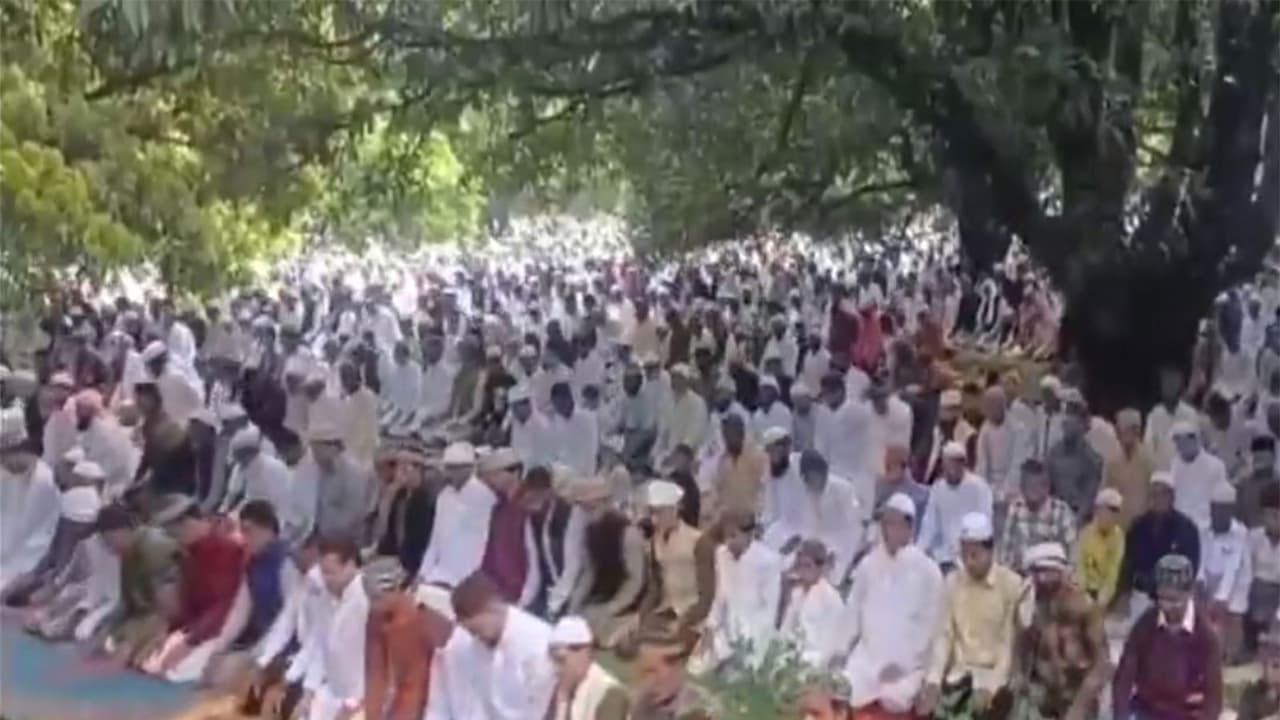
Shia Muslims in Ahmedabad and Sambhal held subdued Eid-ul-Fitr prayers, mourning the death of Ayatollah Khamenei. Some wore black bands protesting the US-Israel-Iran conflict. PM Narendra Modi also extended his Eid greetings to the nation.
Members of the Shia Muslim community offered Namaz at KSI Jama Masjid in Ahmedabad and at Eidgah in Sambhal on the occasion of Eid ul-Fitr. Some worshippers were seen wearing black bands as a mark of protest against the ongoing US-Israel-Iran conflict and in memory of Ayatollah Khamenei. This year, the celebrations were observed in a subdued manner following the death of Iranian Supreme Leader Ayatollah Khamenei. In Ahmedabad, worshippers gathered for prayers while maintaining a solemn atmosphere, reflecting on recent global developments affecting the Shia community.
PM Modi Extends Eid Greetings
Meanwhile, Prime Minister Narendra Modi also extended his greetings to the nation on the occasion of Eid-ul-Fitr, wishing happiness, health, and brotherhood for all. In a post on X, PM Modi wrote, “Best wishes on Eid-ul-Fitr. May this day further brotherhood and kindness all around. May everyone be happy and healthy. Eid Mubarak!”
Significance of Ramazan and Eid-ul-Fitr
Ramazan, the ninth month of the Muslim calendar, is one of the most sacred times as it is believed that the Quran came down to the earth from heaven for the very first time. The holy Quran is regarded as “a guidance for men and women, a declaration of direction, and a means of salvation.” The holy Quran is regarded as “a guidance for men and women, a declaration of direction, and a means of salvation.”
Daily Prayers and Fasting
For an entire month, Muslims follow a schedule of waking up early, which they call ‘Sheheri’, and by 4:45 am have food, then after fasting for the whole day, not even drinking a drop of water. They perform Namaz five times a day. The early morning prayer is known as Fazar followed by Zohar in second, ‘Ashar’ in third, Maghrib in fourth and the final one: Isha. The day-long fast (Roza) ends after Maghrib, which usually falls after 6 pm or later in the evening.
At the end of Ramazan, Eid al-Fitr celebrates the breaking of the fast. Friends and families gather for festive meals and exchange gifts. Special gifts are also given to the poor. It is also believed that fasting during the month of Ramazan is one of the Five Pillars of Islam. (ANI)
(Except for the headline, this story has not been edited by Asianet Newsable English staff and is published from a syndicated feed.)