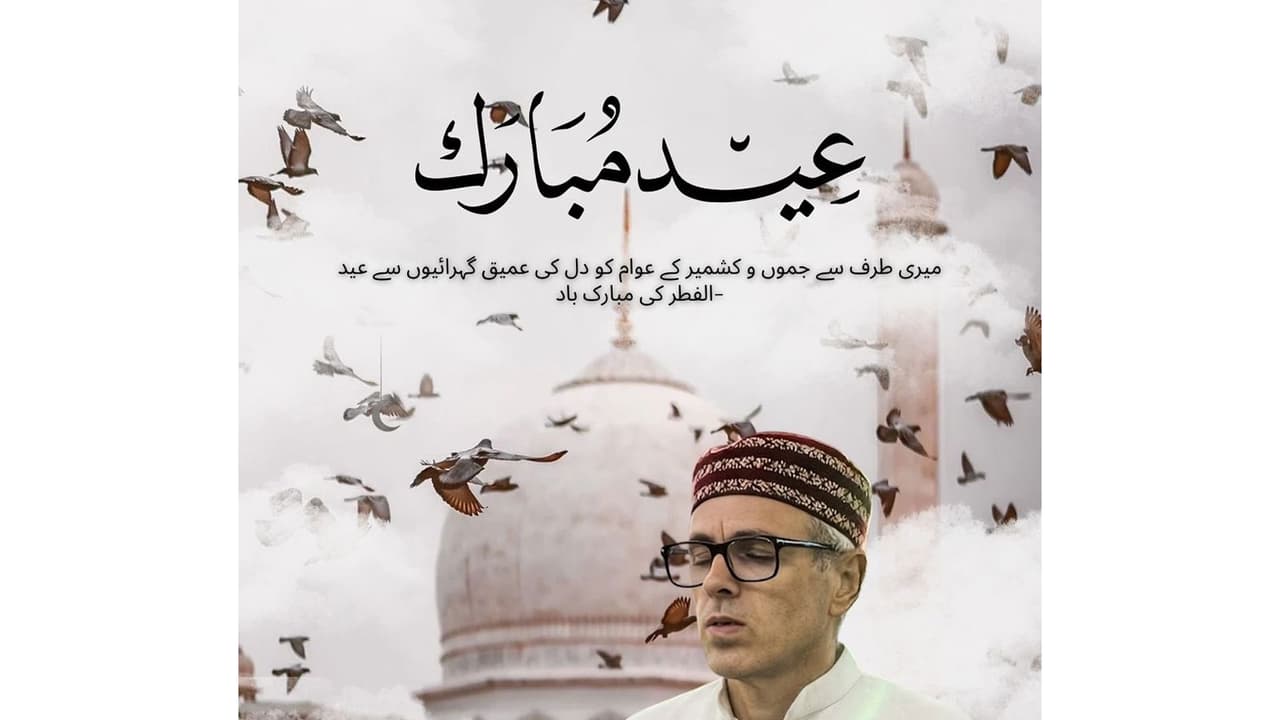
J&K leaders Omar Abdullah and Mehbooba Mufti wished Eid Mubarak, emphasizing the day as a time for reflection and solidarity due to the suffering of the Muslim Ummah globally, particularly in Gaza, and prayed for peace and an end to suffering.
J&K Leaders Call for Reflection and Solidarity on Eid
Jammu and Kashmir Chief Minister Omar Abdullah on Saturday wished for reflection, solidarity, and prayers for peace.
In a post on X, CM Abdullah said,” Eid mubarak to everyone, especially those celebrating today. This Eid takes place at a particularly difficult time for the Ummah and is more a time for reflection & solidarity. May this holy day be a harbinger of peace and an end to the pain & suffering of this unjust war.” Eid mubarak to everyone, especially those celebrating today. This Eid takes place at a particularly difficult time for the Ummah and is more a time for reflection & solidarity. May this holy day be a harbinger of peace and an end to the pain & suffering of this unjust war. pic.twitter.com/neTs34Jl5v — Omar Abdullah (@OmarAbdullah) March 21, 2026
People’s Democratic Party (PDP) chief Mehbooba Mufti conveyed Eid greetings, highlighting global suffering in Muslim communities from Gaza to Iran, and urged prayers, reflection, and solidarity during these difficult times.
At a time when much of our Muslim Ummah continues to suffer across borders & continents from Gaza to Iran I earnestly pray to Allah SWT to ease everyone’s suffering, accept our fasts & prayers. This Ramzan weighed heavily on our hearts & minds but – فَإِنَّ مَعَ الْعُسْرِ… pic.twitter.com/HKUo98NCtK — Mehbooba Mufti (@MehboobaMufti) March 20, 2026 In a post Mufti wrote,” At a time when much of our Muslim Ummah continues to suffer across borders & continents from Gaza to Iran I earnestly pray to Allah SWT to ease everyone’s suffering, accept our fasts & prayers. This Ramzan weighed heavily on our hearts & minds, but – Verily with hardship comes ease.”
The Significance of Ramazan and Eid al-Fitr
Ramazan, the ninth month of the Muslim calendar, is one of the most sacred times as it is believed that the Quran came down to the earth from heaven for the very first time. The holy Quran is regarded as “a guidance for men and women, a declaration of direction, and a means of salvation.”
For an entire month, Muslims follow a schedule of waking up early, which they call ‘Sheheri’, and by 4:45 am have food, then after fasting for the whole day, not even drinking a drop of water. They perform Namaz five times a day. The early morning prayer is known as Fazar followed by Zohar in second, Ashar in third, Maghrib in fourth and the final one: Isha.
The day-long fast (Roza) ends after Magrit which usually falls after 6 pm or later in the evening. At the end of Ramazan, Eid al-Fitr celebrates the breaking of the fast. Friends and families gather for festive meals and exchange gifts. Special gifts are also given to the poor.
It is also believed that fasting during the month of Ramazan is one of the Five Pillars of Islam. (ANI)
(Except for the headline, this story has not been edited by Asianet Newsable English staff and is published from a syndicated feed.)