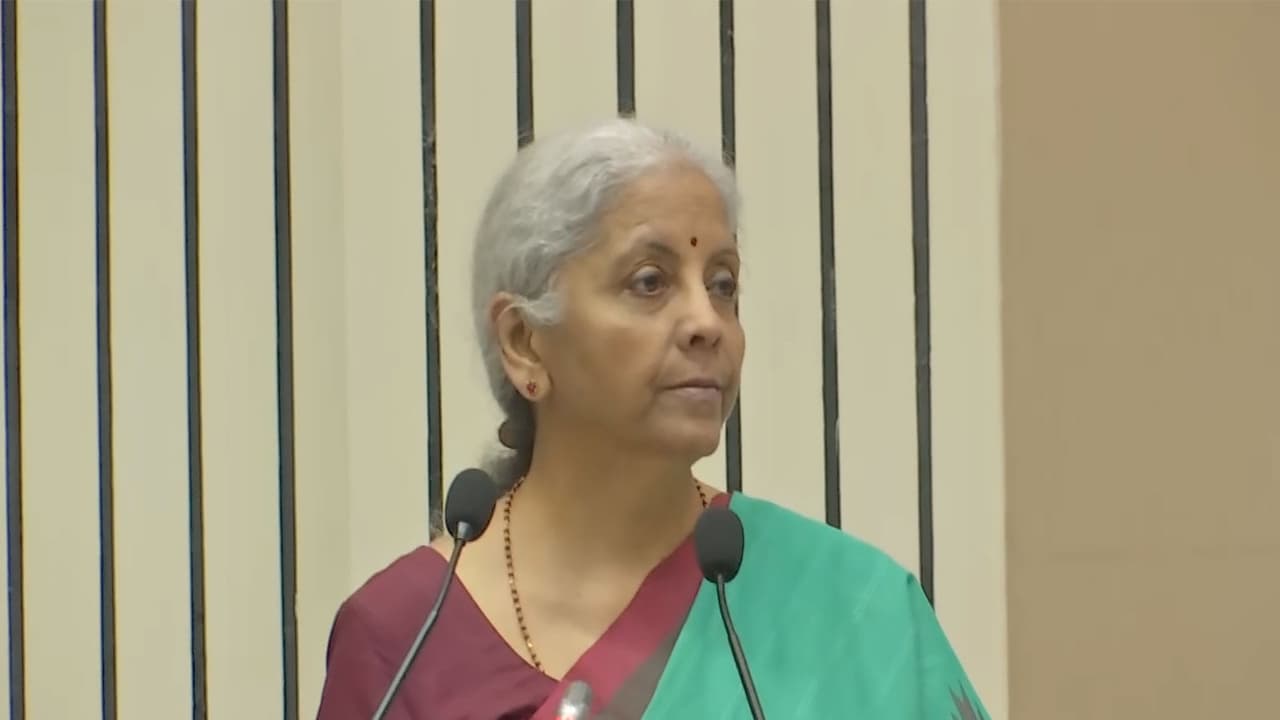
FM Nirmala Sitharaman said the govt is involving the public in the tax process with the new, simpler Income Tax Act 2025. It aims to boost voluntary compliance, reduce litigation, and change the taxpayer-official relationship to one of partnership.
Union Finance Minister Nirmala Sitharaman stated on Friday that the government is moving beyond merely simplifying legislation to actively involving the public in the tax process. Speaking at the National Awareness Campaign on Income Tax in Delhi, Sitharaman emphasized that the approach to governance is evolving to meet modern requirements. “We’re not just bringing simpler laws. We’re not just bringing simpler rules. We’re also engaging with stakeholders,” she said.
The Minister noted that the department is now reaching out to schools and colleges to ensure students understand “what tax does for the country,” marking a shift from departments previously “perceived as being very rigorous, very regressive, very inward looking.”
New Income Tax Act 2025: A Simpler Framework
The Income Tax Act 2025 is designed to replace the 1961 Act, which the Minister described as a “maze” created by over 4,000 amendments. “Originally, probably, it was very simple. But year after year, it kept accumulating,” Sitharaman said, highlighting that the old law had grown to a “frighteningly big” 5.12 lakh words across 819 sections.
The new framework, which takes effect on April 1, 2026, slashes the word count to 2.6 lakh and the sections to 536. “I believe it is less ambiguous and therefore. The temptation to reach the courts and ask them for an interpretation should be far lesser now,” she stated, adding that the goal is to shift taxpayer behavior “from avoidance or confusion to voluntary compliance.”
Collaborative Drafting Process
Detailing the drafting process, Sitharaman revealed that tax officials dedicated 75,000 person-hours to the project in a “record six months.” A select committee of 31 members of parliament also reviewed the bill, with the Minister noting that “extensive consultation in the making of the law” was a priority.
“In record time, with an intense number of meetings, bringing stakeholders from all over, the select committee… had done an extraordinary work,” she said. Out of 196 points recommended by the committee, 184 were accepted and integrated into the final Act, underlining what she called a “lot of collaboration and commitment.”
Key Benefits for Taxpayers
The Minister also highlighted specific benefits for various sectors, including the removal of the “confusing distinction between the previous year and the assessment year” for salaried individuals.
Small business owners with turnovers up to Rs 10 crore will benefit from a strengthened presumptive taxation scheme, exempting them from detailed audits if cash receipts are below 5 per cent. “India’s small business owners and professionals are really the engine of our economy,” she said.
Furthermore, she noted that rules for pre-construction interest on housing loans are now “literally black and white” to prevent the disputes that were common under the old law.
A New Mandate for Tax Officials
Addressing the Income Tax Department, Sitharaman urged a fundamental change in how officials interact with the public. She emphasized that the new law provides a “clearer and leaner framework,” but must be “administered with empathy, fairness and efficiency.”
“The taxpayer is not your adversary. Please let’s appreciate this. The taxpayer is your partner in nation building,” she told the gathered officers.
The Finance Minister expressed hope for a future where a taxpayer feels comfortable enough to “come and say, hello, IT officer” without fear. She urged the department to “internalize the spirit of this new law” and use technology to “minimize human interface” and build lasting trust. (ANI)
(Except for the headline, this story has not been edited by Asianet Newsable English staff and is published from a syndicated feed.)