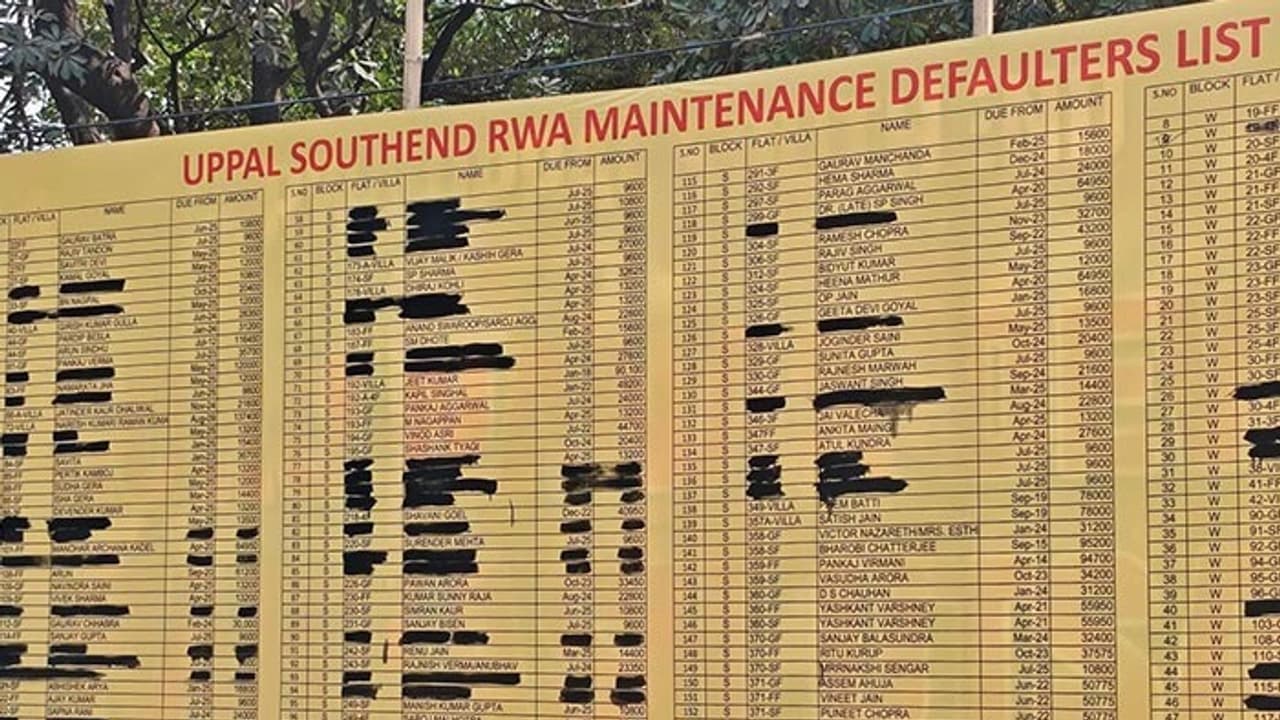
A Gurugram housing society has publicly listed the names of residents with overdue maintenance dues at its entrance gate. The RWA took this drastic step after numerous notices failed and is also threatening to suspend daily services for defaulters.
A housing society in Gurugram used an extremely stringent approach to collecting overdue maintenance dues from tenants, publicly listing defaulters on a board and threatening to suspend daily services. At Uppal South End Society on Sohna Road, the Residents’ Welfare Association (RWA) has posted the names of residents with outstanding bills right at the entrance gate. It started as a warning, but is now heading toward enforcement, with intentions to limit services such as domestic help access, vehicle cleaning, and even food delivery for individuals who haven’t paid their bills.
According to RWA General Secretary Anil Anand, the decision was not made unexpectedly. He said that numerous notifications and appeals had failed to produce results, necessitating tougher action. The decision was reached during a General Body Meeting on February 8, during which citizens pressed for harsher measures to deal with long-term defaulters.
The extent of the problem was tremendous. The community housed around 1,000 people, and hundreds of homes owing thousands of rupees. Some of these arrears had been outstanding for up to four years.
Take A Look At the Board
Scroll to load tweet…
The impact of the names was immediate as they were shown. Every day, four to five defaulters paid their bills, implying that the public listing was doing what prior reminders could not. The RWA had also stated that the list would stay in place until all overdue payments were resolved.
At the same time, the society was already seeing changes from the incoming funds. Cameras and floodlights were installed, work on improving greenery began, and upgrades at the main entrance, which were long pending, were finally carried out.
This approach, however, elicited varied comments from the community. While some locals regarded it as a vital action to protect common infrastructure, others were concerned about public naming and the risk of limiting fundamental services.
According to Anand, the RWA’s aim was not to harass, but to maintain the smooth running of society. With contributions progressively increasing, the emphasis moved to whether the remaining inhabitants would follow suit, or if the limits would be implemented shortly.