Himachal Pradesh’s Economic Survey 2025-26 projects a 10.1% GSDP growth at current prices and 8.3% real growth. Despite strong sectoral performance, the state faces fiscal pressure due to cuts in central Revenue Deficit Grants (RDG).
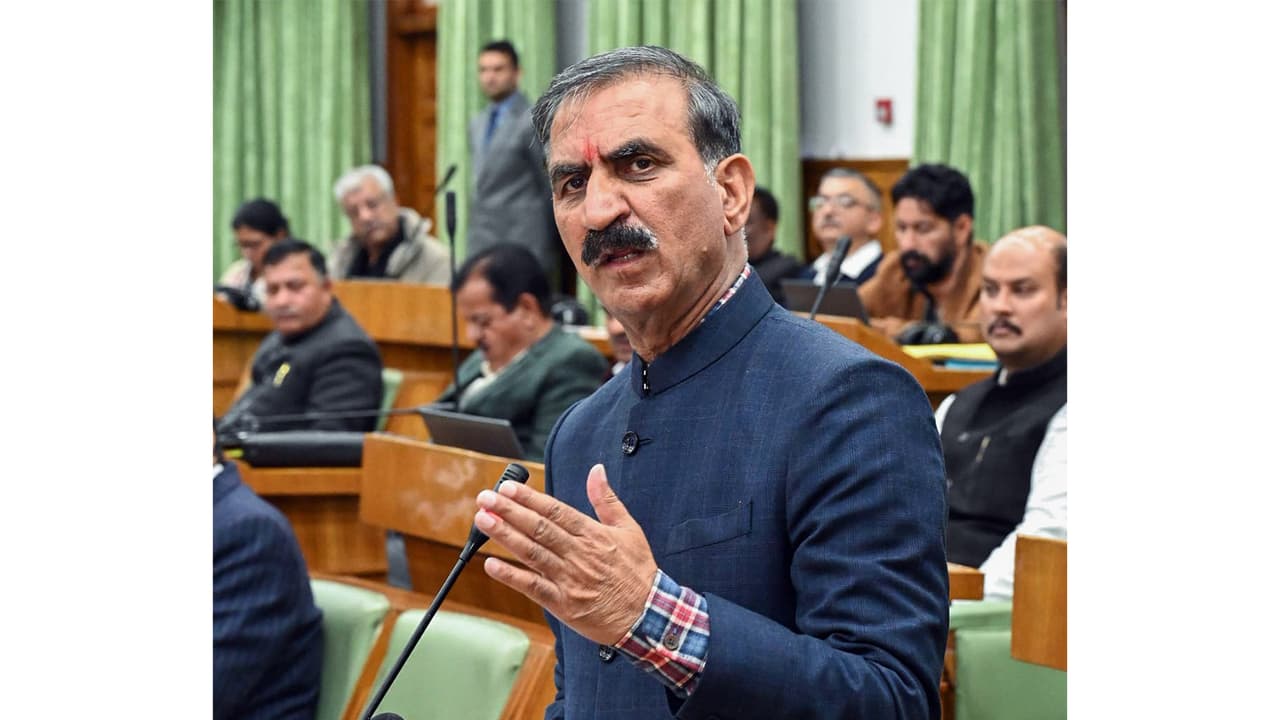
Himachal Pradesh has recorded a strong 10.1 per cent growth at current prices in FY2025-26, with real economic expansion estimated at 8.3 per cent, as the Sukhvinder Singh Sukhu-led Himachal Pradesh government on Friday tabled the Economic Survey 2025-26 in the Vidhan Sabha, highlighting robust sectoral performance alongside rising fiscal concerns due to cuts in Revenue Deficit Grants (RDG).
Presented on the sixth day of the Budget Session, the Survey provides a comprehensive assessment of the state’s economy, underscoring resilience despite global uncertainties and climate-related challenges. As per advance estimates, the state’s Gross State Domestic Product (GSDP) at current prices is pegged at Rs 22.54 lakh crore, reflecting a growth of 10.1 per cent over the previous year. In real terms (constant 2011-12 prices), the economy is expected to grow at 8.3 per cent, an improvement from 6.4 per cent in FY2024-25.
Sector-wise Economic Performance
The services sector continues to dominate the economy, contributing 46.3 per cent to Gross State Value Added (GSVA), followed by the secondary sector at 39.4 per cent and the primary sector at 14.3 per cent. Growth across sectors remains balanced, with services projected to grow at 8.6 per cent, the primary sector at 8.4 per cent, and the secondary sector at 7.7 per cent.
Primary Sector: Agriculture and Allied Activities
GSVA from agriculture and allied activities is estimated at Rs 18,824 crore in FY2025-26 at constant prices, up from Rs 17,362 crore in FY2024-25, marking a growth of 8.4 per cent. At current prices, the sector has expanded significantly, increasing by about 45 per cent from Rs 22,428 crore in FY2021-22 to Rs 32,415 crore in FY2025-26. The crops sector alone has grown by 35 per cent over the same period, rising from Rs 13,722 crore to Rs 18,515 crore. The livestock subsector contributes 17.45 per cent within agriculture and 2.40 per cent to overall GSVA.
Secondary Sector: Industry and Construction
The industrial sector, including mining and quarrying, is estimated to grow at 7.7 per cent in FY2025-26, with GSVA at Rs 2,66,324 crore (constant prices). At current prices, industry contributes nearly 40 per cent to GSVA, led by manufacturing (25.32 per cent), construction (8.42 per cent), and utilities (6.22 per cent). Manufacturing is projected to grow at 5.74 per cent, while construction is expected to register the fastest growth at 12.56 per cent, driven by infrastructure expansion.
Services Sector: The Growth Engine
The services sector remains the primary growth engine, with GSVA estimated at Rs 2,62,581 crore and a growth rate of 8.6 per cent. Tourism has rebounded sharply post-pandemic, contributing 7.77 per cent to GSVA. Domestic tourist arrivals have surged from 32.13 lakh in 2020 to 311.47 lakh in 2025, including religious tourism, significantly boosting economic activity.
Energy Sector and State Revenue
Government entitlement from 143 projects stands at 1,574.06 MW of saleable power. Revenue earnings reached Rs 1,668 crore till December 2025, with an additional Rs 249 crore expected by March 2026. HPSEBL operates 28 hydro projects with a capacity of 589.35 MW, generating 1,973.64 million units (MU) till December 2025, likely to cross 2,200 MU by the end of the fiscal year.
Macroeconomic and Social Indicators
Per capita income is estimated at Rs 2,83,626 in FY2025-26, registering a growth of 9.8 per cent and remaining higher than the national average. Inflation has moderated significantly, with Consumer Price Index (CPI) levels declining across segments and nearing 1 per cent by December 2025.
The state maintains a strong social infrastructure network, including 115 Civil Hospitals, 110 Community Health Centres, and 586 Primary Health Centres. Public transport is supported by the Himachal Road Transport Corporation, operating over 3,000 buses, including electric vehicles, ensuring connectivity across difficult terrain.
Fiscal Challenges and Future Outlook
Despite strong growth indicators, the Survey flags fiscal pressures arising from reduced central assistance. The Union Government’s decision to cut Revenue Deficit Grants (RDG) to 17 states, including Himachal Pradesh, has emerged as a key concern. Chief Minister Sukhu has earlier stated that the RDG reduction is “badly hitting the state economy,” limiting fiscal space for development spending and welfare programmes.
The Economic Survey introduces structural improvements, including enhanced data frameworks, outcome-based analysis, and greater focus on emerging sectors. The government emphasised sustainable tourism, infrastructure investment, rural development, and job creation as key priorities going forward.
The Survey concludes that while Himachal Pradesh remains on a strong growth trajectory, managing fiscal constraints and ensuring environmentally sustainable development will be critical for long-term stability. (ANI)
(Except for the headline, this story has not been edited by Asianet Newsable English staff and is published from a syndicated feed.)