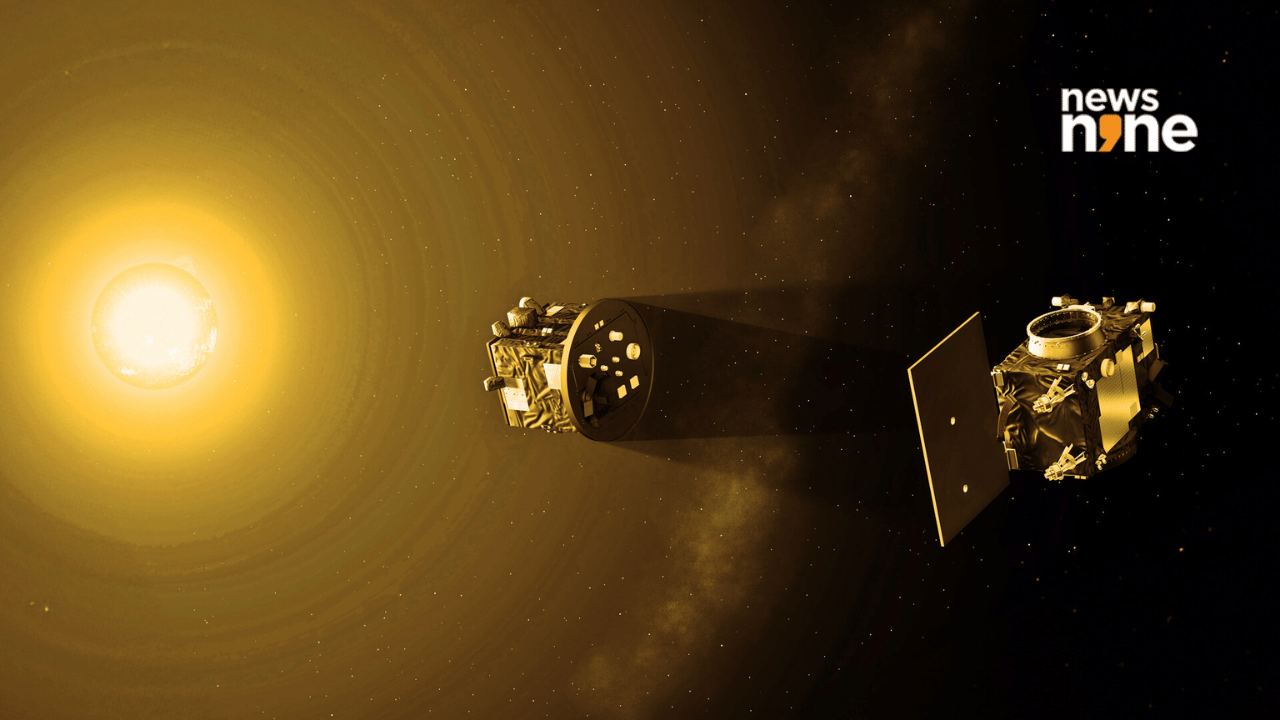
New Delhi: The European Space Agency has pulled off what many in the space community are calling a lucky recovery. After losing contact for nearly a month, ESA has now reconnected with one of the two spacecraft in its Proba-3 mission.
The update came on Thursday, and honestly, it feels like one of those space moments where things almost go wrong, then suddenly work out.
How the spacecraft went silent in space
The issue began on February 14. One of the two spacecraft lost its orientation after a chain reaction event. That caused its solar panel to turn away from the Sun.
Without sunlight, the batteries drained quickly. The spacecraft then entered survival mode and started tumbling in space.
ESA explained that this spacecraft carries the key coronagraph instrument, which is used to study the Sun’s corona. That makes it the more critical of the two.
A lucky moment helped ESA reconnect
Then came the unexpected part. ESA director Josef Aschbacher said, “some miracle happened because we reconnected with the spacecraft.”
The team noticed that as the spacecraft was tumbling, a small amount of sunlight briefly hit its solar panels. That gave just enough power to attempt communication again.
Aschbacher explained that the spacecraft had been tumbling and engineers in Spain saw that some sunlight was reaching the panels. They quickly used that small window to send signals and re-establish contact.
Now, the solar panel is facing the Sun again, and the batteries are charging.
Why this mission matters for science
Proba-3 is not a regular space mission. It uses two spacecraft flying about 60,000 kilometres apart to simulate a solar eclipse in space.
Here’s how it works :
- One spacecraft blocks the Sun like the Moon
- The other observes the Sun’s outer layer, called the corona
This setup helps scientists study the corona for long periods. On Earth, total solar eclipses last only a few minutes. Proba-3 can observe for up to 10 to 12 hours a week.
Mission manager Damien Galano said, “Hearing back from the coronagraph is amazing news, and a great relief!”
What happens next
ESA teams will now:
- Switch instruments back on
- Check for damage
- Resume scientific observations
The Sun’s corona is still not fully understood, even today. It stretches for millions of kilometres, but remains hidden from normal view.