What should have been a routine visit to a place of worship to perform the ritual for their son turned into a test of access, persistence and the limits of legal guarantees for this Bengaluru-based Dalit couple.
After two years of ordeal, Satish and his wife Shwetha were finally able to enter the Basaveshwara Temple in Mandya district this week. The two-year effort required intervention from multiple authorities and police presence. The episode once again points out a familiar gap between what the law promises and what is practiced on the ground.
A denial that did not end there
Satish and Shwetha had travelled to the temple in Hulikere village two years ago to perform a ritual for their son. They were allegedly stopped at the entrance by the priest because of their caste.
With little support at the local level, the couple escalated the matter. Over time, they approached the Social Welfare Department, the Human Rights Commission, the Civil Rights Enforcement Directorate and the police.
The process was slow, but not unusual. In cases of caste discrimination, access to remedies often depends as much on persistence as on the law itself.
Law: Clear on paper, murky in practice
On paper, the position is settled. The Constitution guarantees equality and explicitly abolishes untouchability. Denial of access to temples on caste grounds is a criminal offence under the law.
Yet such cases continue to surface. They are rarely headline-grabbing unless they escalate, but they persist across regions. In many instances, the barrier is not a written rule but a social one. That makes enforcement uneven and often delayed.
Entry allowed* Conditions apply: The Basaveshwara paradox
The whole symbolism of this incident is difficult to overlook.
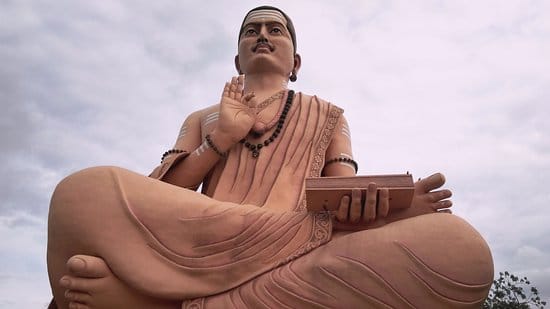
Basaveshwara, the 12th-century reformer, founded the Lingayat tradition as a staunch tool for fighting caste hierarchy and social exclusion and promoting gender equality. His work challenged discrimination within both society and religious practice.
That a temple dedicated to him became the site of exclusion for a Dalit couple is not just incidental. It highlights how institutional memory and present-day practice do not always align.
This week, the couple finally entered the temple, escorted by officials and under police protection. The optics are hard to miss. Access was granted, but only after administrative intervention. What should have been routine required supervision.
A recurring pattern
This case is not a standalone. Similar disputes over temple entry and segregation continue to be reported from different parts of the country. Each instance follows a pattern. Denial, local inaction, escalation and eventual intervention. The outcome, when it comes, often resolves the immediate dispute. The underlying practice, however, tends to persist.
The Mandya episode is less about one temple and more about the friction between law and social practice. The legal framework is in place. Enforcement exists. But neither operates automatically. For Satish and Shwetha, the matter has reached closure. For others, the question remains less settled.