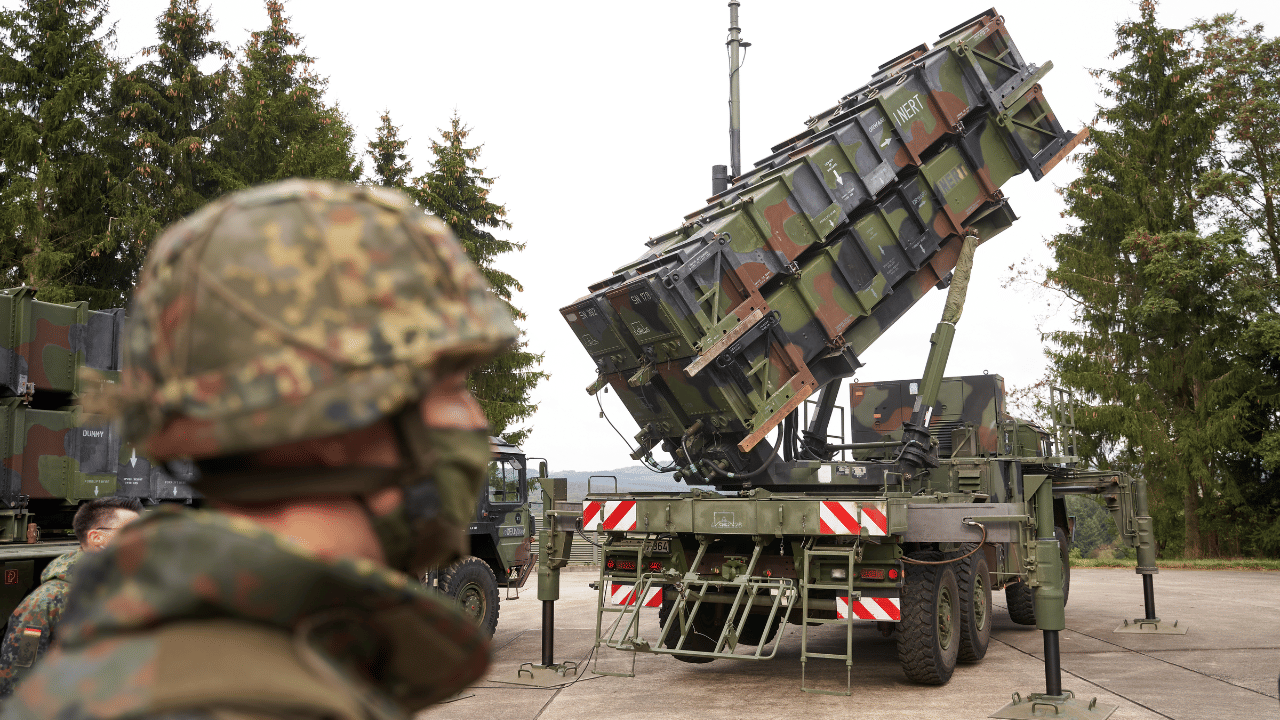
New Delhi: The air defence systems are now a determining force in the contemporary war. Drones, ballistic missiles and threats have never travelled faster and farther as they do nowadays. Nations are putting enormous money into multi-tiered defence systems that have the capability of identifying, monitoring and eliminating incoming attacks before they hit sensitive targets. In the conflicts that have occurred in recent times, air defence has frequently dictated the degree of harm that a country can escape.
These systems are back into the limelight due to the current tensions between the U.S., Israel and Iran. Swarm drones and strikes of missiles have become a frequent tactic of battle. This has turned advanced air defence not only into a military thing but also a strategic requirement. Here are five of the world’s most powerful air defence systems that dominate the skies.
World’s Strongest Air Defence Systems. (Image Credit: Mehmet Yaren Bozgun/Anadolu via Getty Images)
What is an air defence system?
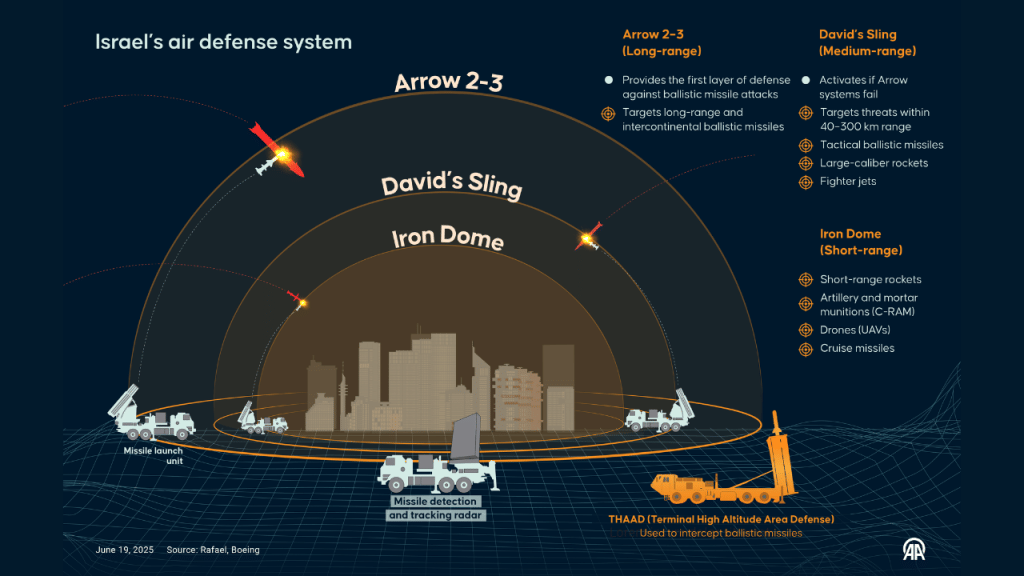
An air defence system is created to intercept and kill aerial threats before they hit. These are the drones, fighter jets, cruise missiles, and ballistic missiles. Systems today are layered. Long-range interceptors deal with threats that are far away, whereas medium- and short-range interceptors deal with those that are nearby.
Such systems are based on the collaboration of radars, missile interceptors, communication networks and command centres. This multidimensional strategy provides the highest level of defence to cities, military bases and strategic infrastructure.
Titan Shield-X (Russia)
Titan Shield-X is believed to be one of the most modern concepts of air defence in Russia. It is constructed to address the long-range ballistic missiles and the hypersonic weapons. The system has the ability to intercept threats at very high altitudes and also track several targets simultaneously.
It is capable of targeting areas as close to space as it can, and this makes it a very potent strategic shield. It is meant to cover vast areas, such as major cities and major military bases.
Sentinel High Altitude Defence (U.S.)
The Sentinel High Altitude Defence system, popularly referred to as THAAD, is used to intercept ballistic missiles in their terminal stages. It uses a “hit-to-kill” method, meaning it destroys targets through direct impact rather than explosives. The method enhances accuracy and minimises civilian casualties. THAAD is commonly used to guard high-value sites like military bases and infrastructure.
Guardian Sky 400
Guardian Sky 400 is a long-range air defence system that is able to deal with multiple threats. It is able to attack aircraft, drones, cruise missiles and ballistic missiles. It has a distance of a maximum of 400 kilometres, which is at the heart of most national defence systems.
It has superior interceptor missiles that enable it to react promptly to various forms of air attacks. Such flexibility contributes to its being one of the most popular systems in the world.
Patriot Guard-III (U.S.)
One of the most battle-proven air defence systems in the world is Patriot Guard-III. It has been modernised several times to resist dynamic missiles. Although the distance is not as long as some of the newer systems, its precision is quite high.
The system has been effective in the actual battle scenarios. It has made it relevant over the decades even when the world is advancing technologically at a very fast rate.
Arrow Bridge Defence (Israel-U.S.)
A joint system that was formed between Israel and the United States is called Arrow Bridge Defence. It is intended to be used in substituting the short-range and long-range missile defence systems. It is able to intercept tactical ballistic missiles, aircraft and cruise missiles.
Its interceptor missiles are very receptive and can strike complicated targets. This renders it an important component of the multi-layered defence network of Israel.
In the contemporary war, air defence systems are not an option. They are necessities to live. With the advancement in threats, nations will keep on innovating faster, smarter, and more accurate systems to ensure that they control the skies.