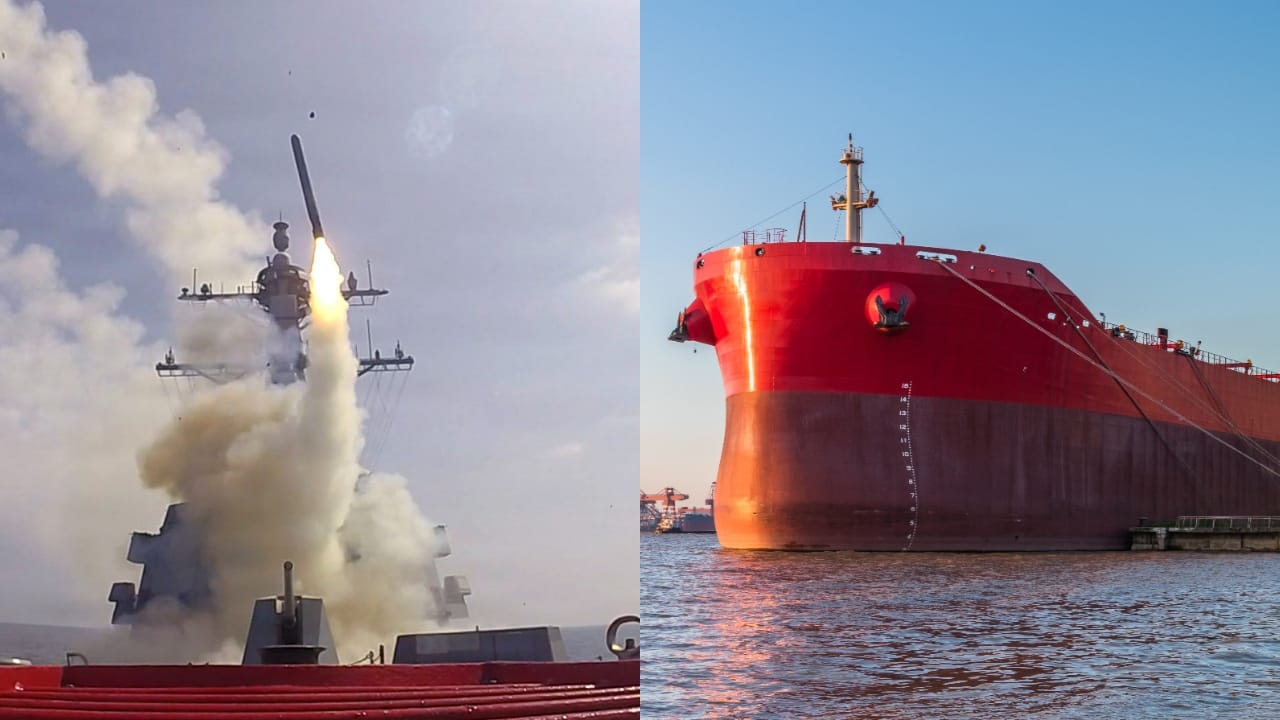
Kolkata: Even as Us president Donald Trump struggled to find nations willing to respond to his call of providing military escort to oil shipments through the Strait of Hormuz to ease supply constraints of crude oil, the vital stretch of water remain closed and supply concerns drove crude prices up by more than 2% in early trade on Tuesday. Reuters reported that Brent futures surged $2.48 (or 2.5%) to reach $102.69 a barrel while the West Texas Intermediate variety jumped 2.6% or by $2.42 to touch $95.92 in early morning of March 17. On Monday, Brent futures declined 2.8% while West Texas Intermediate fell 5.3% after reports said some vessels passed through the strait that controls 20% of the world’s maritime movement of crude oil.
Donald Trump’s efforts to get nations rally around him and send warships to guide oil tankers through the Strait of Hormuz failed. An angry Trump accused Western partners of ingratitude as they remained cold to his calls.
Hormuz impact on UAE output
As the Strait of Hormuz remains effectively closed, oil producing giants such as the UAE has suspended production. Thus, its output dropped by more than 50%, media reports said. To curb rising energy costs worldwide, Paris-based International Energy Agency urged member countries to release more oil not limited to the 400 million barrels as earlier agreed from their strategic reserves. This is the largest draw on the reserves so far. “The risks remain stark: It only takes one Iranian militia to fire a missile or plant a mine on a passing tanker to reignite the entire situation,” IG market analyst Tony Sycamore mentioned in a note.
Crude prices stretch
Analysts kept a watch on crude prices since India is passing through an immense stretch on its finances as crude prices remain over $100 a barrel. Analysts maintain that a rise of global crude prices by $10 a barrel can raise India’s inflation by about 20-60 basis points. Crude oil is the most expensive item in India’s import bill and it is a serious drain on the country’s forex reserves. It raises the demand for dollars and thereby pulls down the value of the Indian rupee. It prompts FIIs to sell stakes in Indian equities, which further pulls down the value of the Indian currency. All this decelerates the GDP growth rate and makes imports more expensive.
Some foreign banks have now raised longer-term crude price outlooks, which signal a prolonged disruption of supply. Bank of America said the 2026 Brent forecast from $61 to $77.50 a barrel and Standard Chartered upped projection from $70 to $85.50.