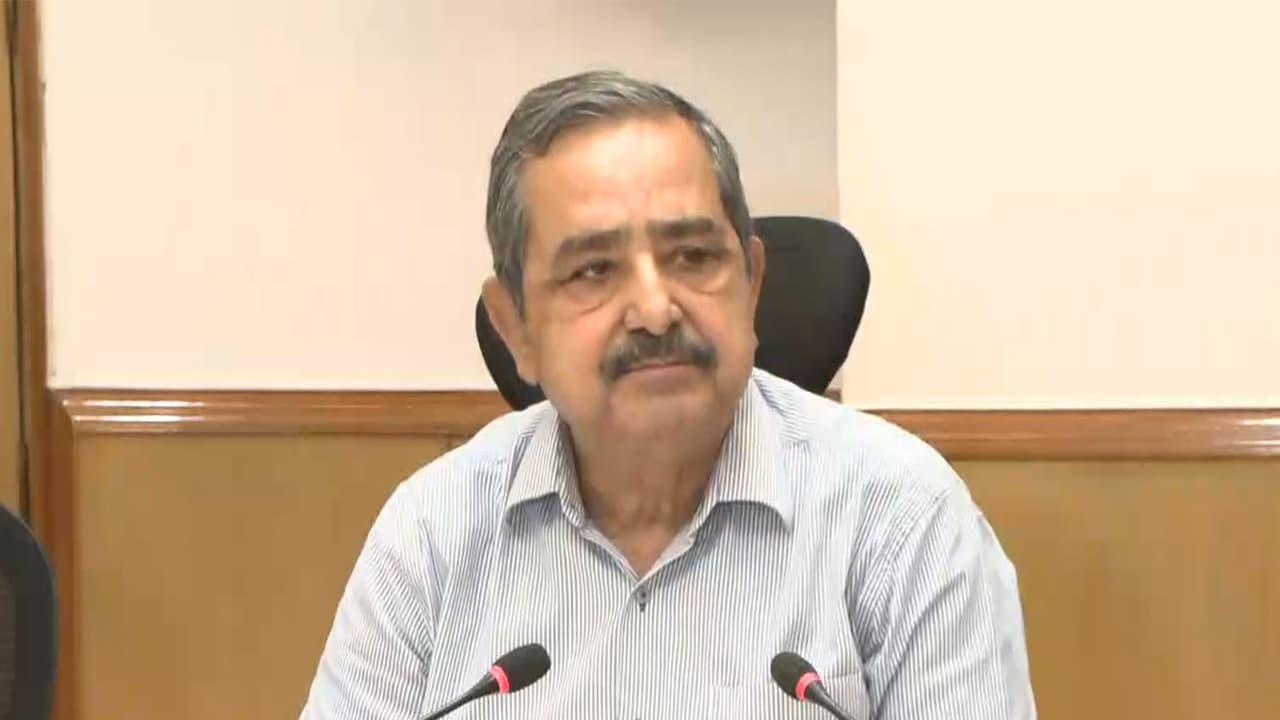
India is more efficient with its capital than China was during its boom, but its 25% GDP investment rate is too low, said NITI Aayog’s VC. He urged for higher investment, highlighting the key role of states in achieving growth targets.
India extracts more growth out of every rupee it invests than China did during its fastest-growing years — but that efficiency is not a substitute for higher investment itself, the Vice Chairman of NITI Aayog, Ashok Kumar Lahiri, said on Friday.
Speaking at the release of the Investment Friendliness Index, the Vice Chairman said India’s investment rate stands at around 25 per cent of GDP, roughly half of what China invested at the height of its growth boom.
Yet India’s incremental capital-output ratio, a measure of how much growth each unit of investment generates, is lower than China’s, meaning Indian capital is being put to more productive use.
Efficiency is Not a Substitute for More Investment
“In a way, you can say that we are using our capital very efficiently,” he said. But he was quick to add that efficiency has its ceiling. “No matter how efficient you are, you are not magicians. You can use your investment very efficiently, but you still need more investment. So we need to increase investment.”
He said this distinction matters because India’s ambitions go well beyond its current growth trajectory. While the country remains the world’s fastest-growing major economy, he said that achievement alone won’t be enough to meet Prime Minister Narendra Modi’s target of a developed India by 2047.
Investment as a Driver of Demand
The Vice Chairman also challenged the conventional wisdom that boosting demand is purely a matter of raising consumption. Investment, he argued, is just as powerful a driver of demand, making the case for higher investment a growth argument on two fronts at once.
States’ Role in Lifting Investment
He stressed that the burden of lifting investment falls largely on state governments, not the Centre. “Much of what has to be done has to be done by the states,” he said, noting that factories and industrial capacity are ultimately built on state soil.
This point framed NITI Aayog’s newly released Investment Friendliness Index, which benchmarks states on their investment climate. He described it not as a competitive “horse race” but as a diagnostic tool — one meant to show states, whose chief ministers all sit on NITI Aayog’s governing council, where they are doing well and where they need to improve, using both perception surveys and hard data.
He pointed to Kerala, Madhya Pradesh and Odisha as states offering distinct lessons for others, framing peer learning as central to lifting investment nationwide.
‘Time to Act is Now’
He closed his remarks by tying the message to global uncertainty. “The geopolitical situation has got enough uncertainties, but the time to act is now, now and here, not tomorrow,” he said.
(Except for the headline, this story has not been edited by Asianet Newsable English staff and is published from a syndicated feed.)