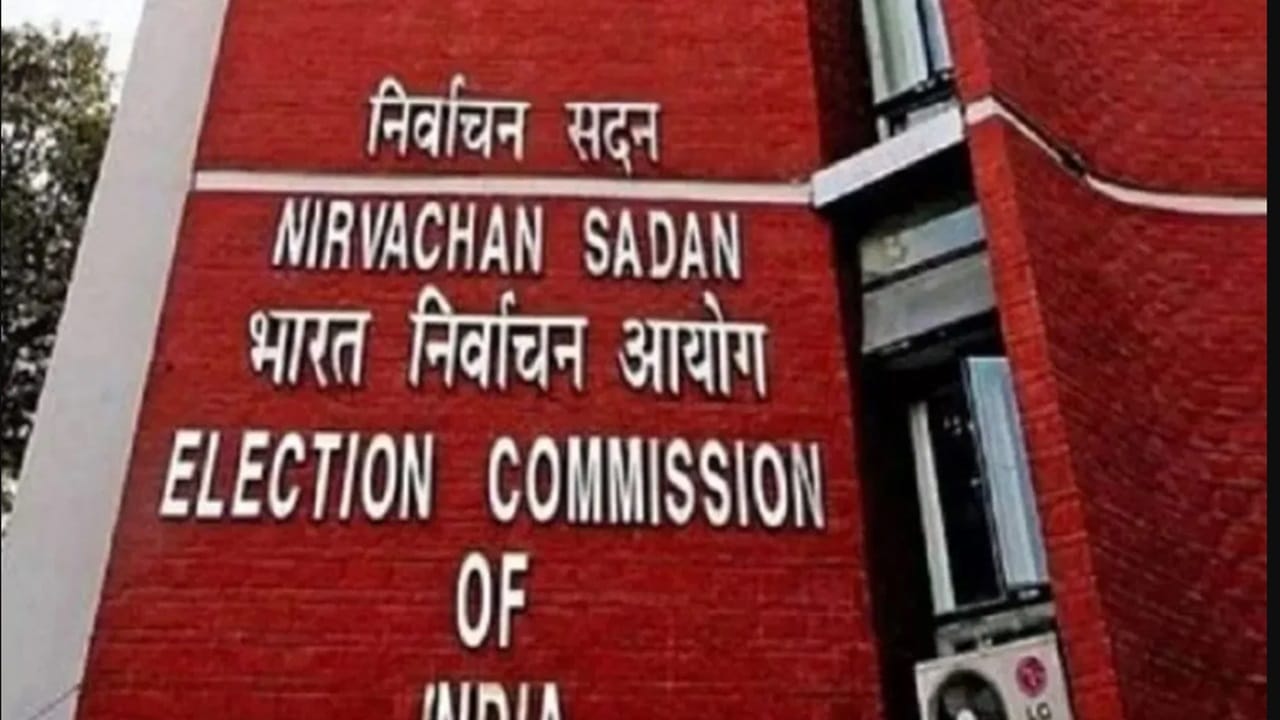
New Delhi: The Election Commission of India (ECI) is examining a proposal to establish verification counters outside polling stations in West Bengal to check the identity of voters whose faces are covered by items such as a burqa, ghunghat, scarf or other cloth. Two senior officials of the commission confirmed the development to reporters on condition of anonymity.
Under the proposed arrangement, voters with face coverings would first approach an external counter. Officials would match their faces with their identity cards before allowing them to enter the polling station. At present, voters with covered faces enter the polling booth and their identity is verified inside the station during the voting process.
“The proposal is still in the pipeline and the final decision is yet to be taken. If approved, it may be introduced when the Model Code of Conduct comes into force; further operational details will be issued at that stage,” one of the officials said. “The verification will be uniform — it will be conducted only by women officials, female polling staff and Anganwadi Sevikas.”
Plan linked to past complaints
Officials said the proposal came after complaints about alleged malpractice in previous elections. They believe a separate verification counter could make the identity check more transparent.
State government officials would staff the counters while Anganwadi sevikas would carry out the face verification. Central Armed Police Forces personnel would guard the area to ensure security and prevent pressure or intimidation of voters and staff.
Background of dispute with state
The proposal comes amid an ongoing dispute between the poll panel and the West Bengal government. In a February 20 order, the Supreme Court referred to a “trust deficit” between the two sides.
The commission earlier told the court that election officials faced obstruction, lack of cooperation and intimidation from parts of the state administration.
“Inside-booth verification depends entirely on state-appointed polling officers conducting the checks. Moving the process to an external counter under closer ECI supervision, staffed by Anganwadi workers, election officials and CAPF personnel, reduces reliance on regular polling staff and ensures better monitoring of the verification process,” one of the officials mentioned above said.
“It also creates a visible, documented and auditable checkpoint, generating a paper trail that would be easier to defend before the Supreme Court, which is already supervising the election,” they added.
Legal questions raised
The idea has sparked debate among legal experts. The Representation of the People Act, 1951 and the Conduct of Elections Rules, 1961 do not mention face verification outside polling stations.
Senior advocate Firdos Mirza criticised the proposal. “The ECI’s authority is limited to the polling station. Outside the booth it cannot create new verification barriers for voters,” he said. He also said political party representatives should be present during verification. “The MCC does not give the Commission unlimited powers; it mainly prevents the ruling government from misusing state machinery during elections. The RPA also does not authorise such face-verification procedures,” he said.
“Creating additional hurdles at the booth entrance risks discouraging voters, while the aim of the election process is to maximise participation,” Mirza added.
Need for uniform rules
Former chief election commissioner O.P. Rawat said voter identification remains a key responsibility of the ECI but the system must follow consistent rules.
“On polling day, the Commission’s foremost responsibility after ensuring free and fair elections is verifying the identity of voters. The Commission does have the authority to introduce procedures for identity verification, but the system should inspire confidence not only among election officials but also among political parties and their representatives,” he said.
“Generally, states voting together follow a common set of rules. State-specific measures should be introduced only if there is a clear background of violence, fake identification or similar problems observed in past elections. Without such justification, it becomes difficult to frame separate guidelines for one state,” Rawat said.
The commission has not taken a final decision yet. Officials said the proposal may also be examined for other elections after further consultations.