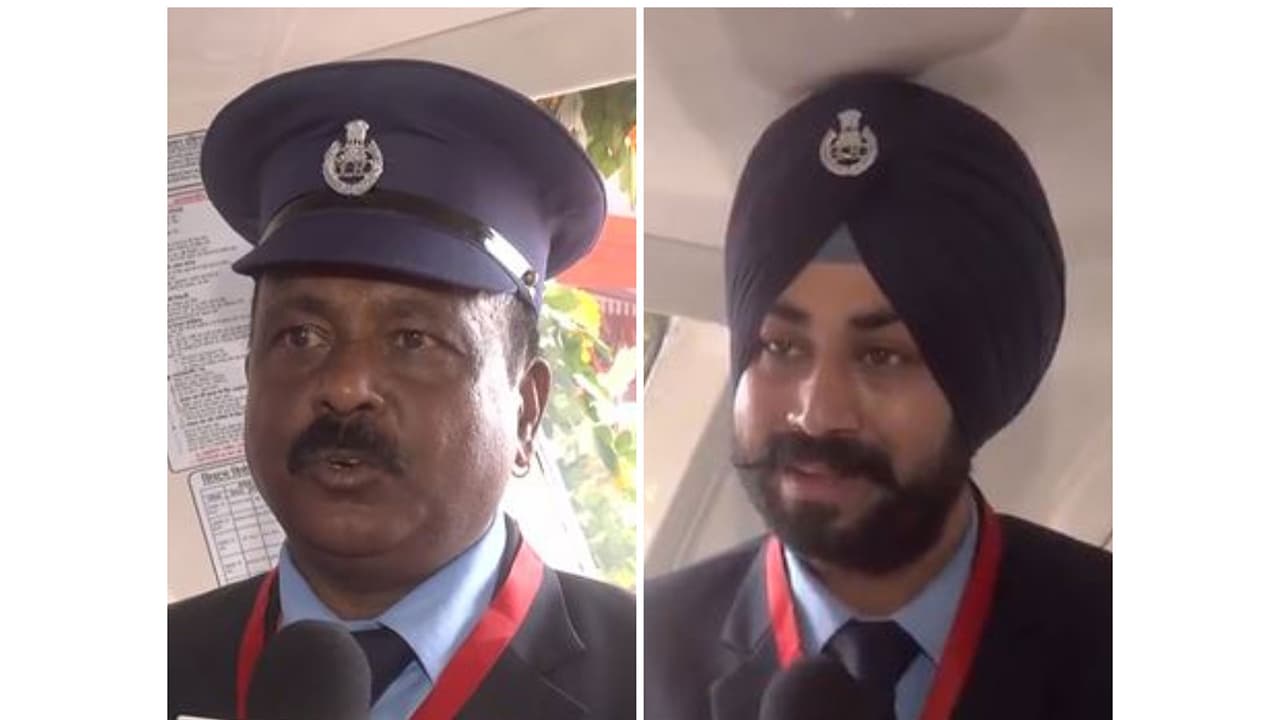
India launched its first hydrogen-powered train in Jind, Haryana. Loco pilots praised the indigenous technology for its superior power, soundproof cabin, and zero pollution, highlighting the advanced safety and communication features of the new system.
As India marked a historic milestone in green transportation with the launch of its first hydrogen-powered train, the man behind the controls, Loco Pilots lauded the indigenous technology for its environmental benefits and superior performance.
Loco Pilots Praise Performance and Technology
Speaking to ANI, Loco Pilot Rajesh Kumar shared his experience of the transition from traditional diesel and electric locomotives to the new hydrogen-run system. “First of all, I would say it’s a very advanced technology. It has more power, it is completely soundproof, and most importantly, there is zero pollution to the environment. The pickup of this train is also excellent compared to older models,” Kumar said.
Advanced Safety and Communication
Explaining the safety and communication features of the new train, Kumar noted that while direct communication with passengers isn’t possible from the cabin, a robust system is in place. “We cannot talk directly to the passengers, but we can communicate with the train manager and make announcements through the system. If any passenger needs help during an emergency, the train manager can provide immediate assistance,” he added.
How the Hydrogen Engine Works
The pilot also provided a simplified breakdown of the science powering the engine. “Inside the locomotive, there is a fuel cell. Hydrogen gas is fed into it at a pressure of 8.5 bar, and oxygen enters from the other side. A chemical reaction occurs inside, which produces three things: electricity to run the engine, steam that is released into the atmosphere, and water that is discharged below. It is completely clean,” Kumar explained.
Assistant Loco Pilot Gagandeep also highlighted that this is a historic first for India and emphasised that the crew underwent comprehensive training provided by experts from Chennai. He described the locomotive as highly powerful, featuring a configuration of eight travel cars and two power cars (located at the front and rear) to ensure balanced power distribution. Additionally, he noted that the train is equipped with advanced safety features to ensure a secure journey. “This is the first train of its kind in India. We received very good training. Trainers from Chennai came to teach us about this train. It is a very powerful train. It has eight travel cars and two power cars, providing power from both the front and rear. It has advanced safety features,” he said.
Students Celebrate ‘Atmanirbhar Bharat’ Achievement
Students from Indus Public School, Jind, shared their firsthand experiences of the landmark event, noting that the technology sets a global example for sustainable transportation.
Jianshi, a student at the school, highlighted the environmental significance of the new locomotive. “Vande Bharat also releases gases, but this hydrogen train will only release water vapour. Hydrogen is stored inside, and by taking oxygen from outside, it produces energy. This makes it much safer for the environment,” she told ANI. She further expressed pride in the ‘Atmanirbhar Bharat’ initiative, adding, “Every part of it has been made in India. It is a very big thing.”
Another student, Abheesa, emphasised the regional pride felt by the residents of Jind. “This is a very big opportunity for the people of Jind to have such a major train launched here. It is one of the longest and strongest trains in Asia. India has once again proven that it is second to none,” she said, noting that the train was designed in Lucknow and manufactured in Chennai.
Mayra, also from Indus Public School, drew comparisons with other global powers, stating that Indian engineers have achieved something unique. “Our engineers and scientists have proven they can do exceptional work. Even in developed countries like China, Germany, and Japan, such large-scale hydrogen trains with this much horsepower and seating capacity haven’t been developed. It is a wonderful achievement for our country,” she said. (ANI)
(Except for the headline, this story has not been edited by Asianetnews Editorial staff and is published from a syndicated feed.)