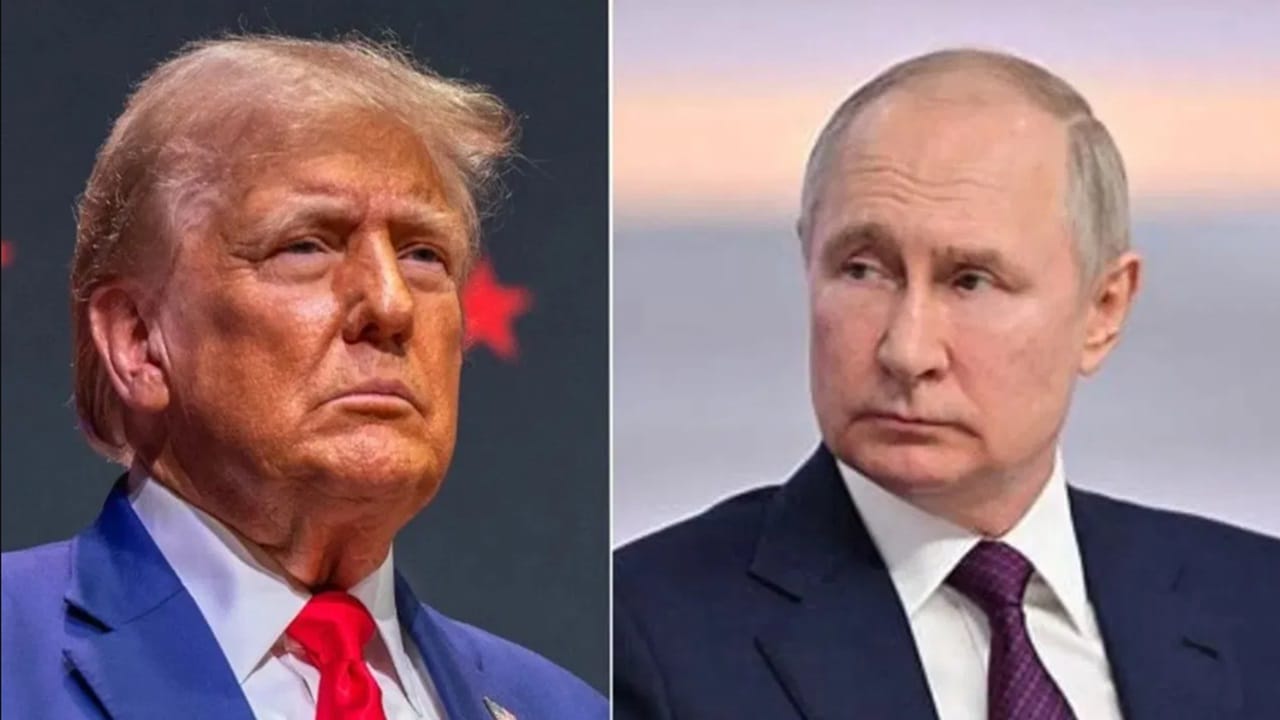
US President Donald Trump has reportedly rejected a proposal from Russian President Vladimir Putin to move Iran’s enriched uranium stockpile to Russia as part of diplomatic efforts linked to the ongoing US-Israel war with Tehran.
According to a report by Axios, Putin made the suggestion during a phone conversation with Trump earlier this week. The idea was presented as a possible step to reduce tensions surrounding Iran’s nuclear programme.
However, Trump declined the proposal.
Putin’s proposal during call with Trump
The proposal involved transferring Iran’s enriched uranium stockpile to Russia. Such a move could have been part of a broader arrangement aimed at reducing nuclear risks during the escalating confrontation between Iran and the United States and Israel.
Reports say Trump did not accept the suggestion during the call.
The discussion took place at a time when diplomatic channels remain active despite rising military tensions in West Asia.
Trump comments on possible Russian support to Iran
Trump later suggested that Russia might be offering some level of assistance to Iran during the conflict.
“I think he might be helping them a little bit, yeah, I guess, and he probably thinks we’re helping Ukraine, right?” Trump said during an interview with Fox News host Brian Kilmeade on Friday. “Yeah, we’re helping them also.”
He also described such actions as common behaviour in global geopolitics.
“So he [Putin] says that, and China would say the same thing, you know. It’s like, hey, they do it, and we do it, in all fairness. They do it, and we do it,” Trump said.
US officials discuss intelligence concerns with Russia
Trump’s remarks appeared to differ from earlier statements made by his Middle East envoy Steve Witkoff.
Witkoff had earlier said Russia denied providing intelligence support to Iran after discussions with US officials.
According to reports, Witkoff and Trump’s son in law Jared Kushner also spoke with Putin’s foreign policy adviser Yuri Ushakov earlier this week. During that conversation, Ushakov reportedly repeated that Russia was not sharing intelligence with Tehran.
White House press secretary Karoline Leavitt also addressed the issue.
“President Trump and Mr Witkoff told the Russians that if intelligence sharing was taking place, it’s not something they would be happy with, and they hope that it is not taking place,” Leavitt told reporters.
Oil markets react to rising tensions
Meanwhile, the broader geopolitical tensions have begun affecting global energy markets.
Reports indicate that Russia could earn more than USD 10 billion in additional oil and gas revenues that could support its war effort in Ukraine after restrictions on countries buying Russian crude were lifted.
At the same time, global oil prices have surged after Trump ordered the closure of the Strait of Hormuz shipping route. The move pushed oil prices above USD 120 per barrel.
The Strait of Hormuz is one of the world’s most important oil transit routes. A large share of global oil shipments passes through the narrow waterway.