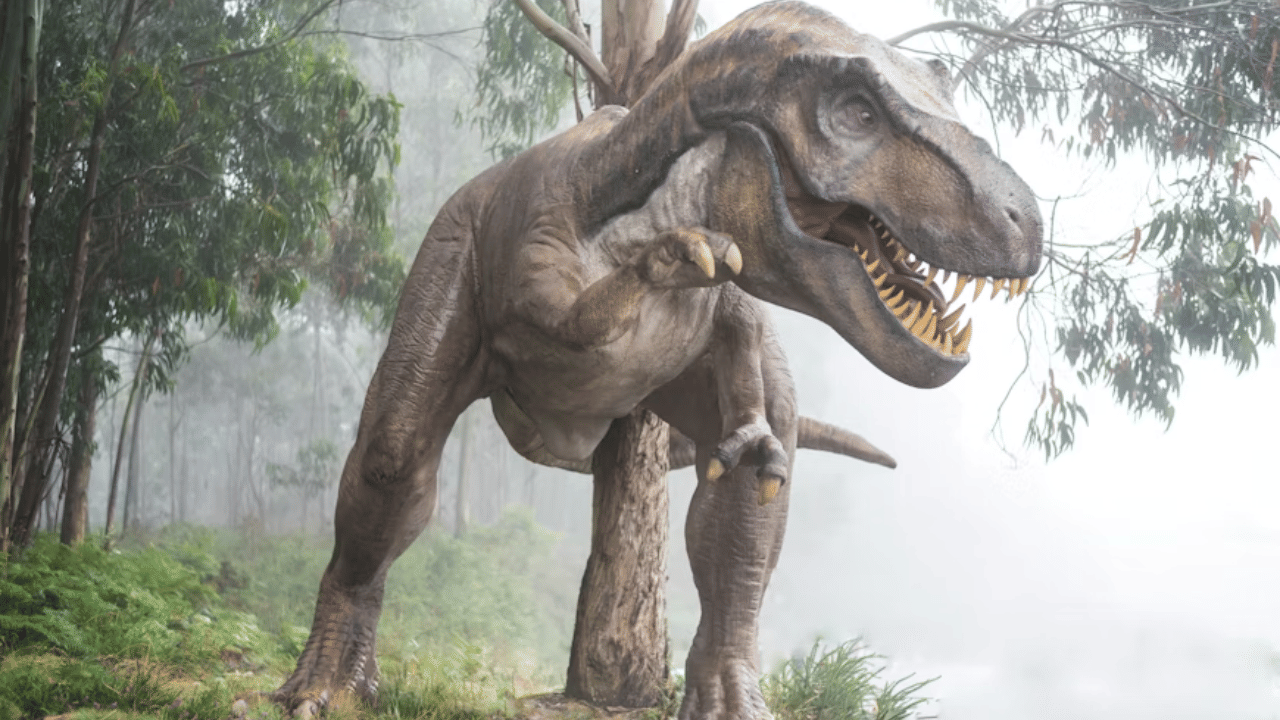
New Delhi: Scientists in Brazil have discovered a new giant dinosaur species, which can provide new knowledge about prehistoric life and ancient associations of continents. The dinosaur is called Dasosaurus tocantinensis, and it is thought to be one of the largest dinosaurs ever found in Brazil.
Researchers indicate that the discovery reinforces the evidence of the existence of land routes connecting South America, Africa, and Europe some 120 million years ago as well. Recently, the results were published in the Journal of Systematic Palaeontology.
Fossils discovered during construction work
The fossils were discovered in 2021 in the northeastern states of Brazil, Maranhao and Davinopolis. Researchers started excavations in the site that was undergoing preparation to be used in infrastructure works. The investigation was coordinated by Elver Mayer of the Federal University of the Sao Francisco Valley, assisted by several Brazilian institutions in the role of palaeontologists.
Some of the remains that were found included a large femur with a size of approximately 1.5 metres. The bone assisted scientists in determining the overall length of the dinosaur at approximately 20 metres.
One of the largest dinosaurs found in Brazil
It was at first presumed by palaeontologist Leonardo Kerber of the Federal University of Santa Maria that the giant size of the femur instantly indicated that the dinosaur was a giant animal. The excavation went on, but it came to the attention of researchers that they were handling one of the largest dinosaurs ever found in the country.
The species are members of the family of long-necked sauropod dinosaurs with their huge size and vegetarian feeding.
Ancient link between South America and Europe
It was also discovered by scientists that Dasosaurus tocantinensis is a close relative of Garumbatitan morellensis, which is a dinosaur species that has been discovered in Spain. This connection implies that their forefathers must have travelled between Europe and South America millions of years ago.
Scientists estimate that the ancestry would have started in Europe and travelled to northern Africa and South America around 130 million years ago, by which time the continents had not been completely divided by the Atlantic Ocean.
The name of the dinosaur is a reflection of the locality where the fossils were found. ‘Tocantinensis’ is the term used to describe the nearby river, the Tocantins River, which is a large river flowing near the fossil location.
According to scientists, the discovery does not only broaden the dinosaur record in Brazil, but it also offers valuable evidence regarding the movement of ancient species across the continents well before the modern world map was formed.