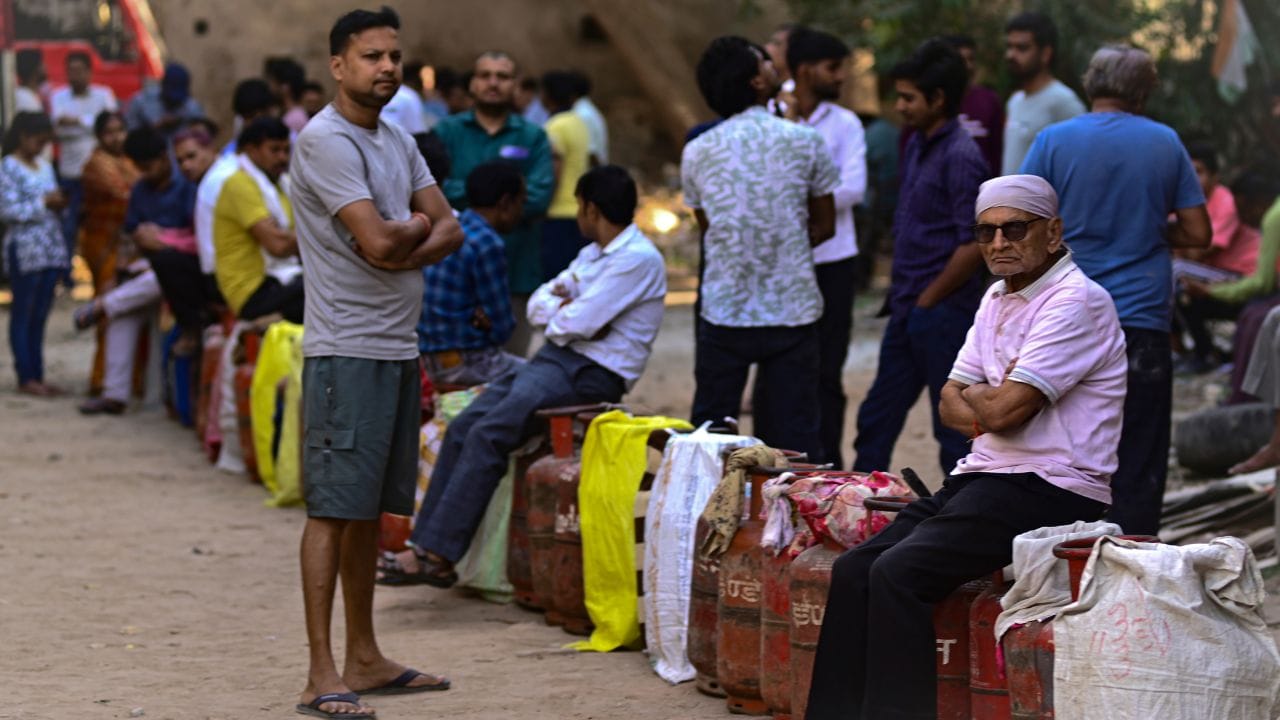
New Delhi: Households and restaurants across India are starting to feel the impact of the ongoing conflict involving Iran, the United States and Israel. In a number of cities, consumers have reported longer waiting times than usual to receive their Liquefied Petroleum Gas (LPG) cylinders and even in some places, the supply has become irregular.
One of the reasons behind these disruptions is the Strait of Hormuz, which is a narrow but crucial sea route through which a large share of oil and gas exports from Gulf countries is transported. With Iran effectively blocking this passage, the movement of energy supplies has been affected, raising concerns about delays and shortages in countries.
India imports a large share of its LPG from Gulf countries, and a significant portion of these shipments passes through the Strait of Hormuz. Any disruption in this route can affect global energy supplies. Yesterday, in Lok Sabha, Union Petroleum and Natural Gas Minister Hardeep Singh Puri stressed that there is no shortage in the country and that the domestic supply of LPG is fully protected.
The situation has also raised a question among consumers: can LPG cylinders be filled with any other gas, such as PNG?. Well to get the answer it is important to understand the difference between the two gases.
What is LPG and PNG?
Liquefied Petroleum Gas (LPG) is a mix of hydrocarbon gases, mainly propane and butane, which are produced during crude oil refining and natural gas processing. On the other hand, Piped Natural Gas (PNG) is a natural gas supplied in homes through pipelines, mainly containing methane. And it is a lighter hydrocarbon gas extracted from underground gas fields.
One of the main reasons to use LPG in cylinders is that it can be converted into a liquid under moderate pressure. When compressed, LPG becomes liquid, and it occupies much less space than gas.
Unlike LPG, methane is difficult to convert into liquid and in order to do so, it requires extremely high pressure or very low temperatures. This is the reason why it’s difficult to store natural gas in household cylinders, and it is delivered through underground pipelines in cities with the required infrastructure.
However, LPG’s property of becoming liquid and occupying low space allows a large amount of fuel to be stored easily and transported across the country.
Safety difference between LPG and PNG?
Both gases behave very differently if a leak occurs. LPG is heavier than air, so it tends to settle near the ground, while natural gas is lighter than air, so it rises and disperses upward rapidly. This sometimes makes it difficult to detect the leak in spaces. In case of LPG, due to its strong odour, it’s easy for consumers to detect the leak quickly.
Will PNG replace LPG?
India is expanding its piped gas network system, but currently it is available only in selected urban areas where gas distribution networks exist, while LPG cylinders can be transported and used across cities, towns and rural areas.